Labour disputes
Unlawful dismissal and reinstatement at work, unpaid wages and compensation, transfer without consent, disciplinary sanctions.

We handle employees' employment disputes and protect them on dismissal
We challenge refusals to grant pensions, benefits and allowances
We work on medical disputes and harm to health
We protect the rights of consumers of goods and services
We appeal decisions of state bodies made without examining the situation

Tell us who refused you and on what grounds — we will say whether it can be appealed and which documents will be needed.
Message us on WhatsAppUnlawful dismissal and reinstatement at work, unpaid wages and compensation, transfer without consent, disciplinary sanctions.
Refusal to grant a pension, disputed service record, lost employment documents, recalculation of the awarded amount.
Refusal to grant social payments, disability and child benefits, disputes over recipient status.
Harm to health during treatment, refusal of medical care, disputes with clinics, access to medical records.
Defective goods and services, refusal to refund money, imposed services, disputes with online stores.
Expulsion, conflicts with school and university, paid educational services, the rights of a child in an educational institution.
Appealing decisions on establishing or removing a disability group, refusal of rehabilitation aids.
Formal brush-offs, missed deadlines for considering applications, refusal without examining the situation on the merits.
The first consultation is free. Some issues are resolved by a well-drafted complaint without going to court: state bodies respond formally for exactly as long as they are addressed informally.
Cost
Indicative prices. The exact amount is stated after reviewing the documents and is fixed in the contract.
| Service | What is included | Cost |
|---|---|---|
| Consultation with a social lawyer | Review of the situation, assessment of the prospects for appeal | free of charge |
| Complaint to a state body or to the employer | Drafting an application with legal reasoning | from 25,000 ₸ |
| Legal opinion | Written analysis of documents and course of action | from 30,000 ₸ |
| Labour dispute in court | Reinstatement, recovery of wages and compensation | from 150,000 ₸ |
| Pension dispute | Appeal against refusal, confirmation of service record, recalculation | from 140,000 ₸ |
| Medical dispute | Case concerning harm to health with a medical examination | from 220,000 ₸ |
| Consumer rights dispute | Claim, statement of claim, recovery of penalty and moral damages | from 90,000 ₸ |
| Appeal against a decision of a state body | Administrative claim and representation | from 130,000 ₸ |
Prices are for reference only and do not constitute a public offer. State duty and expert examinations are paid separately. In a number of social cases no state duty is charged.
We read the document itself: which provision the authority or employer relies on and whether it fits the situation.
Employment record book, orders, certificates, medical documents, correspondence. We request some of the documents ourselves.
We tell you honestly: whether the refusal is justified or can be lifted. Sometimes the right answer is "there is nothing to dispute".
An application with legal reasoning and response deadlines. It is harder to get a formal brush-off when the matter is set out on the merits.
The scope of work and the cost are fixed in writing before we start.
Statement of claim, hearings, work with expert examination. In labour and social cases the deadlines are shorter than usual.
Reinstatement at work, payment of the awarded sum, recalculation — we follow through until the actual result.
We check that payments are being made and that the records in the documents have been corrected.
Send the text of the refusal via WhatsApp — we will tell you what it rests on and how to have it lifted.
Team
We handle a case from start to finish with the same team: you always know who is dealing with your matter and who to contact.

Lawyer for civil cases
Handles disputes over real estate, inheritance, contracts and transactions. Supports transactions from document review through to registration of title.

Lawyer for financial and motor vehicle disputes
Works with banks, insurers and debt collectors, handles recovery and bankruptcy cases, and defends drivers in administrative matters.
Lawyer for family and social matters
Handles divorces, division of property, alimony and disputes over children, as well as employment, pension and social issues.

Lawyer for corporate law
Supports company transactions, arranges shares and corporate agreements, handles disputes between participants and reorganisation.

Tax lawyer
Challenges notifications and inspection reports, handles tax disputes in court, supports inspections and recovers overpayments.

Construction and contract lawyer
Reviews contract agreements, estimates and acts, handles disputes over quality and scope of works, supports acceptance of facilities.

Intellectual property and IT lawyer
Protects copyright and trademarks, drafts contracts for IT teams and handles rights to products and code.
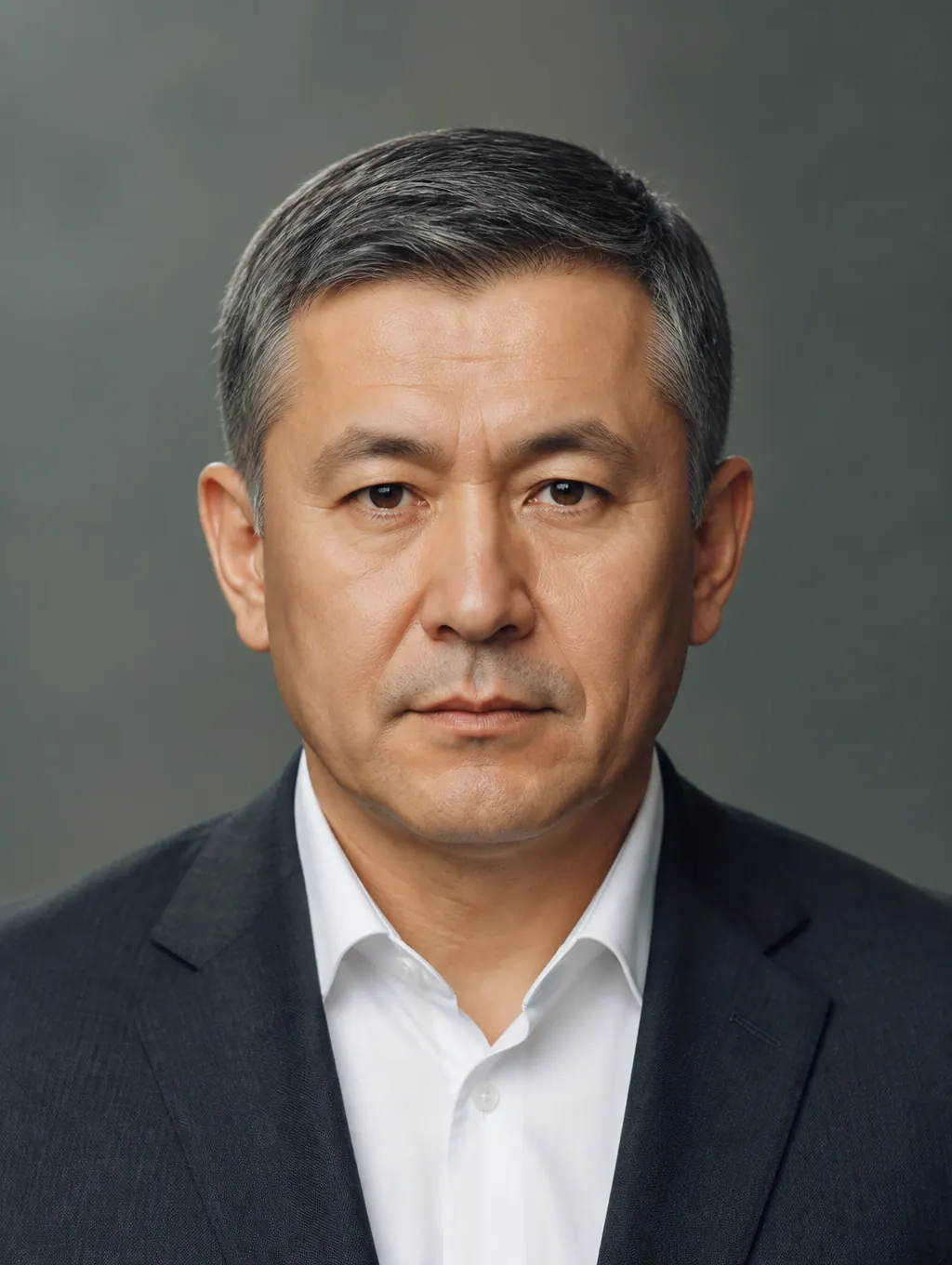
Bankruptcy and debt recovery lawyer
Handles bankruptcy and rehabilitation procedures, recovers receivables, defends directors against subsidiary liability.
Practice
Details have been changed and anonymised: the content of the case is protected by professional privilege.
Useful information
A formal reply to an application arrives on an ordinary letterhead: the applicant is told that there are no grounds and is advised to approach another body. People come with such a letter after dismissal, refusal to count length of service, removal of disability status, termination of payments, and after a seller has returned a defective item. The person holds the sheet in their hands and does not understand whether this is a final decision or whether it can still be set aside, where to go and within what time limit.
The article shows what a social lawyer checks first: whether the reply refers to a specific legal provision under which the decision was made, and whether the procedure for appeal is explained. If this is missing, the reply is set aside by a complaint to a higher body or in court. It then explains how a complaint differs from a claim, which time limits are counted from the date of refusal, and which documents are collected before filing.
A refusal by a state body or an employer does not always mean the decision is final. A social lawyer examines the document on the merits: checks whether the body acted within its competence, whether it referred to a legal provision, and whether it took all the circumstances of the case into account. The work covers several areas — labour law, pension matters, medical law, consumer rights, education law, psychiatry — but the logic for assessing a refusal is the same.
The first filter is whether the refusal is formal or lawful. A formal refusal contains no reasoning: it does not state which provision was applied, which documents were not accepted, or what rebuts the applicant's arguments. Such a reply is set aside on the ground of lack of reasoning. A lawful refusal relies on a specific provision and confirmed facts — then the dispute is about the application of law, not the quality of the reply.
The second filter is the completeness of the examination. The body must assess all documents submitted; if some were left without attention, the refusal is vulnerable. In labour disputes, compliance with the procedure for applying a disciplinary sanction and familiarising the employee with the documents matters. In pension and medical matters, it is checked whether the medical and service-record documents were examined.
The remote format does not change the substance of the work: the specialist assesses the documents, determines the nature of the dispute and indicates which route — a complaint to a higher body or a claim in court — will lead to a result faster. A social lawyer online works with the same materials as during an in-person visit, provided they are sent in a readable form and as a complete set.
It is enough to upload colour scans or photographs: the application and the written refusal, the authority's reply, the employment contract, hiring and dismissal orders, an extract from the Unified Accumulative Pension Fund, a certificate of registration at the place of residence, a medical and social examination report, and correspondence via eGov. If a document is missing, the specialist will advise where to obtain it — at a Public Service Centre, from the employer or at a polyclinic.
The consultation takes place by video call or in correspondence. The analysis is in writing: what exactly was breached, on what basis the refusal can be challenged, to which body the complaint should be sent and which documents should be attached to the claim. Twelve years of practice in social matters — benefits, disability, allowances, refusals by state bodies, labour and pension disputes — show that remote analysis saves time when the papers are collected carefully.
| Material | What the lawyer checks | Outcome for the applicant |
|---|---|---|
| Refusal by the authority | References to legal norms and grounds | Basis for a complaint or claim |
| Documents on length of service | Records of employment and periods | What confirms length of service in Kazakhstan |
| Medical papers | Completeness of the MSE conclusion | Whether re-examination is needed |
| Correspondence with the authority | Compliance with the application procedure | Argument of a procedural violation |
A review does not replace personal presence in court or before an authority, but it helps to see the weak points of a position in advance.
A response from a state authority or employer is assessed separately for form and content. A formal refusal is not reasoned, has no reference to a legal norm, or is signed by a person without confirmed authority. It is void in form: it creates no legal consequences and does not make it clear which actions were rejected and on what basis. The check starts with these signs: a formal defect is easier to remedy by a repeat application or complaint than to challenge the refusal on the merits.
A final refusal is reasoned: the legal norm is stated, the facts are set out, and the signatory with their position and authority is identified. A repeat application is pointless — the position is supported by references to the law, and there is only one path: challenge. The substance of the reasoning is checked at two points: whether the norm relates to the disputed issue and whether the circumstances on which the applicant's right depends have been established.
The authority of the signatory is significant in itself. A response from the department of employment and social protection of the population signed by a specialist without a document confirming the right to sign is vulnerable regardless of whether the reasoning is correct. The same applies to decisions on applications connected with the Public Service Centre: if the final document does not reflect the grounds for refusal, the applicant is entitled to demand a written explanation.
After a refusal by a state body or an employer, both a pre-trial complaint and a court claim are possible. The choice depends on what needs to be proved and how quickly an interim result is needed. In social disputes — employment, pension, medical, consumer, education, psychiatric — a complaint often produces results without going to court. In the practice of a social lawyer, 55% of cases are resolved without court through a complaint to a superior body or the prosecutor's office.
A complaint is submitted according to jurisdiction: to a superior body, the prosecutor's office or the authorised body for the profile of the dispute. A prosecutor's act can prompt the body to remedy the violation voluntarily and does not require proof in an adversarial process. A court reviews the lawfulness of the decision on the merits and issues an act binding for enforcement. Sometimes both routes are used: first a complaint, then a claim under the rules of administrative court proceedings.
The key differences lie in timeframes, scope of review, reversibility and effort required. A complaint is faster and simpler, but the body reviews its own decision and does not always go beyond the arguments of the applicant. A court assesses the evidence comprehensively, but the route is longer and requires procedural preparation. Before filing a claim, the time limits for applying and compliance with the pre-trial procedure, where mandatory, are checked.
| Criterion | Pre-trial complaint | Court claim |
|---|---|---|
| Timeframes | Shorter: the body considers the application under general rules | Longer: preparation, filing, consideration |
| Scope of review | Within the arguments of the complaint | On the merits of the dispute, with examination of evidence |
| Reversibility | Rarely overturned by the body itself; a repeat application is possible | A court decision is binding for enforcement, appeal to a higher instance |
| Cost of effort | Below: minimum documents and procedures | Above: procedural documents, participation in hearings |
| Outcome | Elimination of the violation by the authority | Recognition of the decision as unlawful, restoration of the right |
The pre-trial procedure may be mandatory for certain categories of disputes; this is checked before filing a claim.
An employer's refusal in a labour dispute and a state authority's refusal differ in nature and in the procedure for appeal. The employer is a private entity; its decisions on dismissal, recovery or refusal of reinstatement are formalised by orders and notifications, which are challenged directly in court. A state authority acts within the framework of public powers, and its response must contain a reference to the specific provision under which the decision was made and an explanation of the procedure for appeal. A formal brush-off without legal reasoning is not a refusal: it can be appealed to a superior authority or in court.
A social lawyer for labour disputes works primarily with documents confirming the employment relationship and length of service. In Kazakhstan, the employment record book is not mandatory evidence: length of service is confirmed by the employment contract, orders on hiring, transfer and dismissal, statements from the Unified Accumulative Pension Fund and data from information systems. It is these documents, and not an entry in the record book, that determine the period of work and the grounds for termination of the relationship.
A formal brush-off is not a final refusal. An organisation responds on the merits exactly as long as it is spoken to substantively, rather than being told about one's grievances.
Pension refusals are a separate category of social disputes: the applicant deals with a state authority, not an employer. The decision is made by the authorised authority for the assignment and payment of pensions, where data from the Legal Cadastre, personal records and archives converge. The work begins with the refusal: what exactly the authority has called into question — the period of work, the nature of employment, the payment of mandatory pension contributions or the ground for assigning the payment.
The key work is not with the amount, but with the fact. Entries in the employment contract and orders on hiring and dismissal, statements from the personal account, data from the organisation's primary documents, and information from the archives of liquidated enterprises are checked. In Kazakhstan, length of service is confirmed by precisely such documents, and not by an entry in a single document, which is why gaps and discrepancies in them usually become the subject of the dispute.
The second layer is the legal characterisation of the period: whether it was subject to inclusion in length of service, whether it related to preferential calculation, whether the employee was engaged in work with special conditions. A dispute about the fact almost always precedes a dispute about the amount: until the period is credited, there is nothing to discuss regarding recalculation. Hence the specific nature — not challenging the arithmetic, but proving that the disputed segment of work took place and must be taken into account.
A refusal by the medical and social expert examination on re-examination and the termination of disability payments are different decisions, and they are challenged separately. The MSE conclusion confirms or removes the group and determines its cause, while the payment is assigned by the body that assigns the benefit or pension, on the basis of the conclusion. A won dispute about the group does not by itself restore the payment: the restoration of payments must be secured separately and, where necessary, a recalculation for the period of unlawful termination as well.
Medical documentation plays the key role. The primary medical documentation, referrals for MSE, the examination record and the examination report show which tests were carried out and what the conclusion is based on. If the report does not reflect the complaints, does not take into account the results of examinations or does not involve the necessary specialists, this is a separate ground for challenge. A social lawyer in medical law checks the link of "diagnosis — examination — conclusion" and identifies where it is broken.
In a consumer dispute, the response comes from the seller or the manufacturer — a private person, not a state body. A state body responds within an administrative procedure, referring to a law and a subordinate act, while the seller more often rejects the claim orally or with a formal reply, without examining the goods on the merits. That is why the dispute begins with a written claim: it records the date of the application, the buyer's demand and the ground — the goods' non-conformity with the contract or a defect. Without a claim, an application to the authorised body or the court loses its footing: it is not confirmed that the seller was given the opportunity to remedy the violation voluntarily.
After that, the expert examination is of key importance. Under the Law of the Republic of Kazakhstan on Consumer Protection, the burden of proof is distributed in favour of the consumer: if the defect did not arise through the buyer's fault, the seller is liable. The seller has the right to carry out its own quality check or expert examination and to challenge the findings, so the conclusion of an independent specialist is the main evidence. The dispute over the nature of the defect — whether it is a manufacturing or an operational one — most often determines where to go: to a complaint or straight to court.
Education disputes and cases concerning psychiatric care stand apart among the areas in which a social lawyer works. In the first case, the refusal comes from a school, college or university: not admitted, expelled, not allowed to sit assessments, refused a transfer or the creation of special conditions. In the second — from a medical organisation: refusal of hospitalisation, of examination, of providing information, restriction of a patient's rights in the provision of psychiatric care.
The general algorithm for assessing a refusal is the same. First, it is checked whether the refusal was issued in writing and whether it refers to a legal norm; an oral refusal is recorded through an application and a response. Then it is established whether the procedure was violated: the review procedure, the mandatory documents and conclusions, the rights of the person affected by the refusal.
Next, it is assessed whether the mandatory pre-trial stages have been exhausted. In labour disputes, for employers with a number of employees above the established threshold, the dispute is first considered by a conciliation commission — without this, the court returns the application. Then the route is chosen: a complaint to a superior body or to the prosecutor's office, or a statement of claim to the court.
A social lawyer counts the time limit for appealing a refusal by a state body or an employer from the date of delivery or sending of the response to the applicant, not from the date stated in the document. The right to a complaint or a claim arises when the citizen learned of the violation of the right. The date the response was drawn up may differ from the date of sending, and postal delivery takes several days. Therefore, the confirmed moment of receipt is of key importance: the acknowledgement of delivery on the copy, the postal notification, the incoming correspondence stamp or the entry in the registration log.
If the reply arrives later than the expected deadline, the right to appeal is preserved. The legislation of the Republic of Kazakhstan allows a missed deadline to be restored for valid reasons, including late dispatch of the reply by the authority. A request to restore the deadline, stating the reasons for the delay, is attached to the complaint or claim. A social lawyer checks whether the procedure for sending the reply was followed and, where necessary, appeals against the authority's inaction.
Before a complaint or claim, an evidence base is assembled that confirms the applicant's right and the very fact of refusal. The basis is a written application and a mark of its receipt: an incoming registry number, a stamp, a Public Service Centre slip, or confirmation from eGov. If a reply has been received, the document itself with its date and outgoing number is attached; silence on the part of the authority or employer is recorded differently — by a copy of the application with a mark and by correspondence.
The right is confirmed by contracts, orders, an employment contract, decisions and certificates. Medical documents, extracts, conclusions and examination results prove the state of health and the need for the service. In property matters, cadastral and title documents issued through the Legal Cadastre and the Public Service Centre are added.
Refusal to issue copies of medical documents is unlawful: a patient is entitled to receive copies of their own documents, and such a decision is set aside by a written demand with reference to the relevant norms. A social lawyer checks whether there is confirmation of filing and delivery in hand and, where necessary, restores lost marks through a repeat application.
What the selection will include:
the application and the document confirming its receipt (stamp, incoming number, Public Service Centre slip, eGov);
the reply of the authority, employer or medical organisation, or evidence of silence;
The choice between a complaint and a claim in a social dispute depends on the nature of the conflict. If the parties are in dispute over a fact, a complaint to a superior authority is almost pointless: the reviewing body assesses documents rather than re-establishing the circumstances. Where the fact is not disputed and the issue comes down to the application of a legal norm, the administrative route is faster and cheaper.
The second criterion is the need for specialised knowledge. Disputes over the degree of loss of working capacity, the quality of medical care, or the causal link between working conditions and illness require an expert examination, and that is ordered by a court. A complaint comes up against the authority's lack of powers to review medical and technical conclusions.
The third criterion is the other party's willingness to comply with the decision. An authority that voluntarily remedies the violation following a complaint removes the need for a claim. If the decision will only be enforced through compulsory recovery, a complaint wastes time. The prospect of actual recovery is also taken into account: in a number of social and consumer disputes, compensation for moral harm may be claimed, but its amount is determined by the court and is usually more modest than expectations.
The practical criteria apply equally to employment, pension, medical, consumer and education disputes.
Reviews
I was dismissed for absenteeism, but at the time I was on sick leave, it was hurtful to the point of tears. Asel helped gather everything and through the court they reinstated me and recovered payment for the forced absence, it dragged on for about three months. Many thanks to her.
Service: Social lawyer in Almaty
in the 90s I worked at a factory, then everything fell apart and the enterprise just kind of disappeared. when it was time to apply for my pension they refused me, because the work record couldn't be confirmed. I was ready to drop the whole thing, but my daughter said to find a lawyer. here they found archive certificates, the work record was included and the pension is already set up. very grateful, I would never have figured it out myself
Service: Social lawyer in Almaty
Thank you for the review, Viktor. We are glad the archive certificates were found and the issue with your length of service was resolved — may your pension payments arrive on time.
I needed a copy of my medical record for another clinic, but our hospital simply refused to issue it. I went to them several times, spoke with the reception, with the head doctor, all to no avail. I no longer knew what to do, started looking for a lawyer for such medical cases. I got in touch, and Gulnara calmly explained that the refusal was unlawful. We prepared a letter, and, honestly, I did not believe it would work. But two days later the copy was issued. They really helped me out, because time was already pressing. Many thanks
Service: Social lawyer in Almaty
The shop did not refund money for faulty equipment for six months. A pre-action claim, a lawsuit, and they returned it with a penalty.
Service: Social lawyer in Almaty
They wanted to expel my son from college, and the procedure was clearly violated, and I did not know where to turn. I was looking for a lawyer who would take on such a case. We sorted it out, the expulsion was cancelled.
Service: Social lawyer in Almaty
I came with an issue about benefits, I had little hope. Viktor told me openly that in this case the refusal is lawful, there is no point in disputing it. At first I was upset, but later I understood he was telling the truth. He did not take money for a hopeless case, and I especially liked that. Such honesty is rare these days.
Service: Social lawyer in Almaty
They refused the benefit and referred to income which I have not had for two years, I was in shock. Madina wrote an appeal with the documents and the decision was reviewed. Thank you to her
Service: Social lawyer in Almaty
I was refused disability after the MSEK, and I did not understand at all what to do next. It seemed like it was the end and there was no point in arguing. I decided to seek help after all. They sat down with me and gathered the medical documents again, laid everything out clearly. Then we went through it a second time, already with proper preparation. Honestly, I was very nervous before the commission. But everything went calmly. In the end the status was granted. I am very grateful for the patience and for not abandoning me halfway.
Service: Social lawyer in Almaty
I am 74 years old, I would not have got anywhere on my own. they came to my home, did everything for me. god bless them
Service: Social lawyer in Almaty
I was dismissed in violation of the procedure, they did not even request a written explanation at all. I came to them after I had tried to talk to the employer myself and got nowhere. I was looking for a lawyer specifically for labour disputes, because I had already realised I would not manage on my own. Here they listened calmly, looked at the documents. Explained that the violations were obvious. Then everything went through the court. I was reinstated at work and recovered payment for the forced absence. I went to them several times, they always answered my questions. Of course I waited more than one day, but the result was worth it
Service: Social lawyer in Almaty
Thank you for entrusting us with this case. We are glad we managed to reinstate you at work and secure the payment.
I came with a refusal of benefit, but there was not even a reference to a legal provision, just general words. The lawyer said that in itself was already grounds. And so it turned out.
Service: Social lawyer in Almaty
Thank you for the review. We are glad the appeal produced the desired result.
I came for survivor's benefit payments, I couldn't work out the paperwork and deadlines myself. They helped, sorted it out quickly. The only thing was I had to wait a couple of days for an answer and bring in a couple more documents, but that's minor.
Service: Social lawyer in Almaty
Thank you for your feedback. We're glad we could help, and the wait was down to clarifying some of the documents.
I came with a medical case that had been dragging on for a long time, I'd got confused in all those papers myself. I spent a long time looking for a lawyer who would take on such a difficult area. They warned me straight away that without an expert examination there was no chance and that the case would take a lot of time. Honestly, that was a bit off-putting, but at least there were no empty promises. I had to wait for an answer and bring some of the documents in again. Nothing went quickly, roughly as they had said. But there is a result and that's the main thing. Thank you for your patience with me
Service: Social lawyer in Almaty
My child has special needs and for a long time they wouldn't give us the benefit at the social protection office, they kept fobbing me off for six months. I was completely worn out by it and went for help. Viktor sorted the matter out in a month, huge thanks to him.
Service: Social lawyer in Almaty
They explained everything in plain language, without legal words I don't understand.
Service: Social lawyer in Almaty
My salary was delayed for four months, I didn't know what to do anymore. Sanzhar wrote a pre-action letter, then a claim, and in the end they paid everything plus compensation for the delay. Huge thanks
Service: Social lawyer in Almaty
I applied about targeted assistance, they refused and I didn't understand why. I came with that refusal, there was no one else to help. in the end the refusal was overturned. very attentive people
Service: Social lawyer in Almaty
I had a labour dispute with my employer but I dragged it all out so long, going through the instances, that I missed the deadline for filing in court. I already thought that was it, nowhere to go. here they looked at it, found valid reasons and restored the deadline. I wish cases like this were resolved faster, but even so it's good
Service: Social lawyer in Almaty
The hospital refused to issue copies of the medical record, and I needed them for further treatment. I asked myself several times, all to no avail. They helped me get the copies, turned out it was unlawful.
Service: Social lawyer in Almaty
Thank you for the review. Indeed, refusing to issue copies of a medical record is unlawful, we're glad the matter was resolved.
I came with a matter concerning my pension, but my case was hopeless. They told me so straight away, didn't hide it. Then they suggested a different route on other grounds. Before that I had been to several places myself and couldn't get a clear answer anywhere. Here they explained everything clearly. Thanks to that, the case moved forward. There is a result, and I have peace of mind.
Service: Social lawyer in Almaty
Thank you for your feedback. In cases like this it's important to us to be honest, and we're glad you achieved a result.
Blog

The short time limit for filing and the documents that need to be obtained straight away.
Read the analysis
Archive certificates, personal accounts and establishing the fact of employment.
Read the analysis
The structure of the application and the requirement for a written ground of refusal.
Read the analysis
Why the rule on non-return of made-to-order items does not apply where there is a defect.
Read the analysis
Which documents to collect so that the group is not downgraded on formal grounds.
Read the analysis
How to stop the payments and recover what was paid.
Read the analysisFAQ
The deadline for going to court in such disputes is short and runs from the date the dismissal order is served. You cannot delay — restoration of a missed deadline is possible only for a valid reason.
Check whether the reply refers to a specific legal provision and explains the procedure for appeal. A formal reply can be appealed to a higher body or in court.
Service is confirmed by archival certificates, documents from the enterprise, and where these are absent — through the courts, including by witness testimony.
A patient is entitled to copies of medical documents. A refusal is unlawful and is overcome by a written demand referring to the relevant provisions.
In a number of social and consumer disputes — yes. The amount is determined by the court, and it is usually more modest than expected, but the claim itself is still worth making.
In many employment and social claims, the employee and the recipient of payments are exempt from the state fee. We confirm this at the consultation.
No. More than half of cases are closed by a well-drafted complaint: organisations respond formally for exactly as long as they are not spoken to on the merits.
This page is about protecting the employee. Disputes on the company's side are handled by our practice for legal entities.
The consultation is free. An application or complaint to a body costs less, representing a case in court costs more. For pensioners and people with disabilities there is no surcharge for travelling to the client.
Yes. A refusal, certificates and correspondence with the body can simply be photographed. If it is hard for you to get around, we will come to your home.
Handling the whole chain at once: disability, pension, benefits, housing, guardianship. These issues usually follow one after another, and pursuing them in parallel is faster than dealing with them one by one.
Contacts and maps
2GIS opens in a separate tab — the service does not allow embedding an organisation card.
Open in 2GISZoon opens in a separate tab: client reviews and ratings are there.
Open on ZoonThe first consultation is free. If the matter can be resolved without court, we will say so directly.