Temporary residence permit and permanent residence permit
We determine the required status, prepare documents for the migration service of the Ministry of Internal Affairs of the Republic of Kazakhstan, and handle the case through to a decision.
Navigation
Search
City and language
Contacts
+7 778 325 44 44 348/4 Raiymbek Ave, office 517, Almaty Mon–Sun: 10:00–19:00 Message us on WhatsApp
This section brings together two areas: a person's immigration statuses and a business's international contracts
We listen to your situation once and pass it straight to the specialist for the section
We help you understand what is resolved through the migration service and what through a court or arbitration
We work with both private foreign nationals and companies with foreign counterparties
We assess the prospects before payment and tell you straight if a dispute has no prospects
If a matter goes beyond the section, we bring in another lawyer from the practice, without referring the case out

Tell us what happened — you need a status for yourself or a relative, you have received a refusal, your entry has been blocked, or a partner abroad is not paying under a contract — and we will tell you which of the section's two areas you need and who exactly will handle it. Case assessment is free.
Message us on WhatsAppTypes of services
We determine the required status, prepare documents for the migration service of the Ministry of Internal Affairs of the Republic of Kazakhstan, and handle the case through to a decision.
We arrange address registration through the Public Service Centre and eGov, and extend deadlines to avoid an entry ban.
We prepare the quota and the package for the employer, and justify the absence of Kazakhstani specialists with the required qualifications.
We handle the acceptance and restoration of Kazakhstan citizenship, collect archival certificates and legalise documents from abroad.
We appeal decisions of the migration service, reduce the duration of bans, and prepare evidence of family and business ties in Kazakhstan.
We check the delivery basis, payment currency and the parties' obligations before signing a contract with a foreign partner.
We choose the applicable law and the dispute resolution procedure so that a conflict with a partner is resolved quickly and under clear rules.
We recognise judgments of courts of other countries through the Minsk Convention, and legalise documents by apostille under the Hague Convention of 1961.
The review is free. If the matter can be resolved by applying to a Public Service Centre or with a single document, we will say so straight away rather than selling unnecessary support.
Cost
This practice area combines two fields, and almost always either can be ordered separately. We give the exact amount after reviewing the situation and the documents.
| Service | What is included | Cost |
|---|---|---|
| Review of the situation and identification of the practice area | Whether it is migration or international law, and what to do first | free of charge |
| Oral consultation | On a migration matter or an international contract | from 8,000 ₸ |
| Written opinion on the situation | Prospects, risks, course of action | from 35,000 ₸ |
| Support with applying for a residence permit or permanent residence permit | Collecting documents and filing with the migration service | from 90,000 ₸ |
| Permit to attract foreign labour | Quota, justification, filing the employer's package | from 120,000 ₸ |
| Appealing a refusal or entry ban | Complaint, gathering evidence, support through to a decision | from 100,000 ₸ |
| Restoring or obtaining citizenship | Collecting archival certificates, legalisation of documents, filing | from 130,000 ₸ |
| Legalisation of documents and apostille | Preparation and support of apostilling | from 25,000 ₸ |
| Review of a foreign economic contract | Terms, applicable law, arbitration clause | from 60,000 ₸ |
| Recognition of a foreign court judgment | Preparation and filing of an application for recognition | from 90,000 ₸ |
| Representation before the Specialized Interdistrict Economic Court or in arbitration | Full support in a dispute with a foreign element | from 200,000 ₸ |
| Retainer support for a business with foreign counterparties | Ongoing review of contracts and support of transactions | from 220,000 ₸ per month |
The ranges are indicative and do not constitute a public offer. State duties, legalisation fees and translations are paid separately.
You describe what happened — with documents, status, a contract or a partner abroad. No precise wording is needed.
We say whether this is a migration matter or an international law matter, and which practice will handle it.
We look at what has already been filed with the migration service or set out in the contract, and what can be done next.
We tell you honestly whether it is worth appealing a refusal or disputing with a partner, and what result is realistic.
An application, complaint, contract, request for recognition of a decision — depending on the direction.
Apostille or consular legalisation, if the documents are intended for another country or are used in Kazakhstan.
We support filing, appeal, arbitration or court — we do not drag the process out longer than necessary.
Status, permit, signed contract or enforced decision — we record the result in writing.
Describe your situation on WhatsApp — tell us whether it is migration or international law, and who in the practice will handle it.

Relocation, employing a foreigner and a contract with an overseas partner only look alike at first glance. We help you work out which area of law you actually need.
The Bonafacto teamlawyers in migration and international law
Team
We handle a case from start to finish with the same team: you always know who is dealing with your matter and who to contact.

Court defence lawyer

Family lawyer
Civil and family law lawyer

Business support lawyer

Legal consultant

Corporate and employment disputes lawyer
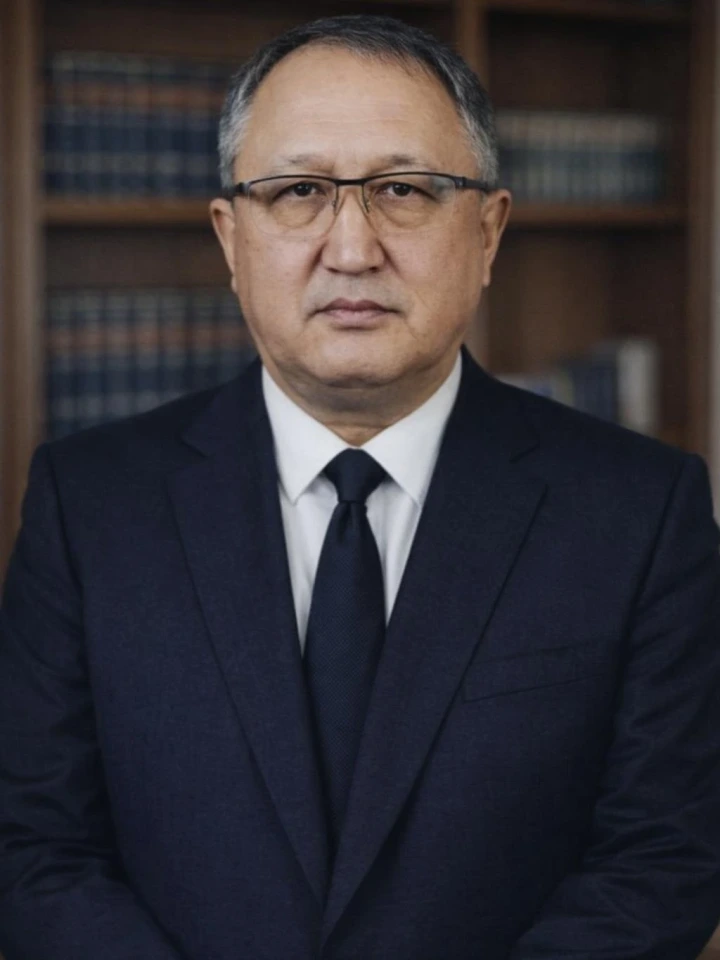
Tax disputes legal counsel
Practice
Details have been changed and anonymised: the content of the case is protected by professional privilege.
Useful information
Most often, an enquiry begins with a specific situation: a foreign national's period of stay is expiring and it is unclear on what ground to extend it; a company is about to hire a specialist from abroad and does not understand which procedures are mandatory; an entrepreneur has received a foreign document that needs to be presented in Kazakhstan. In all cases the issue lies at the intersection of the migration regime and the rules of international law, and a mistake at the outset costs more than a timely check.
The article explains what the work of such a specialist involves: how the ground of stay is determined, when legalisation of documents is required, which permit procedures accompany the hiring of a foreign national, and how the chances of permanent residence and citizenship are assessed. Cross-border disputes, the recognition of foreign arbitral awards and defence under a foreign economic contract are considered separately, as are the criteria for choosing a specialist for a specific task.
Migration practice and international law in Kazakhstan intersect where a foreign national does not merely arrive, but lives, works and does business with local companies. The lawyer assists both sides: the person obtaining lawful status, and the organisation with foreign counterparties, employees or participants. The areas can only be separated conditionally: an individual's status affects transactions, taxes and the liability of the business.
The first area is the status of a foreign national: entry, stay, temporary residence permit, permanent residence permit, employment, family reunification. In Kazakhstan, a temporary residence permit and a permanent residence permit are issued, whereas a temporary residence permit is a Russian term. The lawyer checks the grounds, the deadlines and the completeness of the documents so that the status is confirmed without gaps.
The second area is international law for business: foreign economic contracts, applicable law and jurisdiction, recognition and enforcement of foreign decisions, work with foreign partners, and investment protection. This arises with a contract with a non-resident or when engaging a foreign specialist. The intersection with migration lies in employment and corporate relations: the status of a foreign employee or participant determines whether he may lawfully sign documents and represent the company's interests.
An foreigner's basis for staying in Kazakhstan is determined by their migration status. The law distinguishes between temporarily staying, temporarily residing and permanently residing persons. Each status has its own supporting document and scope of rights. A migration lawyer starts by checking which document formalises the stay and for what period.
A temporarily staying person enters on a visa or under a visa-free regime and remains in the country within the permitted period. Confirmation is a valid visa, a migration card or another document confirming registration at the place of stay. This status does not give the right to permanent employment or the social guarantees of a resident. Extension is possible through the authorised body and on the grounds established by law.
A temporarily residing person obtains a permit for temporary residence in Kazakhstan for a defined period. The document is issued by the internal affairs bodies, as a rule for family reunification, study or work. Where employment is involved, the rule on a permit to attract foreign labour applies, except for certain categories. This status is closer to permanent, but is limited by the period and purpose of entry.
| Status | Supporting document | Validity period |
|---|---|---|
| Temporarily staying | Visa or migration card | Within the permitted period |
| Temporarily residing | Permit for temporary residence | For the period specified in the permit |
| Permanently residing | Residence permit | Indefinite, provided the grounds are maintained |
| Labour migrant | Permit to attract foreign labour | For the term of the permit, except for certain categories |
The document confirms status only where the term is valid and the declared purpose of stay matches.
Legalisation of a foreigner in Kazakhstan begins with basic documents: a passport with a valid visa or a record of visa-free entry, a migration card, a certificate of registration at the place of stay, a work permit and an employment contract, and, in cases of family reunification, documents confirming kinship. A separate group consists of education documents, medical certificates and a criminal record certificate, where the ground of entry so requires. Documents issued abroad are accepted after legalisation: an apostille is affixed under the 1961 Hague Convention by the competent authority of the country of issue. Preparing documents is not merely a matter of collecting papers: their composition, validity periods and translation must match the declared ground of stay. A formally complete set often contains contradictions — an expired registration, a mismatch between the data in the migration card and the passport, the absence of a notarised translation. Discrepancies come to light on submission and lead to refusal or administrative liability. Changing employer, moving to another region and extending a permit are situations where the basic set is not enough. When moving to a new employer, the previous permit and registration must be reissued, and a gap in validity creates a period of unlawful stay. A move changes the territorial registration authority, and without re-registration the documents lose effect. Extension depends on the ground still existing on the date of application and on the absence of violations in the previous period. Legal review is needed where documents interact with employment, family, tax law and international treaties. A lawyer assesses the ground, checks the validity periods and legality of each document, and sets out the sequence of steps before submission. This makes it possible to identify the weak link in advance and choose a procedure under which the foreigner's status is maintained without interruption.
An employer taking on a citizen of another state must, before submitting documents to the employment authority, obtain a permit to attract foreign labour. It is issued for a specific position and confirms that no suitable specialist could be found on the local labour market. Without a valid permit, an employment contract with a foreigner is deemed concluded in breach of migration rules.
The foreign labour quota is set for a calendar year and limits the share of foreign specialists on the staff. Exceeding it is a separate ground for refusing to extend a permit and for employer liability, so hiring is planned in advance, taking into account the limits and the validity periods of permits already issued.
Once a foreigner is hired, notification obligations arise before the migration and tax authorities. Breach of the notification procedure or deadline entails administrative liability, even if the employee entered lawfully and holds a work permit. The qualification's correspondence to the declared position is checked separately: the diploma, length of service and job function must match the documents submitted when the permit was obtained.
A permanent residence permit in Kazakhstan is confirmed by a residence permit — a document certifying the identity of a foreigner or stateless person. The procedure is handled through the internal affairs bodies at the place of intended residence, and the data is entered into information systems. Kazakhstani procedures should not be confused with Russian terminology: in Kazakhstan, a temporary residence permit and a residence permit are issued, whereas temporary residence permit is a Russian term with different content.
The grounds for permanent residence are determined by the applicant's connection to the country: family ties with citizens of the republic or persons permanently residing here, family reunification, loss of citizenship, recognition as a refugee or grant of asylum, study followed by lawful employment. A separate group consists of persons entitled to a simplified procedure under international treaties. Each ground is confirmed by its own set of title documents, and the assessment of prospects depends on how complete they are.
Migration and international work is rarely isolated: a person's status, the legalisation of their documents and the performance of a contract often depend on the same set of rules.
Admission to citizenship of the Republic of Kazakhstan is governed by the Law of the Republic of Kazakhstan on Citizenship of the Republic of Kazakhstan. The conditions are: permanent residence in the country for the established period, a lawful source of subsistence, knowledge of the state language to the established extent, and renunciation of previous citizenship, unless otherwise provided by an international treaty. Simplified grounds exist for spouses of citizens of the Republic of Kazakhstan, persons with close relatives in Kazakhstan and certain categories of former compatriots. Citizenship does not follow automatically from marriage, employment or long-term stay — it is a separate administrative procedure with verification of each condition.
The application is submitted through the internal affairs bodies or foreign institutions and is considered within the period established by law. Refusal is possible if the person fails to meet at least one condition, has provided false information, has unfulfilled obligations to the state, or has been prosecuted for serious crimes. The existence of other citizenship contrary to the requirement to renounce it is also checked. A lawyer in migration and international law assists with the collection of documents, legalisation of foreign papers, translation and apostilling, and prepares a response to a notice of refusal.
The status of an employee and the status of a spouse and children are formalised by different permits. The employee obtains a work permit and a residence permit, while the basis for the stay of family members is family reunification and confirmation of kinship. An error in the sequence leads to an expired status for the spouse and children even where the employee has been correctly formalised.
A permit for a spouse is not issued automatically on the fact of marriage: the validity of the marriage and dependency for maintenance are confirmed. Documents for children include a birth certificate, the consent of the other parent for departure and confirmation of kinship, and, where studying, documents from the educational institution. The status of family members depends on the term and category of the employee's permit, so extensions are carried out in sync.
Legalisation of foreign documents: an apostille under the 1961 Hague Convention is affixed by the authorised body of the country of issue, after which the paper is accepted in Kazakhstan without further certification. If the country is not a party to the convention, consular legalisation applies. Translations are made with notarial certification and bound to the original.
The service includes verification of the grounds, preparation and filing of applications, monitoring of deadlines and bringing the status of all family members to a single period of validity.
A refusal by the migration service, an expulsion order or a decision to reduce the period of stay are challenged under the Administrative Procedural and Procedural Code of the Republic of Kazakhstan. The application is filed at the location of the authority, and in disputes over the lawfulness of decisions affecting the rights of a foreigner, also at the place of their stay. The case is considered with the participation of a representative of the authority whose decision is being challenged.
The pre-trial procedure is not mandatory, but a complaint to a superior authority records the service's position before court. The period is counted from the day when the applicant became aware of the violation of the right; if missed, it entails the return of the claim unless an application for restoration is made. The dispute is built on verification of the grounds for refusal: compliance of the decision with law, observance of procedure, and the availability of supporting documents.
When challenging a refusal of a residence permit, the court checks whether the decision states the legal norm and the factual circumstances, whether the documents have been examined, whether the arguments have been assessed, and whether requirements not provided for by legislation have been imposed. If violations are confirmed, the decision is recognised as unlawful and the authority is obliged to remedy the violation.
A foreign document does not apply in Kazakhstan automatically: for it to be accepted by a state body, notary, bank or court, its legal force must be confirmed. The procedure depends on the country of issue and the international treaty with it. If Kazakhstan and the issuing state are bound by the Hague Apostille Convention, it is sufficient to affix an apostille — a stamp certifying the signature and seal of the issuing authority. The apostille replaces consular legalisation and is recognised without additional procedures.
If the country is not a party to the convention, consular legalisation applies: the document is certified by the authorities of the foreign state, then by the consular office of Kazakhstan. Legalisation may also be based on a bilateral legal assistance treaty, which simplifies or removes additional certification. A translation for official use is made with notarial certification of accuracy.
| Format | When it applies | Who certifies | Specific feature |
|---|---|---|---|
| Apostille | The country is party to the Hague Convention | Competent authority of the country of issue | Replaces consular legalisation |
| Consular legalisation | The treaty does not simplify the procedure | Authorities of the country of issue and the consulate of Kazakhstan | Certification takes place in two stages |
| Treaty regime | There is a bilateral legal assistance treaty | Under the rules of the treaty | Cancellation of certification is possible |
| Notarised translation | Document in a foreign language | Notary in Kazakhstan | Required before submitting the document |
The choice of format is determined by the country of issue of the document and the applicable international treaty.
Kazakhstan structures a foreign economic contract as a document in which risks are allocated in advance between parties from different legal systems. The key terms — applicable law, dispute resolution procedure and currency clauses — determine where and under which rules a conflict will be heard. If these provisions are drafted vaguely, the dispute risks turning into parallel proceedings in two jurisdictions. A lawyer in international law reviews the contract before signing so that every wording has an unambiguous interpretation.
The applicable law in a contract is not a formality but the choice of substantive rules that a court or arbitral tribunal will apply to the merits of the dispute. The parties may specify the law of Kazakhstan, the law of a foreign state or the rules of international treaties to which the Republic of Kazakhstan is a party. Without such a clause, conflict-of-laws rules may lead to the law of the seller's country, the place of performance or another criterion. This determines limitation periods, rules on penalties and the admissibility of certain remedies.
When a dispute with a foreign element reaches proceedings, the first choice is between a state court and international commercial arbitration. A state court hears the case under the rules of the Civil Procedure Code or the Administrative Procedural Code of the Republic of Kazakhstan, applies Kazakhstani procedural law and issues a decision in the name of the state. International commercial arbitration in the Republic of Kazakhstan, above all the arbitration at the Chamber of Commerce and Industry, operates under the Law "On International Commercial Arbitration" and accepts jurisdiction if the parties have concluded an arbitration agreement. The presence of such a clause in the contract deprives the state court of the right to hear the dispute on the merits.
The choice of format determines where and how the decision will be enforced. A decision of a state court of Kazakhstan is enforced on the territory of the Republic of Kazakhstan through court enforcement officers, and abroad only after recognition and enforcement by a competent authority of the foreign state. An arbitral award is enforced under the New York Convention of 1958, to which Kazakhstan is a party, which considerably simplifies the procedure in most trading jurisdictions. A cross-border dispute in Kazakhstan is also heard where the party is abroad and the assets are in the Republic of Kazakhstan.
Choosing a migration lawyer starts with identifying the nature of the dispute: some matters are resolved through administrative procedures in the Republic of Kazakhstan, while others require the application of international treaty rules. Migration cases concern temporary and permanent residence permits, attracting foreign labour, citizenship and challenging decisions of the authorised bodies. The international track covers recognition and enforcement of foreign decisions, contractual disputes with a foreign element, cross-border inheritance and family matters. Combining these blocks in one specialist is acceptable only where the matter genuinely sits at the intersection.
Assess the workload by the volume of materials and the number of instances. A case with a foreign element requires legalisation of documents, notarised translations and compliance with treaty procedures, and therefore takes longer. Separately, clarify whether the decision will be recognised abroad: foreign arbitral awards are recognised under the New York Convention of 1958, and judgments of CIS courts under the Minsk Convention. If several such procedures are involved, an international law lawyer in Almaty must have practice specifically in recognition and enforcement, not only in domestic disputes.
Reviews
My wife couldn't get a residence permit, we were already losing hope. We came here, and they helped us with translating the documents. Everything took a month and a half, as promised. Very happy, thank you so much. Especially liked that they kept us informed at every stage.
Service: International law and migration in Almaty
Thank you for your review! We are glad everything was completed on time and that you were satisfied with the support.
We had a dispute with a supplier from China, the amount was significant and we were already preparing to go to court. Acquaintances advised us to approach lawyers specialising in international contracts. At the first meeting they went through our contract and drew attention to the arbitration clause. To be honest, at first I didn't understand how that would help, but the lawyer explained it calmly, without fancy words. Then they drafted a claim and sent it to the partners. After a while the supplier got in touch themselves and offered to settle. We received payment without going to court, which was a huge relief for us. We saved both time and nerves. I recommend them to anyone with foreign trade deals
Service: International law and migration in Almaty
We are a small trading company and were applying for a permit for foreign specialists for the first time. Before that we had always worked with local staff, but this time we decided to bring in two engineers from abroad. We started looking into the documents ourselves and got confused about which certificates were needed and in what order. We asked for help because we were afraid of losing time and getting a refusal. The lawyer laid everything out clearly and told us which documents to prepare in advance. We put the package together, checked every paper before submitting. In the end the documents were accepted on the first attempt, with no comments. We received the permit quickly, even faster than we expected. Now we know who to turn to if we need this again
Service: International law and migration in Almaty
Because of an old violation I was banned from entering and couldn't return to my family, who were already living here. I didn't know where to start myself, so I went for help. Dulat took on my case and the ban was lifted, now I'm back with my family. Thank you very much
Service: International law and migration in Almaty
I needed an apostille on my diploma for work abroad, I was afraid it would drag on. Aizhana arranged everything in three weeks and the employer accepted the documents without any questions. They really helped me out
Service: International law and migration in Almaty
We were restoring citizenship, before that we tried on our own for almost a year. We went to offices, collected certificates, but something was always missing. We had already started doubting it would work out at all. Here it was resolved in eight months. They immediately drew up a plan and explained which documents were needed and in what order. Every time something was delayed, they kept in touch with us. We didn't have to run around and worry anymore. We are very grateful for the patience and the calm approach. Finally it's all behind us
Service: International law and migration in Almaty
Before signing a contract with a German supplier I decided to get advice, because I was afraid of problems at customs. The consultation helped me spot the weak points in time and avoid those problems. Thank you, I almost made mistakes
Service: International law and migration in Almaty
They explained well the difference between a residence permit and a temporary residence permit, I was confusing these concepts altogether.
Service: International law and migration in Almaty
We were recognising a court decision from Russia on alimony, it went through almost without my involvement.
Service: International law and migration in Almaty
I came with a package of documents for legalisation, I didn't understand the requirements myself or where to take them. I needed help because I had no time at all to figure it out. Thanks for the help, everything was done quickly and without unnecessary questions. True, once I had to wait for a reply longer than I expected, but then they caught up. I also had to bring a couple more papers, but that's minor. Overall I was satisfied, the matter was closed. I'm happy with the lawyers' work, I recommend them
Service: International law and migration in Almaty
We were applying for citizenship for our child, we were worried it would be difficult. Anna explained every step in advance, what was needed and when. Everything went smoothly, without surprises. Thank you for the calm and support.
Service: International law and migration in Almaty
Dulat immediately said that the registration could be extended through eGov by yourself, and not to wait for the employer. That saved a lot of time. It's nice when they don't drag out money but actually help
Service: International law and migration in Almaty
Before signing a contract with a Turkish partner I felt uneasy, I couldn't read and understand the document myself. So I went to a lawyer for advice. They found a clause on applicable law that was unfavourable for us. If I had signed it as it was, there would have been big problems later. They corrected it, and now the contract is fair. Thank you.
Service: International law and migration in Almaty
Thank you for your review! We are glad you had the contract checked in time and made a safe decision.
I struggled with the entry ban for a long time, another lawyer dragged it out for almost a year with no result. I didn't know where to turn anymore. Here they sorted it out in a couple of months, everything was resolved. Thank you
Service: International law and migration in Almaty
Thank you for your review! We are sorry your previous experience was unsuccessful, but glad we were able to help and resolve the matter.
The translation and apostille of the diploma were done quickly, we only waited longer than usual for the university's reply. Otherwise everything was excellent, thank you
Service: International law and migration in Almaty
Thank you for your review! We are glad that overall everything went well, and the delay with the university's reply was outside our control.
We needed to urgently arrange a permit for a foreign employee, and we didn't know all the requirements ourselves. We were afraid of making a mistake and getting a fine. They helped us do everything in accordance with the law, now there is no risk of a fine. Thank you
Service: International law and migration in Almaty
Thank you for your trust! We are glad we helped you arrange everything correctly and spared you the risk of fines.
thank you, they finally sorted out my citizenship. I struggled for so many years and here everything was resolved
Service: International law and migration in Almaty
Thank you for your review! We are very glad the matter has finally been resolved and you can breathe easy.
I was concluding a contract with a new supplier and decided to show it to a lawyer, because I had been burned before. They checked it carefully and added an arbitration clause. Now it's calmer to work, I know I'm protected
Service: International law and migration in Almaty
My husband is a foreigner and we didn't know how to register him properly and what documents to prepare. I asked for help because I was afraid of making a mistake. They explained what documents are needed at the Public Service Centre, now everything is clear. Thank you
Service: International law and migration in Almaty
My situation was difficult, I didn't understand much about getting a residence permit myself. That's when Dulat helped, he explained everything. He turned out to be a very attentive and patient person. The team worked quickly and helped gather the documents correctly. I am grateful for everything and would recommend them to my friends. Thank you
Service: International law and migration in Almaty
Thank you for your review! We will pass your kind words on to Dulat and the whole team, we are glad we could help.
Recognition of the court decision took four months, a little longer than I expected. I had to submit additional documents a couple of times but the result was worth it. Thank you for your work
Service: International law and migration in Almaty
they apostilled a criminal record certificate for a visa, everything went through without delays
Service: International law and migration in Almaty
We needed to get work permits for two employees and I didn't know where to start. Aizhana helped gather all the documents, told us which certificates were needed. The documents were accepted right away without any issues. Very happy with the work, thanks. Everything fast and clear, no stress
Service: International law and migration in Almaty
It was my first time dealing with migration matters and honestly I didn't know where to start. I needed to sort out documents for work, and I didn't understand any of it myself. Zhanibek explained everything clearly, without unnecessary complicated words. He showed me which documents were needed and in what order to submit them. I didn't feel stupid, I asked questions and got proper answers. It all took less time than I feared. I'm happy with the result, the matter was resolved. If any of my acquaintances need it, I'll recommend them. Thank you for the work
Service: International law and migration in Almaty
Blog

How to choose between the two statuses and what each one requires.
Read the guide
What needs to be obtained before a foreign specialist starts work.
Read the guide
How an apostille differs from consular legalisation and when each is needed.
Read the guide
What to check in a contract with a foreign partner before signing.
Read the guide
Who issues the power of attorney and what to do if the other parent objects.
Read the guide
How to settle with a foreign partner without the risk of being left without the money.
Read the guideFAQ
Didn't find your question? Ask it directly — we'll reply on WhatsApp.
Ask a questionStart with us if you are unsure about the list of documents or have already received a refusal: we will review the situation and, if the matter can be resolved directly through a Public Service Centre without a lawyer, we will say so straight away.
These are two different Kazakhstan statuses with different terms and grounds: a temporary residence permit is issued for a limited period for a specific purpose, while a residence permit is a more permanent status. The Russian term "temporary residence permit" does not apply to the Kazakhstan system.
The apostille is placed on the original document or its notarised copy before translation, and the translation is certified separately. The procedure depends on the requirements of the destination country — we clarify this before going to the notary so that the documents do not have to be redone twice.
Look at the contract: if it contains an arbitration clause, the parties have agreed in advance to resolve disputes by arbitration, and such awards are recognised under the 1958 New York Convention. Without such a clause, the dispute goes to an ordinary court — in Kazakhstan, economic disputes are heard by the Specialized Interdistrict Economic Court.
No, a foreign judgment has no force automatically. A separate recognition and enforcement procedure is required — with CIS countries it is carried out under the Minsk Convention, with other states under bilateral treaties or on the basis of reciprocity.
The employer confirms that there are no Kazakhstan specialists with the required qualifications, submits an application for the quota and a package of documents for each candidate. We prepare the justification and handle correspondence with the authorised body until the permit is issued.
An administrative fine under the Administrative Offences Code of the Republic of Kazakhstan, and for a repeat violation — suspension of activity. It is cheaper to obtain the permit in advance than to challenge the protocol later.
Yes, the law allows this through a separate restoration procedure. It is necessary to confirm the lawfulness of the earlier renunciation and provide documents on the current status abroad, including legalised certificates.
Request a copy of the decision with the grounds from the Migration Service of the Ministry of Internal Affairs of the Republic of Kazakhstan, and check the term and the appeal procedure. Often the ban can be shortened or lifted if the violation was formal or was connected with an error by the receiving party.
Any country — only the regime and the list of documents depend on citizenship and whether there is an agreement between the countries. We look separately at whether an apostille, consular legalisation is needed, or the document is accepted without additional procedures.
Yes. You send a description of the situation and the documents — we tell you which area of the practice suits you and which course of action will give a result faster.
Contacts and maps
2GIS opens in a separate tab — the service does not allow embedding an organisation's listing.
Open in 2GISZoon opens in a separate tab: it has client reviews and ratings.
Open on ZoonThe first consultation is free. If the matter can be resolved without court, we will say so directly.