Recalculation of debt under a loan
We check actual payments against the schedule and verify the order of allocation: penalty first or principal first. Errors in charges occur regularly.

We handle disputes with banks, MFIs and leasing companies
We recalculate the debt and remove unjustified charges
We handle out-of-court and court personal bankruptcy
We check the lawfulness of the debt assignment and the debt collectors' conduct
We recover money paid for imposed insurance and services

Send us the contract and the statement — we will tell you how much of the debt can be challenged and which route is cheaper: restructuring or bankruptcy.
Message us on WhatsAppWe check actual payments against the schedule and verify the order of allocation: penalty first or principal first. Errors in charges occur regularly.
Recovery of fees for services imposed at signing and insurance products included in the loan body.
Negotiations with the bank on changing the schedule, deferral and reducing the payment. Works while the case has not been passed for recovery.
Out-of-court and court procedure: we check whether you meet the conditions and handle the process until the debt is written off.
Verification of the lawfulness of the debt transfer, stopping calls to relatives and to work, recording violations.
Challenging charges on short-term loans where the interest amount is many times the principal.
Removal of unlawful restrictions, protection of property that cannot be subject to enforcement, work with the court enforcement officer.
We work out which debt is joint and which is personal, and who is liable for loans after divorce.
The first consultation is free. If the debt is undisputed and there is nothing to challenge, we will say so directly and discuss restructuring or bankruptcy.
Cost
Indicative prices. The exact amount is stated after reviewing the contracts and statements and is fixed in the contract.
| Service | What is included | Cost |
|---|---|---|
| Consultation on debt | Review of the contract and statement, assessment of prospects | free of charge |
| Legal opinion on a loan | Written analysis of the charges and the terms of the contract | from 30,000 ₸ |
| Claim to a bank or MFI | Calculation of the disputed amounts and a demand for recalculation | from 35,000 ₸ |
| Refund of imposed services | Claim and statement of claim for the refund of insurance and commissions | from 45,000 ₸ |
| Negotiations on restructuring | Preparation of a proposal and support during negotiations | from 60,000 ₸ |
| Dealing with debt collectors | Review of the assignment, demand to stop the pressure | from 50,000 ₸ |
| Personal bankruptcy | Full support throughout the procedure | from 250,000 ₸ |
| Representation in court against a bank | First instance on a turnkey basis | from 170,000 ₸ |
Prices are given for reference and do not constitute a public offer. The state fee, the remuneration of the financial manager and notarial acts are paid separately.
The contract, payment schedule, account statement, correspondence with the bank. Without a statement, there can be no talk of recalculation.
We check actual payments against charges. This is where we find what can be challenged.
Recalculation, restructuring or bankruptcy — we compare them by cost and consequences, not by popularity.
The scope of work and the price are set out in writing before we start.
A claim with a calculation. It is often more profitable for the bank to settle than to litigate and wait.
If no agreement is reached — a claim or the launch of bankruptcy proceedings with full support.
We lift unlawful seizures and make sure enforcement does not touch what it cannot be applied to.
We obtain supporting documents: a certificate confirming no outstanding debt, removal of encumbrances.
Send us the contract and correspondence — we will tell you where to complain and within what timeframes this must be done.
Team
We handle a case from start to finish with the same team: you always know who is dealing with your matter and who to contact.

Lawyer for civil cases
Handles disputes over real estate, inheritance, contracts and transactions. Supports transactions from document review through to registration of title.
Lawyer for financial and motor vehicle disputes
Works with banks, insurers and debt collectors, handles recovery and bankruptcy cases, and defends drivers in administrative matters.

Lawyer for family and social matters
Handles divorces, division of property, alimony and disputes over children, as well as employment, pension and social issues.

Lawyer for corporate law
Supports company transactions, arranges shares and corporate agreements, handles disputes between participants and reorganisation.

Tax lawyer
Challenges notifications and inspection reports, handles tax disputes in court, supports inspections and recovers overpayments.

Construction and contract lawyer
Reviews contract agreements, estimates and acts, handles disputes over quality and scope of works, supports acceptance of facilities.

Intellectual property and IT lawyer
Protects copyright and trademarks, drafts contracts for IT teams and handles rights to products and code.
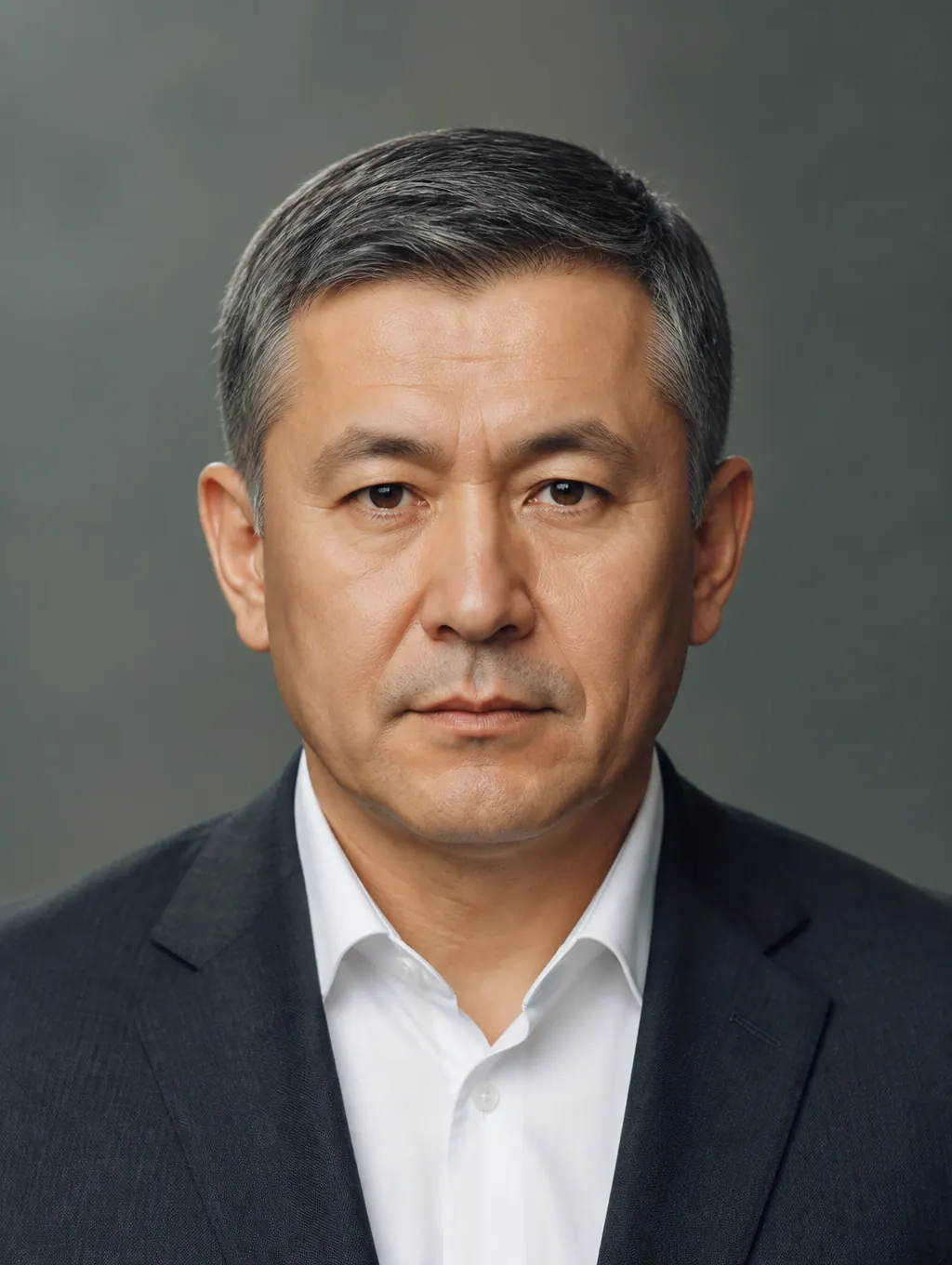
Bankruptcy and debt recovery lawyer
Handles bankruptcy and rehabilitation procedures, recovers receivables, defends directors against subsidiary liability.
Practice
Details have been changed and anonymised: the content of the case is protected by professional privilege.
Useful information
The situation is typical: several bank loans, a couple of microloans, the payments on them no longer match the salary, and the calls from collection agencies start before the month is over. The person takes out a new loan to close the old one, and a couple of months later the debt is bigger than it was. At that point it is easy to go down the wrong path: to accept the bank's first offer, to sign an additional agreement, or simply to stop answering the phone and wait for it to sort itself out.
The mistake is that loan agreements and the work of MFIs and collectors in Kazakhstan are subject to specific rules: what can be recovered, which charges can be challenged, how to reduce the burden through court or out-of-court procedures. Without going through the documents, it is impossible to understand where the bank or MFI overstepped and where the debt really is yours. Below are practical guidelines: what a financial lawyer for loans does, what ways of resolving debts exist, and what to prepare before the first conversation.
A car loan, an instalment plan for a phone, a card with a limit and three microloans — individually the amounts seem manageable, but together they eat up the entire salary. The overdue amount grows, the calls from banks and MFIs go on from morning till night, and there is simply nothing to make the next payment with. A familiar situation for many in Almaty, and it is not a dead end: a financial lawyer assesses the debt burden and offers one of three legal paths — recalculation, restructuring or bankruptcy.
The choice depends on how much you owe, what your income is and whether there is property that could be subject to enforcement. At a consultation, a financial lawyer will go through the agreements and tell you which option will actually work in your case, rather than wasting your time.
A financial lawyer and a loan consultant solve different problems. A consultant usually explains the terms of the contract, outlines what procedures exist and gives advice. A financial lawyer goes further: he checks the bank's or MFO's calculations, reconciles payments against statements and finds errors that may have inflated the debt.
In addition, a financial lawyer represents the client's interests in court and works with court enforcement officers. He prepares procedural documents, challenges unlawful charges and seeks a review of the terms. Nine years of practice in financial disputes and more than 260 cases with banks and MFOs have shaped an approach in which around 60% of matters are resolved without court. So the choice between a consultant and a lawyer is a choice between advice and real action on the case.
When a bank or MFO assigns the debt to a debt collection agency, the amount of the obligation does not grow — the assignment only changes who you pay. But it does not remove the need to check the calculation: accrued interest, penalties, commissions and insurance should be recalculated, since collectors often claim an amount that does not match the contract.
Negotiations on a deferral, instalment plan or reduction of payments are more effective when handled by a financial lawyer rather than by the debtor alone. A financial law lawyer checks the contracts, challenges disputed charges and approaches the bank, MFO or collector on your behalf, whereas personal calls usually end in demands to pay more.
A financial lawyer builds the conversation with the creditor on documents: he sees what the debt consists of, which amounts were lawfully charged and which can be removed. A bank or MFO responds to such an approach differently than to a private borrower who comes without calculations or references to the contract.
Insurance taken out when a loan is issued is often arranged together with the loan, and the client does not always understand what he is signing. If such insurance is cancelled within the period set out in the contract, in some cases the premium can be refunded. This affects the total debt: the insurance premium added to the principal reduces the loan body after recalculation.
A lawyer dealing with financial matters handles such situations: he checks how insurance and commissions are reflected in the contract and the payment schedule, whether the client had a real opportunity to refuse and where the money went. Recovering the excess does not clear the entire debt to the bank or MFO, but it reduces the amount on which interest is charged. Usually several conditions are checked.
The most common question in such a situation: if the loans are in the husband's or wife's name, will the other spouse's property be taken? For a financial lawyer the answer rests on one criterion — what the borrowed money was spent on. Joint debts of spouses are divided when property is divided, while the personal debts of one spouse remain his alone. This means the creditor may claim a share in the debtor's jointly acquired property, but not the personal belongings and accounts of the other spouse.
A loan taken before marriage or spent on one spouse's needs is considered personal: treatment, education, repayment of his earlier debts, gifts to third parties. The bank or MFO must prove the opposite — that the money went to the family. Hence the practical conclusion for Almaty: a spouse who did not sign the contract cannot simply be 'added' to someone else's debt, but hiding joint property is equally pointless. That is why a financial lawyer first works out which obligations are joint and which are not, and builds the defence against recovery from there.
Recalculation — a dispute over how the debt was calculated: remove penalties, insurance and commissions. Restructuring — a new schedule: term, payment, deferral. Bankruptcy — write off debts that cannot be paid.
The law provides for out-of-court and court bankruptcy, as well as restoration of solvency. The choice depends on income, property and readiness to go through the procedure:
| Option | What it gives | Who it suits | Main consequence |
|---|---|---|---|
| Recalculation | Removes unlawful charges and reduces the amount | The debt is inflated by penalties, insurance, commissions | A dispute with a bank or MFI, the debt amount is reduced |
| Restructuring | Changes the term and the size of the payment | There is income, but the payments are unaffordable | The debt remains, you will have to pay for longer |
| Restoration of solvency | A repayment schedule under the control of the procedure | There is property and a chance to settle up | The debt is preserved, but the payments become manageable |
| Bankruptcy | Writing off debts | Nothing to pay with, little property | Debts are written off, but there are restrictions |
The choice of option depends not on the amount of debt, but on income, property and readiness to go through the procedure.
Bankruptcy of individuals in Kazakhstan is regulated by the Law of the Republic of Kazakhstan on Rehabilitation of Solvency and Bankruptcy of Individuals of the Republic of Kazakhstan. A financial lawyer turns to this procedure when the debt burden has become unmanageable and income does not allow even partial repayment of obligations. The Law offers two paths: out-of-court and judicial.
The out-of-court procedure suits debtors without income and without property that can be subject to enforcement — when objectively there is nothing to pay with and this is confirmed. Judicial bankruptcy and rehabilitation of solvency are chosen if there is income or property: then the debt is either restructured under court supervision, or the property is sold to repay it. The difference lies in which creditors' claims can be written off and what consequences await the debtor, so a financial lawyer assesses the situation individually.
Microfinance organisations in Kazakhstan do not operate in a grey zone: they are supervised by the financial regulator, and rates on microloans are capped by law. Therefore, a contract where the remuneration clearly exceeds the established limit is the first thing a financial lawyer tackles when a client brings in a folder of loans.
Next, everything that increased the debt beyond the amount disbursed is checked. A financial lawyer can challenge imposed insurance, fees for issuing and servicing the loan, charges for services that were not actually provided, and fines and penalties accrued for a period when the creditor itself delayed its response. Assignment of the debt to a debt collector requires particular attention: if the contract did not include the right to transfer the loan to third parties, the new creditor's claim is challenged. Here is what a financial lawyer checks in a contract with an MFI:
More than half of all enquiries about loans and microloans are resolved without court — over the years of practice in financial disputes, around 60% of matters were settled through negotiations. Court is not in the bank's or MFI's interest either: it means time, costs and the risk that enforcement will drag on. That is why the creditor readily enters into dialogue if it sees that the debtor is ready to pay, but on realistic terms.
Negotiations require a package of documents: loan agreements and payment schedules, a statement of debt from the bank or MFI, account statements, proof of income, documents on life circumstances — illness, loss of job, reduced salary, caring for a relative. Verbal agreements with a call centre employee are worth nothing, so the outcome is recorded in writing:
To analyse the debt burden, a financial lawyer needs not only a description of the problem but also the documents. Gather all current loan agreements with banks and microfinance organisations, including those already partially repaid, together with the payment schedules for them. For each obligation, statements of the current debt broken down into principal, interest, penalty and commissions will be useful.
Separately, prepare the correspondence with the bank or microfinance organisation: letters, notices, demands, responses to claims. If communication took place in messengers or by email, save the screenshots and files. Such a set helps to determine precisely which amounts should be challenged and where there are grounds for negotiation.
What to gather for each loan:
| Document | What it confirms | Where to obtain it |
|---|---|---|
| Loan agreement | Terms of the loan | From the lender or from you |
| Payment schedule | Amount and timing of payments | Annex to the agreement |
| Statement of debt | The amount of the debt and its composition | Request to the bank or microfinance organisation |
| Correspondence with the lender | History of communication | Email, messengers |
The absence of some papers does not prevent the analysis from starting, but a complete picture speeds up the development of a strategy.
The most expensive mistake is silence in response to notifications from the bank, MFIs and debt collectors: the longer there is no reaction, the higher the chance that the contract has already been passed for enforcement and the amount has grown through penalties and commissions. Paying a debt collector without checking their authority is also a risk: money often goes not to the creditor, while the debt does not decrease. Taking out a new loan to close an old one is a trap that takes longer and costs more to get out of than the original one.
Agreeing to the proposed terms without doing the calculations is the second most costly mistake: a restructuring offered verbally by the bank may turn out to be unprofitable once all payments are recalculated. Before negotiations, a financial lawyer calculates what can realistically be reduced and what to insist on. Before visiting a financial lawyer, you should not sign settlement agreements, supplementary agreements or payment schedules. Bring your loan contracts and schedules for all loans — this is the basis for the review.
Bankruptcy of an individual in Kazakhstan follows one of two procedures — out-of-court or judicial; the judicial one includes a review of transactions, possible sale of property and a subsequent restriction on obtaining new loans. A financial lawyer is needed not to "write everything off", but to assess whether the procedure suits your situation and what risks it creates.
At different stages, a lawyer on financial matters handles specific tasks: prepares the justification of insolvency, collects documents on transactions for the recent period, deals with objections from banks and MFIs, supports the sale of property and interacts with the court enforcement officer. The key questions a bankruptcy lawyer works through before starting:
Until you have gone through your loan contract and payment schedule, any decision — restructuring, recalculation or bankruptcy — you are taking blind. Start with the documents, not the negotiations.
Reviews
I came to them when the bank started demanding 4.3 million on a loan. At first I thought everything was fair, but the amount seemed somehow inflated. The lawyer sat down with me, laid out all the payments, and it turned out that part of the penalty had been charged twice. I would never have noticed this myself. After the recalculation, 3.1 million remained. I would have just paid the difference of 1.2 million without looking. Very grateful for the attentiveness and patience. They explained everything in simple words, without complicated terms.
Service: Financial lawyer in Almaty
Thank you for the review, Askar! Glad we could sort out the charges and reduce the amount. Always in touch if you have any questions about payments.
We went through bankruptcy, it took almost a year. They warned us in advance about the restrictions and that the car would have to be given up. Everything turned out as they said, no surprises.
Service: Financial lawyer in Almaty
Collectors were calling my mother at work, it was very embarrassing and stressful. Gulnara helped sort everything out, the calls stopped within a week. The debt remained, but at least we talk like normal people.
Service: Financial lawyer in Almaty
I didn't even know that insurance was included in the loan, I only found out from the lawyers. They returned 340 thousand that I would have just overpaid. Thank you very much for opening my eyes
Service: Financial lawyer in Almaty
Thank you, Aigerim! Glad we could help return the insurance. Get in touch if you need help with the bank.
I came to them when the loan debt became completely unmanageable, I was already thinking about bankruptcy. Aigerim looked at the documents and said that in my situation restructuring was more beneficial. They made a new schedule, now I pay calmly. They would have earned more from me if they had stayed silent. Thanks for the honesty.
Service: Financial lawyer in Almaty
There were three microloans, the interest grew fourfold. Not knowing where to turn, I came for advice. Viktor explained everything and took it all the way to court. The court removed some of the calculations, but not everything went the way we wanted. Still, it was significantly reduced. Thank you, good luck with your work
Service: Financial lawyer in Almaty
I had a loan with a bank, and I didn't understand why the debt was barely decreasing, even though I paid regularly. I sought help, and the lawyers recalculated all the payments. It turned out that the bank was deducting money towards the penalty first, not the principal debt. They explained to me that this shouldn't be the case. After the recalculation, the total amount decreased by almost a third. Honestly, I was shocked at how noticeable it was. Thank you for sorting it out and helping. Now I pay with peace of mind.
Service: Financial lawyer in Almaty
I lent a large sum to a friend, just by a card transfer, and she stopped responding. Sanzhar helped prove through WhatsApp messages that it was indeed a loan. The money was returned by a court decision.
Service: Financial lawyer in Almaty
I got in touch because the bank was charging some unclear amounts, and I couldn't get an explanation. The lawyers quickly calculated everything and explained where those figures came from. Of course, the bank never told me that. It turned out that some of the payments were going somewhere other than I thought. They laid everything out for me, without unnecessary words. It became much clearer what to do next. Thank you for the promptness and accessible explanations. At least now I know what I'm dealing with.
Service: Financial lawyer in Almaty
When I was taking out the loan, they illegally added mandatory insurance, and I didn't know about it. Olga explained everything to me and helped. We got the insurance money back. Thank you
Service: Financial lawyer in Almaty
Collectors were calling my relatives and work, it was very unpleasant. Gulnara recorded all the calls and filed a complaint. The calls stopped within a week
Service: Financial lawyer in Almaty
Thank you for the review, Bakhyt! Glad we could help stop the calls. If the situation happens again, let us know right away.
We agreed with the bank on a new payment schedule. The lawyer prepared a calculation and showed how much I could actually pay. With that calculation, the conversation went completely differently.
Service: Financial lawyer in Almaty
Thank you. Everything to the point and without unnecessary promises. You helped a lot
Service: Financial lawyer in Almaty
Thank you, Aigerim! Glad we could help. Get in touch if you need anything.
I invested money in a friend's project against a receipt, and he disappeared, and I thought it was all lost. I approached the lawyers, and they recovered it through court plus interest for the use of the money. Enforcement is slow, but I have the writ in hand.
Service: Financial lawyer in Almaty
Thank you for the review, Maxim! Glad we managed to recover the debt. If you have any questions about enforcement, get in touch.
Before signing the contract with the bank, I decided to have lawyers check it, Madina found a clause about early demand of the entire sum upon a single missed payment. I would never have noticed it. Thanks for opening my eyes. Now I sign calmly
Service: Financial lawyer in Almaty
I had a loan debt and didn't know how to deal with it. We communicated via WhatsApp, I didn't have to go anywhere. Fine.
Service: Financial lawyer in Almaty
The debt under the receipt was old, I thought the limitation period had passed. It turned out there had been partial repayments and the period counts anew. They recovered it
Service: Financial lawyer in Almaty
I had several microloans, and the debt grew several times over because of the charges. I didn't know what to do anymore, I thought I'd never get out. I approached the lawyers, and they dealt with each MFO. It turned out the interest was such that the court reduced it. They explained to me that it could be challenged. It was scary, but they did everything. The court did reduce the amount. I'm very grateful that they helped. At least now it's easier to breathe
Service: Financial lawyer in Almaty
Thank you for the review, Anuar! Glad we could help reduce your debt burden. If you need support, we're here.
They helped draw up a loan agreement with a friend properly, so there wouldn't be problems later. Better in advance than going to court afterwards. The only thing — I had to wait a couple of days for an answer, but the result was worth it.
Service: Financial lawyer in Almaty
I transferred money to the wrong recipient by mistake, the bank shrugged and didn't want to help. I approached the lawyers, I had to bring in documents, but through a claim and court the money was returned
Service: Financial lawyer in Almaty
Blog

What to look at in the statement and which charges are most often removed.
Read the analysis
The conditions of the procedure and the consequences people are rarely warned about.
Read the analysis
When the premium can be returned and what evidence is needed.
Read the analysis
Restrictions on calls and conversations with relatives.
Read the analysis
The term, the scope of liability and the consequences of a change in the debt.
Read the analysis
Protected income and the procedure for returning what was withheld.
Read the analysisFAQ
Partly yes: penalties, commissions and imposed services are recalculated, and a disproportionate penalty is reduced by the court. The principal debt and contractual interest remain.
It depends on whether there is income from which you can pay. If there is — restructuring is cheaper and without consequences. If there is nothing to pay with in principle — bankruptcy.
Restrictions on obtaining credit and on holding certain positions, sale of part of the property, involvement of an administrator. The sole dwelling, as a rule, is preserved.
No. Communication is permitted with the debtor, and pressure on relatives and the employer is a violation that should be documented.
Do not ignore it. In court you can challenge part of the charges and obtain an instalment plan for enforcement. Failure to appear means a decision based on the bank's calculation without objections.
Often yes, especially if the service was imposed at the time of arrangement and included in the loan principal. Time limits are restricted, so it is not worth delaying.
Interest on short-term loans is challenged when its amount is many times greater than the principal. Full write-off is possible through the bankruptcy procedure.
The out-of-court procedure — several months, the court procedure — usually from six months to a year, depending on the property and the position of the creditors.
The consultation is free. Recalculation of the debt, a demand letter and handling the case are charged separately — indicative figures are in the price list. The amount is fixed in the contract before work begins.
Yes. Send the contract and the statement to WhatsApp — that is enough to state the real amount of the debt and the way to resolve it.
Credits, loans, pledges, insurance payments — civil territory, handled by a financial lawyer. A financial defence lawyer is needed only if a criminal element appears.
Contacts and maps
2GIS opens in a separate tab — the service does not allow embedding an organisation card.
Open in 2GISZoon opens in a separate tab: client reviews and ratings are there.
Open on ZoonThe first consultation is free. If the matter can be resolved without court, we will say so directly.