Real estate
Secure settlement of a transaction: how not to lose money and the right to the property
Secure settlement of a transaction is a way of transferring money so that the seller receives it only after fulfilling their obligations. We look at which options work in Kazakhstan, which mistakes in the contract cost the buyer the most, and what to do if the seller does not return the money.
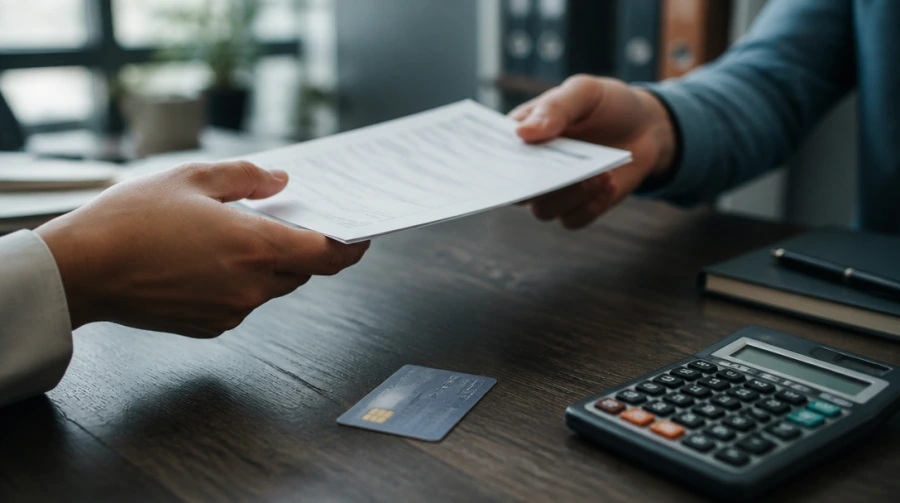
You have found an apartment or a car, agreed on the price, but before signing the contract a question arises: how do you hand over the money without losing it if the seller disappears or the documents turn out not to be in order? In Kazakhstan, large transactions increasingly go through a bank, but even bank instruments do not save you if the conditions for release are set out incorrectly in the contract.
The buyer faces a double risk: losing money when handing over cash, and losing the right to the property if the settlement is arranged so that the seller receives the funds before the transfer of title is registered. Below is a breakdown of the working methods, the requirements for the contract and what to do in a dispute.
Secure settlement of a transaction: how to protect your money and not lose the right to the property
A transaction becomes vulnerable from the moment you hand over the money while title to the property has not yet been registered. That is exactly when the buyer risks being left both without the property they paid for and without a refund: the seller may change their mind, sell the property to a third party, or sell it twice on the same day. Also dangerous for the buyer is the situation where they have already paid, but the seller evades registration of the transfer of title. Handing over money under a transaction creates risks for the seller too: the buyer may not have the full amount, or may refuse to pay after receiving the property.
How to secure payments depends on the type of property and on who is conducting the transaction. The basic principle is the same: the money and the item must change hands at the same time, through an independent intermediary — a bank, a notary or a deposit. Then neither party will find itself in a position where it has already performed its obligation and the other has not.
- The buyer pays before the right is registered, and the seller disappears or sells the item to someone else.
- Double sale: one object is sold to two buyers on the same day.
- The seller refuses to register after receiving the money.
- The buyer takes the item but does not transfer the full amount.
What rights a buyer has with secure payment arrangements in a transaction and how to protect them
A buyer who has transferred money under a contract that records the fact of payment is already protected: the buyer's rights in payment arrangements include a claim for delivery of the item or a refund of what was paid. The basis is the contract, a receipt, a payment document, correspondence about deadlines.
Protection of the buyer in a transaction rests on written evidence. If the seller does not deliver the goods or evades delivery, a refund under the transaction is possible through a pre-action claim, then a court claim; where interim measures are available, through their application.
If the seller has already delivered the item but you have discovered a latent defect, the law gives you a choice: to demand a proportionate reduction in price, free rectification of the defects, or termination of the contract with a refund.
Where delivery of paid-for goods is delayed, the buyer is entitled to demand delivery or to withdraw from the contract and recover the amount. A written pre-action claim with notice records the seller's refusal — this is evidence for the court.
- a written contract with a term on the payment procedure
- a receipt or payment document stating the purpose
- an acceptance and transfer certificate for the item
- saved correspondence about deadlines and amounts
Methods of secure payment in a transaction: letter of credit, escrow, safe deposit box and cash
In Kazakhstan, money in a transaction for an apartment or other property is transferred in one of four ways. The most protected is a letter of credit in a transaction: the bank debits the amount from the buyer's account and transfers it to the seller only after the seller presents documents confirming the transfer of title. An escrow account for payments is close to it: the money is held in a separate account, and the seller receives it after registration of the transaction.
A safe deposit box for payments is simpler but riskier: the seller collects the cash after registration, but the bank does not check the documents, and the dispute over what counts as performance falls on the parties. Cash payments in a transaction outside a bank are the worst option: there is almost nothing to confirm the transfer, and if the transaction falls through, recovering the money through court is extremely difficult. Here is how the methods differ on the key parameters:
- Letter of credit — the bank pays against documents.
- Escrow — the money is blocked until the right is registered.
- Safe deposit box — access on agreed terms.
- Cash — without a bank and with almost no evidence.
| Method | Who controls | Advantage | Downside |
|---|---|---|---|
| Letter of credit | Bank against documents | Strong protection for both parties | Requires precise wording in the contract |
| Escrow | Bank before registration | Money is isolated from the seller | Takes longer and is more complicated to arrange |
| Safe deposit box | Parties on agreed terms | Simple and familiar | The bank does not verify performance |
| Cash | No one | Quick | Weak evidence of transfer |
The method is chosen before signing the contract and the payment procedure is fixed in it.
Safe payments in a real estate transaction in Almaty: what to look for in the contract
Before signing the contract, make sure it sets out the terms for safe payments when buying a flat. Specify the exact method (letter of credit, escrow, bank safe deposit box), the timelines and the procedure for accessing the money. If the seller pushes for cash to be handed over before the transfer of title is registered, that is a reason to be wary. All payments under a real estate sale and purchase contract must be tied to the state registration of the transfer of ownership: in Kazakhstan it is the right to the real estate that is registered, not the contract itself.
Checking for encumbrances before the transaction will protect you from losing money. Order a certificate of registered rights (encumbrances) on the immovable property — it is issued through eGov.kz or the State Corporation "Government for Citizens" — and make sure the property is not pledged, under arrest or in dispute. If an encumbrance is identified, do not hand over the money until it is removed. State in the contract that the seller guarantees there are no such restrictions, and set out liability for concealing them.
- The payment method and the timelines for accessing the money.
- Tying payment to the registration of the transfer of title.
- The seller's guarantees that there are no encumbrances.
- Liability for concealing restrictions.
What documents are needed for safe payments in a transaction
When handing over money in a transaction, it is important to understand in advance which documents for safe payments will confirm both the payment and the transfer of title. Usually these are the sale and purchase agreement, a receipt confirming the seller has received the money, and an acceptance and transfer certificate for the transaction. Sign them at the same time as the payment, not "later", otherwise it is difficult to prove that the money was handed over and the item received.
Keep the originals of the documents indefinitely: court enforcement officers and banks do not accept copies in a dispute, and a notarised copy does not replace the original. If the seller asks you to hand over the money without a receipt or to sign the certificate with a backdate, that is a reason to stop the transaction and sort things out before transferring the money.
- an agreement with a clear subject matter, price and payment procedure
- a receipt confirming receipt of money with identity document details and the date
- an acceptance and transfer certificate for the transaction describing the item
- a document confirming the seller's title to the item
- bank payment documents for non-cash payments
| Document | What it confirms | Who keeps the original | Risk if absent |
|---|---|---|---|
| Agreement | The terms of the transaction and the price | Both parties | A dispute over the amount and the subject matter |
| Receipt | The fact that the money was handed over | Buyer | Failure to return the money is difficult to prove |
| Acceptance and transfer certificate | The handover of the item and its condition | Both parties | A dispute over quality and completeness |
| Payment order | Cashless payment | Payer | It is unclear what the money was sent for and to whom |
Keep the originals separate from copies and do not hand them over to the other party.
Typical mistakes in secure settlement of a transaction and how to avoid them
In Almaty, in transactions with flats and cars, money is most often lost because of haste: the seller asks for a deposit before the documents are checked, the buyer hands over cash without a receipt, and settlement through a bank safe deposit box is arranged without access conditions. As a result, the injured party is left without money and without the right to the item, and there is often nothing to prove the transfer of the sum. To avoid losing money in a transaction, record every transfer in writing and do not hand over the full amount before the transfer of title is registered.
Fraud in transactions is often disguised as ordinary negotiations: forged powers of attorney, a sale using someone else's identity card, resale of the same object. If the seller rushes you, refuses to show the originals, suggests rewriting the contract 'later' or taking the money out of the safe deposit box against a simple receipt — that is a reason to stop. Mistakes in settlement of a transaction are most costly when there is no bank control and no receipt with the exact amount and date.
- Do not hand over a deposit without a written agreement and a receipt.
- Do not sign the acceptance certificate before the keys and the item are actually handed over.
- Check the original documents and the identity of the seller.
- Use a letter of credit or escrow with clear conditions for release.
Secure settlement of a transaction: what to do in case of a dispute or non-return of money
If the counterparty has stopped responding or the money has gone but the item was never handed over, the first step is to record the settlement dispute in the transaction in writing. Draw up a claim for the return of money: state the essence of the contract, when and how much you transferred, what exactly was not performed, and set a specific deadline for a reply. Send it in a way that confirms receipt — by registered letter with acknowledgement of receipt or by courier with a mark on your copy, keeping the inventory and the receipt.
If there is no reply or it does not satisfy you, the next stage is the return of money through court: a claim with the contract, payment documents, correspondence and a copy of the claim letter attached. When the decision enters into legal force, the court issues a writ of execution.
After receiving the writ of execution, the work passes to a private or state court enforcement officer. He traces the debtor's accounts, property and income, imposes arrest and debits the funds; from you, an application, the details and the information about the counterparty that you have are required.
Collect the documents confirming the transfer of money and the non-performance of the obligation.
Check whether the limitation period for your claim has expired.
Apply for interim measures so that the property cannot be re-registered in time.
Pass on to the enforcement officer the information you know about the debtor and his assets.
The main principle of secure settlement: money is handed over only against a document confirming the transfer of title or performance of the obligation. If the seller insists on cash and refuses to record this in the contract, the transaction is unsafe, however reliable he may seem.