Debts under contracts and loans
Supply, construction, services, lease, loans with and without a receipt — from a pre-action demand to a writ of execution.

We recover debts under contracts and loans, including without a receipt
We recover damage in excess of the insurance payout
We protect honour, dignity and business reputation
We have transactions declared invalid and return the property
We set aside default judgments that the client learned about too late

Show me the contract, the correspondence and whatever came from the court — I will tell you what evidence you have, what is missing and whether it can be obtained by a request.
Message us on WhatsAppSupply, construction, services, lease, loans with and without a receipt — from a pre-action demand to a writ of execution.
Road traffic accidents beyond the insurance payout, flooding, damage to property, harm to health and moral harm.
Transactions made under mistake or deception, sham and disguised contracts, return of property transferred.
Refutation of defamatory statements on social media and in the press, removal of publications, compensation for moral harm.
Goods with defects, poor-quality services, hidden defects in a car, penalty and fine payable by the seller.
Recognition of a right by acquisitive prescription, recovery of property from another's possession, disputes between co-owners.
Objections to the claim, counterclaims, expiry of the limitation period, setting aside a default judgment and review of a decision.
Challenging decisions in civil cases, including where the first instance was handled by another representative.
The first consultation is free. We will look at the documents, check the limitation period and tell you what evidence is missing and whether it can be obtained through a lawyer's request — or honestly talk you out of a dispute that will cost more than you stand to win.
Cost
Guidelines for typical civil cases. The final amount is affected by the size of the claims, the number of hearings and expert examinations and the activity of the other side — we quote it after reviewing the documents.
| Service | What is included | Cost |
|---|---|---|
| Consultation on a civil case | Review of documents and prospects of the dispute | free of charge |
| Written opinion of a lawyer | Legal position with legal norms and risk assessment | from 40,000 ₸ |
| Pre-trial claim | Calculation of claims and sending to the other side | from 25,000 ₸ |
| Statement of claim or response to a claim | Document with calculation and attachments | from 30,000 ₸ |
| Lawyer's requests and collection of evidence | Requests to banks, organisations and state bodies | from 40,000 ₸ |
| Conduct of a civil case at first instance | Position, evidence, all hearings | from 200,000 ₸ |
| Setting aside a default judgment | Application, objections on the merits, hearing | from 100,000 ₸ |
| Defence of honour and business reputation | Claim, recording of publications, claim for compensation | from 200,000 ₸ |
| Appeal in a civil case | Appeal or response and participation in the hearing | from 150,000 ₸ |
This is not a public offer. State duty, forensic examinations, notarial certification of correspondence and valuation of property are paid separately.
Contract, correspondence, payments, claim or judgment — we look at what each party's position rests on.
We calculate the limitation period and procedural time limits: they determine whether it is worth starting at all.
We determine what is already proven and what needs to be obtained by request, expert examination or through the court.
We set out the stages, the price and the cost of any expert examinations that may be required.
If the law or the contract requires a pre-action procedure, we send a pre-action claim — sometimes that is where the dispute ends.
We file the claim, and if there is a risk of assets being moved, we file a request for their seizure at the same time.
We present evidence, examine witnesses, file requests and objections.
We obtain the writ of execution, appeal the judgment where necessary and support the enforcement.
The deadline to set aside a default judgment is short — write to us today and we will tell you what we can still do.
Team
Defence in a criminal case, a court dispute and the documents for it — all within one team: the case is not passed between firms, it is handled by an advocate of the relevant profile.

Advocate for criminal cases
Defence from the moment of detention: participation in interrogations, appealing the preventive measure, work with expert examinations and the procedural agreement.

Advocate for family cases
Dissolution of marriage, determination of the child's place of residence and contact arrangements, alimony, division of the spouses' common property.
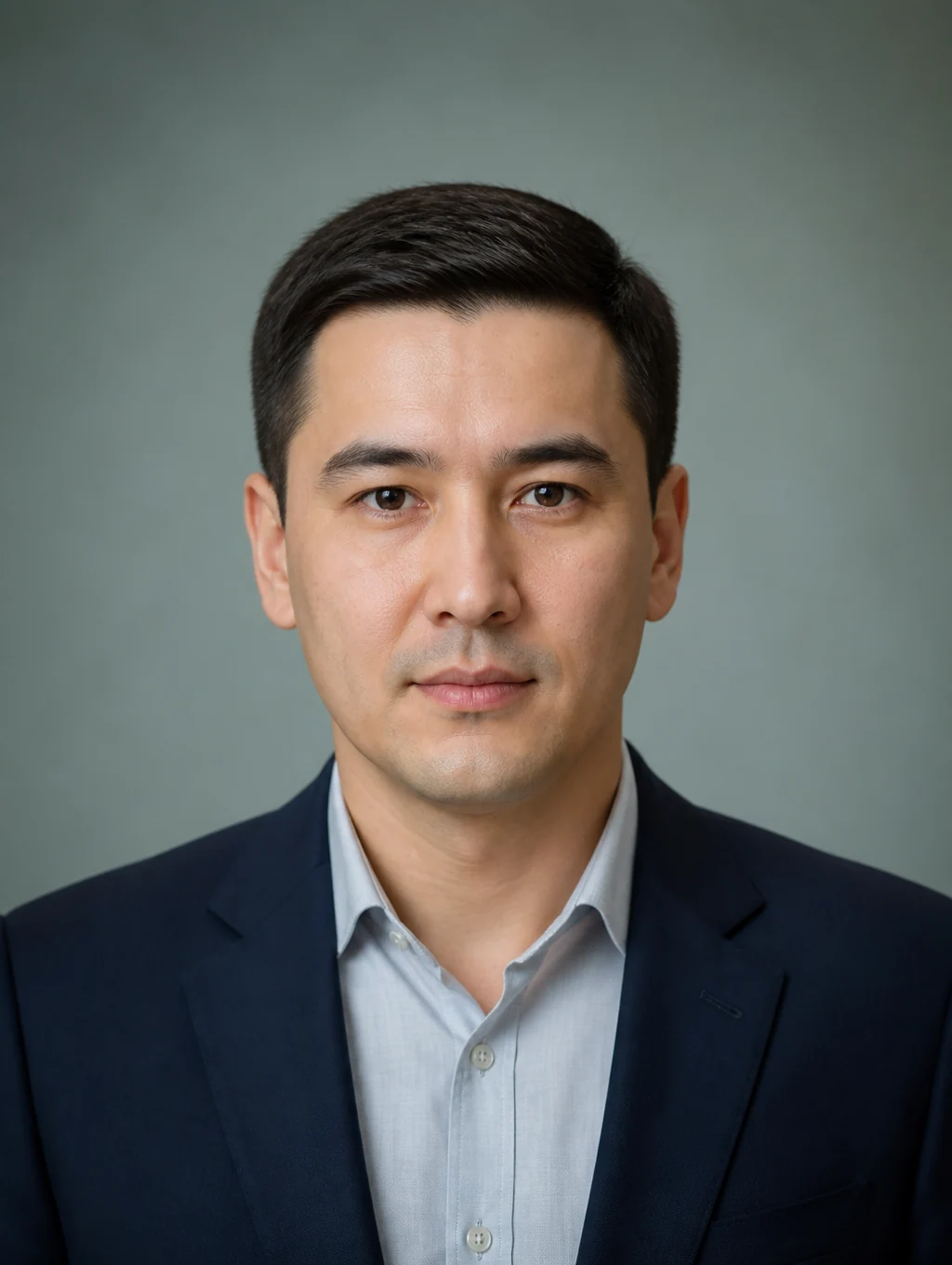
Advocate for civil cases
Representation in court in contractual, housing, land and inheritance disputes, appeal and cassation.

Advocate for economic and administrative cases
Defence of businesses and executives: tax and customs cases, searches and seizures, disputes with state bodies under the Administrative Procedural Code.
Lawyer for civil cases
Prepares statements of claim, pre-action claims and calculations for the court case, gathers evidence and handles correspondence with government bodies.

Lawyer for family and social matters
Maintenance and property division agreements, consents for a child to travel abroad, documents for guardianship authorities and for court.
Practice
Details have been changed and anonymised: the content of the case is protected by professional privilege.
Useful information
Most often people come with a question about a lawyer in three situations: a person is about to file a claim and does not understand how to properly draft the claims and evidence; has received a statement of claim and does not know what to answer and within what time limits; has learned that the court issued a default judgment without his participation, or lost at first instance and wants to appeal. In each of these situations the scope of work is different, and it determines whether a representative is needed at all.
From the article you will learn what civil cases a lawyer handles, how his procedural rights differ from those of a legal consultant, what a lawyer's request is for, when a pre-trial claim is mandatory and when it is useless, how the defence of a defendant is built, what to do about a default judgment and how an appeal proceeds. We will separately look at free legal aid and at how the cost of services is formed.
A civil case at first instance does not require the mandatory participation of a representative: the parties may conduct the proceedings in person, file documents through the court's registry or the "Judicial Cabinet" service. A simple dispute — recovery of a debt under a receipt, termination of a contract without property claims — a person handles himself: drafts the claim, collects the attachments, takes part in the hearings. But when it comes to assessing evidence, a counterclaim, an expert examination or an appeal, self-representation is risky: an error in the subject of proof or a missed procedural step leads to dismissal of the claim, which is far harder for higher instances to correct.
A civil lawyer in Almaty joins at any stage: before filing a claim, during the proceedings or on review. His task is to build the position: to identify the significant circumstances, the admissible evidence and the way to secure it, and to formulate the claims so that the court can grant them. The representative checks compliance with jurisdiction, time limits for filing and the pre-trial settlement procedure — violations here often become grounds for returning the statement of claim.
A civil dispute arises from a contract, infliction of harm, property relations or employment. A civil lawyer works with the conflict before trial and during the proceedings, where the procedure is governed by the Civil Procedure Code of the Republic of Kazakhstan. His task is to collect evidence, determine jurisdiction and build the position in the case.
Contractual disputes concern non-performance of obligations, amendment and termination of transactions, recovery of debt and penalties. A civil lawyer reviews the terms of the contract, the correspondence between the parties and the primary documents, and prepares the claim and the statement of claim. Debt cases require an assessment of the prospects of recovery and a review of the debtor's objections.
Cases on compensation for harm, property disputes and consumer protection require different evidence: expert opinions, extracts from the Legal Cadastre, receipts and reports. The services of a civil lawyer include collecting such materials and working with expert examination. Labour disputes concern dismissals, recovery of payments and reinstatement at work.
The outcome of a civil dispute is determined by the evidence gathered before the proceedings and how it ties to the subject of proof. Work begins with an inventory of documents: what confirms the right, what confirms its violation, and what merely reflects a party's position. The court assesses evidence according to its inner conviction, so what matters is not volume but coherence and admissibility.
In contractual disputes, the contract with annexes, correspondence, acts and payment documents, and evidence of performance or non-performance of the obligation carry the weight. Mistakes include correspondence without confirmation of authorship and relevance to a term of the transaction; claims based on several grounds at once, which blur the subject of proof.
In consumer protection disputes, the key items are the contract, the receipt or other proof of payment, the claim and the response, and a specialist's report on the defect. A common mistake is a claim without a description of the demand and without proof that it was sent. In tort cases, the fact of harm, wrongfulness, causation and the amount of losses must be proved; most often what suffers is the recording of losses at the time of the violation.
| Category | Key evidence | Typical mistake |
|---|---|---|
| Contractual | Contract, acts, correspondence, payments | Correspondence without confirmation of authorship |
| Consumer | Receipt, claim, specialist's report | Claim without a description of the demand |
| Tort | Recording of harm and losses | Losses not supported by documents |
| Reputational | Publication, screenshots, expert examination | The inaccuracy of the information has not been proven |
| Housing | Title documents, technical passport | A dispute over facts without written evidence |
The list is not exhaustive; the body of evidence is determined by the subject matter of the dispute.
Not only an advocate may represent interests in civil proceedings. The Civil Procedure Code of the Republic of Kazakhstan names as representatives advocates, legal consultants, employees of an organisation in matters of that organisation, and other persons admitted by the court. But paid representation on a professional basis outside the bar requires the status of a legal consultant and membership in the chamber of legal consultants — this is required by the Law of 5 July 2018. The court checks the documents confirming the identity and status of the representative and removes anyone not entitled to participate in the case.
Powers are divided into general and special. General powers are confirmed by a power of attorney and give the right to review the case file, file motions, present evidence, and take part in pleadings. Special powers — signing a claim, waiving claims, admitting a claim, changing the subject matter or grounds, concluding a settlement agreement, appealing a decision, receiving the awarded sum — must be expressly named in the power of attorney, otherwise the court will not accept such actions.
In civil proceedings an advocate is not limited to representing the client in court. The law grants him the right to send an advocate's request to state bodies, organisations and officials who hold information on the circumstances of the case. The request makes it possible to obtain written documents and explanations before the court hearing, without waiting for a court order to produce evidence. Information constituting a secret protected by law — banking, medical, communications secrecy — is not disclosed in response to an advocate's request: it is obtained by the court.
The organisation is obliged to respond in the established manner; a refusal or an incomplete response may be appealed or brought to the court's attention. If the information is not provided voluntarily, the advocate files a motion to obtain evidence: the court issues a ruling and addresses it to the body or organisation. Failure to comply with a court requirement entails liability provided for by law.
An important practical rule: if a law or a contract provides for a pre-trial settlement procedure, the court will return a claim filed without it. Therefore, evidence is gathered through an advocate's request in parallel with preparing the pre-action letter, so that the mandatory procedure is complied with by the time the claim is filed.
Gathering evidence by an advocate in a civil case usually includes the following steps:
The outcome of a civil case is more often decided by evidence and procedural steps taken on time than by eloquence at the hearing. It is therefore sensible to bring in a representative before the body of evidence is formed, not on the eve of the pleadings.
A pre-trial claim is a written demand by a creditor to a debtor to perform an obligation voluntarily, before going to court. Under the Civil Procedure Code of the Republic of Kazakhstan, the court leaves a claim without consideration if the claimant has not complied with the mandatory pre-trial procedure established by law or by contract. It is mandatory where the law expressly says so for certain categories of disputes, or where the parties have included such a condition in the contract. Compliance is confirmed by evidence of sending: a postal receipt, an inventory of the contents, a delivery note or the addressee's acknowledgement of receipt.
If the procedure is not complied with, the court does not consider the claim on the merits but returns it or leaves it without consideration. The claimant may remedy the breach and apply again, but loses time and, for certain claims, risks missing the limitation period. The general limitation period in Kazakhstan is three years, and the court applies it only on a party's application. Sending a claim does not suspend the running of the period.
A claim for securing an action is made at the same time as the claim, not after judgment: while the dispute is ongoing, the defendant may sell property, move money out or transfer assets to third parties, and a won case will be left without enforcement. The application is filed in writing together with the claim or later: securing is permitted at any stage of the case until the judgment is enforced.
The law allows the seizure of property or money, a prohibition on the defendant performing certain acts, a prohibition on third parties transferring property to him or performing obligations in his favour, suspension of the sale of property in a dispute over releasing it from seizure, and suspension of enforcement under an enforcement document challenged by the debtor in court. The court determines the set of measures by the nature of the claim and proportionality to it.
The applicant substantiates the risk: confirms that the defendant will make enforcement of the judgment difficult. Evidence is needed — information about the sale of property, attempts to withdraw money, data on assets being registered in relatives' names — not references to bad faith.
Once a claim has been filed and a copy of the statement of claim received, it is important for the defendant not simply to deny the demands but to build a position that can be verified against the case materials. A lawyer in civil cases analyses the claim and its attachments, identifies the relevant circumstances and prepares a response with objections to each of the claimant's arguments.
The response is filed in writing with evidence and served on the other participants. If the defendant has an independent claim against the claimant connected with the original claim, a counterclaim is filed: the dispute is heard in a single set of proceedings. The limitation period is checked — if it has expired, on the defendant's application this is grounds for dismissing the claim, unless the claimant proves suspension or interruption.
The claimant's evidence is checked for admissibility, whether it confirms the alleged circumstances and whether it contradicts the parties' explanations. The defendant may assert that evidence is forged, apply for an expert examination, call witnesses or request documents. If the case was heard without his participation and a default judgment was issued, an application to set it aside is filed with the court that issued it.
Practical defence of a defendant includes:
If the defendant, having been notified of the time and place of the hearing, fails to appear and does not inform the court of valid reasons for non-appearance, the case may be considered in default proceedings. The judgment enters into force under the general rules, but the defendant has a separate remedy — an application to set aside the default judgment. It is filed with the same court, stating the circumstances that prevented participation in the hearing and the evidence confirming them.
The application must show two things: why the non-appearance was caused by valid reasons of which the court was unaware, and which arguments on the merits of the dispute were not examined as a result. The court verifies both conditions together. If at least one is not confirmed, there may be no grounds for setting the judgment aside.
Once the default judgment is set aside, the case returns to consideration on the merits — with the party's participation and examination of its objections. If the application is refused or the deadline for filing it has been missed, the remaining option is to appeal to higher instances: a first-instance judgment is appealed by way of appeal proceedings, after which cassation is possible.
A civil litigation specialist can step in at any of these stages: helping to establish the reasons for non-appearance, gather supporting documents, build a position on the merits and prepare the appeal. Below is what is checked first.
The appellate court reviews the first-instance judgment on a party's appeal or a prosecutor's request. It examines arguments that substantive and procedural law were applied incorrectly. Work begins with a study of the minutes, the audio recording of the hearing and the full text of the judgment: it is necessary to identify where the court assessed the evidence incorrectly or failed to apply a norm the party relied on.
The appeal or the response is drawn up in writing and filed through the court that issued the judgment. The appeal states which circumstances and evidence were assessed incorrectly; the response states why the other party's arguments are unfounded. Conducting the case includes preparing documents, filing them in the prescribed manner and monitoring deadlines so that the appeal is not left without progress.
New evidence is admitted on a limited basis: the party must justify why it could not have been presented at first instance. The lawyer assesses which materials will strengthen the position and which the panel will disregard. At the hearing, the arguments of the appeal or the objections are supported orally and requests are made. The court either leaves the judgment unchanged or sets it aside or amends it.
A civil case passes through several instances, each reviewing its own scope of judgments and actions. The first instance is the main one: evidence is examined, circumstances are established, and a judgment or other final act is issued. Civil cases here are considered by district and equivalent courts, while disputes between entrepreneurs are considered by the Specialized Interdistrict Economic Court. Civil cases here are considered by district and equivalent courts, while disputes between entrepreneurs are considered by the Specialized Interdistrict Economic Court. Civil cases here are considered by district and equivalent courts, while disputes between entrepreneurs are considered by the Specialized Interdistrict Economic Court. Here the party states its claims, submits documents, requests and objections, so preparing the position at this stage determines the prospects going forward.
The appellate instance — a regional and equivalent court — reviews the lawfulness and validity of a judgment that has not entered into force, on the arguments of the appeal and the objections, is entitled to examine new evidence if the party has justified why it could not be presented earlier, and may leave the judgment unchanged, amend it, or set it aside and issue a new one. The cassation instance for civil cases is the Supreme Court of the Republic of Kazakhstan: it reviews acts that have entered into force for significant violations of substantive and procedural law, rather than re-assessing evidence.
Understanding the differences between instances allows you to build a defence without unnecessary steps: in some cases it is enough to object to the opponent's arguments, in others consistent appeals are required. In each case, a lawyer from our practice handles the matter, so the client deals with a single specialist and does not pass the materials to third parties.
| Instance | What it reviews | Outcome |
|---|---|---|
| First instance | The circumstances of the case and the evidence | A judgment on the merits of the dispute |
| Appeal | The lawfulness and validity of a judgment that has not entered into force, on the grounds set out in the appeal | Upholding, varying or setting aside the judgment |
| Cassation | Acts that have entered into force, for substantial violations of law | Setting aside or varying the act, remitting for a new hearing |
| Representative | Consistency of procedural steps | A single position at all stages |
The scope of review and the court's powers depend on the instance; evidence and arguments are presented with its tasks in mind.
A cassation appeal in a civil case is filed with the Supreme Court of the Republic of Kazakhstan after the case has gone through appeal. The procedure for filing, the list of attachments and the content requirements are set by the Civil Procedure Code of the Republic of Kazakhstan. It may be filed by a party to the dispute and other persons whose rights are affected by the judgment. The lawyer checks whether the time limit for appealing has been missed and whether there are grounds for restoring it.
Cassation reviews only the lawfulness of judicial acts: the correct application of substantive and procedural law. It does not re-examine evidence, does not re-assess witness testimony and does not establish new facts — those are the tasks of the first-instance and appellate courts. Representation at this stage is built on analysing the decisions already made and identifying violations that affected the outcome of the case.
State-guaranteed legal assistance in civil proceedings in Kazakhstan is not available to everyone: the law links the right to it both to the category of the case and to the procedural status of the person and their social position. In such cases, the lawyer's work is paid for by the budget, not by the client. In Almaty, such assistance is organised through the city's bar association and the territorial justice authority. The grounds and procedure for a representative's participation are determined by the Civil Procedure Code of the Republic of Kazakhstan and the Law "On Advocacy and Legal Assistance".
In a civil case, the court appoints a lawyer when the defendant has no representative and their place of residence is unknown, as well as in other cases expressly provided for by law. Separately, the law guarantees a lawyer's assistance in cases of special proceedings that affect a person's personal rights — for example, on compulsory hospitalisation in an organisation providing psychiatric care. The work of an appointed lawyer is paid for from the budget, not by the client.
A consultation with a lawyer on civil cases begins with a review of the client's documents. For disputes arising from contracts, these are the contract with its annexes and supplementary agreements, correspondence, acts, payment documents and claims. For non-contractual claims — proof of the right (a title document, a certificate of registered rights from the Legal Cadastre, a technical passport), documents on the infliction of harm, specialist reports and correspondence. If the case is already in court — the statement of claim and the response, the rulings on acceptance and preparation, the hearing minutes and previously issued judicial acts. Any written evidence and information about witnesses are useful.
Civil cases are heard under the Civil Procedure Code of the Republic of Kazakhstan, so even at the consultation stage it is clear how to frame the claim and which circumstances must be proved. The lawyer assesses the prospects: whether there is a basis for the claim, whether the limitation period has expired, whether the dispute falls within the court's jurisdiction, and whether there are obstacles such as an arbitration clause or a mandatory pre-trial procedure. It is also checked whether it would be more advantageous to file a counterclaim or to amend the subject of the claim. As a result of the review, the client understands what to rely on in the proceedings and which arguments the court is likely to reject.
The cost of a lawyer's services in civil cases depends on the nature of the dispute and its complexity: the volume of evidence, the need for expert examinations and the number of parties involved. The number of instances also matters — from first instance to cassation, each requires separate preparation. This also determines the price of a lawyer's services in civil cases where the representative is a legal consultant.
The state fee for filing an application, which is calculated in monthly calculation indices, and the costs of expert examinations ordered by the court are paid separately. These amounts are not included in the cost of the lawyer's services and are paid into the budget or to the expert institution. The court, on the application of the party in whose favour the decision was made, awards that party the costs of paying for the representative's assistance against the other party: for pecuniary claims — not more than ten per cent of the satisfied part of the claim. The final price for the client may therefore be partly offset by the outcome of the proceedings.
Pricing is also affected by the need for travel, the gathering of evidence and work involving several episodes. The initial review of documents and assessment of the dispute's prospects are agreed separately from the conduct of the case. The representative's authority is confirmed by an order, and certain actions require a power of attorney — this affects the list of instructions and the cost of services.
Reviews
A former business partner started writing nasty things about me on Instagram, I had no idea what to do about it and went looking for a lawyer. The lawyer had everything notarised the same day, he later deleted it, but the evidence remained. We won the case.
Service: Civil lawyer in Almaty
Thank you, Kamila! Fast fixation of evidence really matters in such disputes — we're glad everything worked out in your favour.
My father signed a gift agreement instead of an annuity and almost lost the flat — my wife and I were in a panic looking for a lawyer. The court declared the contract invalid, and a special thank you for the quick reaction with the ban on sale.
Service: Civil lawyer in Almaty
Thank you for your review! Good thing you acted in time — interim measures were decisive in that situation.
When my card was frozen I had no idea what was going on, turned out there was a default judgment I knew nothing about, and I went looking for a lawyer. They set the judgment aside, then the claim was dismissed due to the limitation period. I didn't even know that was possible.
Service: Civil lawyer in Almaty
After the accident the insurer paid less than the car was worth, and the person at fault refused to pay at all. I paid for the repairs myself, then realised I couldn't prove anything on my own and started looking for a lawyer. First they collected all the documents on the accident. Then they had an independent assessment of the repairs done. They sent a pre-action claim to the insurer and to the person at fault. The insurer paid part of it, and the rest was recovered from the person at fault through court. The hearing took a while, I had to bring additional documents several times. I waited a long time for the money and had started to doubt. But in the end they recovered the difference and the assessment costs. I got every last tenge.
Service: Civil lawyer in Almaty
Thank you for the detailed review, Maria! An assessment and properly collected documents really decide such disputes — we're glad you got the result.
I bought a car with rolled-back mileage, the seller assured me everything was honest. I didn't know what to do, went to a lawyer. Experts came and proved everything. They returned all the money and the penalty. The expertise decided everything.
Service: Civil lawyer in Almaty
I had a dispute with a supplier, got tangled up in the documents myself and went looking for a lawyer. Gulnara laid it all out clearly, communicated calmly, without unnecessary words. Thank you, everything was excellent.
Service: Civil lawyer in Almaty
I lent money without a receipt and thought it was gone. Nurlan sent requests to the bank and the car dealership, they even found camera footage. Recovered
Service: Civil lawyer in Almaty
My father's garage had no documents for twenty years. We had the right recognised through court by acquisitive prescription. Everything was explained clearly.
Service: Civil lawyer in Almaty
I would have liked the reports after hearings to be sent right away, not the next day. But we won the case, and the rent deposit was returned.
Service: Civil lawyer in Almaty
Thank you for the comment! We have already restructured our work so that hearing results go to the client the same day.
A claim was filed against me for a large amount. The lawyer found that the claimant had missed the limitation period, and the court dismissed it. I would never have thought to raise that myself.
Service: Civil lawyer in Almaty
They honestly told me there was no point disputing with the supplier, I had no evidence. Then they found the correspondence, and only then went to court and won.
Service: Civil lawyer in Almaty
The contractor did the renovation badly, and then he even demanded extra payment through court. I didn't know how to respond to his claim, so I went looking for a lawyer. We filed a counterclaim for poor-quality work, and in the end he was the one who owed me.
Service: Civil lawyer in Almaty
I handled the first instance myself and lost. I thought that was it, no options left. I started looking for a lawyer who would take on the appeal. Acquaintances recommended this company. First we went through the whole decision point by point together. Then we prepared the appeal — I brought in old documents that the court had somehow not taken into account. At the appeal, the lawyer found that the court had not assessed my evidence. The hearing went on for a long time, I was nervous. The decision was changed.
Service: Civil lawyer in Almaty
My business partner took the money and disappeared. I didn't know how to recover it from him, so I went looking for a lawyer. They explained everything to me in simple words, without complicated terms. They helped me gather the documents and draft a claim letter. They sent it themselves, I only signed. After a while the debt was repaid without court. A competent civil lawyer, explains in simple words. Helped draft the claim letter, the debt was repaid without court.
Service: Civil lawyer in Almaty
Thank you, Laura! We're glad the matter was resolved without court — a claim letter often gets results faster.
After the neighbors upstairs flooded us, the management company refused to pay, I went through the authorities and realized I couldn't handle it alone. I went looking for a lawyer. They did an expertise, it showed their fault. We went to court, they argued but still admitted it. They recovered the damages.
Service: Civil lawyer in Almaty
They didn't want to refund me for goods that were never delivered. I was tired of writing, so I went looking for a lawyer. Dinara first looked at the documents and only then named the price, broken down by stages. The case ended at the claim letter stage, I only paid for that.
Service: Civil lawyer in Almaty
Thank you, Olga! We try to name the price only after reviewing the documents — it's fairer both for you and for us.
I bought an apartment, and then it turned out the seller had hidden utility debts and an unauthorised redevelopment. I didn't know what to do about it, so I went looking for a lawyer. Asel helped gather all the documents and prepare the claim. I had to wait a couple of days for a response from the company, but after that everything went smoothly. I had to bring in additional papers from the akimat and the utility companies. The court case went on for more than a month. The seller at first admitted nothing. Then the court awarded damages against him. Long but fair.
Service: Civil lawyer in Almaty
Thank you, Nursultan! Sorry for the delay in responding — we're trying to reply faster now. We're glad the case ended in your favour.
A dispute arose with my neighbour over a broken fence — a small thing, but it got on my nerves. When I couldn't sort it out myself, I looked for a lawyer. They helped reach a settlement agreement at the first hearing. Thank you, it was over quickly.
Service: Civil lawyer in Almaty
Nurlan took the case and explained everything clearly. Good work.
Service: Civil lawyer in Almaty
The travel company wouldn't refund our money — both the tickets and the hotel were gone. The children had been waiting for it, we were very upset and didn't know who to turn to. A friend told us about this place, so we went and talked to them. At first the response was delayed, I had to take some papers in myself, there was a bit of running around. But in the end they refunded everything, even with a penalty, and it was settled without going to court.
Service: Civil lawyer in Almaty
They tried to challenge my purchased apartment in court and have me evicted. Arman took the case and sorted everything out. Thank you.
Service: Civil lawyer in Almaty
I ordered furniture from an online store, they took my money and never delivered it. Dinara helped, and everything was resolved at the first hearing.
Service: Civil lawyer in Almaty
Blog

What to write and how to send it so that the claim works as evidence.
Read the analysis
When the period starts running and how acknowledgement of debt and partial payment interrupt it.
Read the analysis
An IOU, a contract or a transfer with a payment reference — which is easier to prove in court.
Read the analysis
How not to win a dispute for nothing if the defendant manages to re-register the property.
Read the analysis
Termination by agreement, through court and unilaterally.
Read the analysis
Which mistakes of the first instance the appeal corrects, and which it no longer can.
Read the analysisFAQ
As a general rule, no — a citizen can conduct the case themselves. But if evidence needs to be obtained from third parties, the amount in dispute is substantial, or the other side has a representative, conducting the case alone noticeably reduces the chances.
This is a formal request by a lawyer to state bodies and organisations for information needed for the case: statements, registration documents, camera footage. If the response is a refusal, the evidence is obtained through court.
Do not miss hearings, check the limitation period and prepare a reasoned objection. The court applies the limitation period only on the defendant's motion, so you need to raise it yourself.
Yes, if you file an application to set it aside within a short period from the day you receive a copy of the judgment and show a valid reason for non-appearance and arguments capable of affecting the outcome of the case.
Yes, if the transfer of money and the terms of repayment are confirmed by other evidence: bank statements, correspondence, audio recordings, witnesses in admissible cases. Some of this is obtained through a lawyer's request.
First, have the posts notarised before they are deleted. Then — a claim for protection of honour, dignity and business reputation seeking a retraction, removal of the information and compensation for moral harm.
Only if you prove that you could not have submitted them in the first instance for valid reasons. That is why it is important to gather all the evidence before the first decision.
State-guaranteed legal aid is provided to certain categories of citizens and in certain types of cases. If you do not fall within them, the cost of a lawyer can be recovered from the losing party if you win.
Yes, at any time. The new representative reviews the case file and continues from the stage the case has reached.
It depends on the volume of evidence, the number of hearings and the expert examinations required. You can find indicative figures in the price list on this page; we quote the exact price after reviewing the documents.
A simple case without expert examinations can be finished within a few months. A dispute involving an expert examination, a counterclaim and an appeal drags on longer — we give a realistic timeframe after studying the materials.
Contacts and maps
2GIS opens in a separate tab — the service does not allow embedding an organisation card.
Open in 2GISZoon opens in a separate tab: client reviews and ratings are there.
Open on ZoonThe first consultation is free. If the matter can be resolved without court, we will say so directly.