Child's place of residence
A dispute over who the child will stay with after divorce. We gather character references, guardianship and psychologist reports, and show the living conditions.

We handle disputes over the child's place of residence and contact arrangements
We arrange travel permits and challenge unjustified bans
We represent interests before guardianship authorities and in court
We handle cases of deprivation and restoration of parental rights
We help recover alimony and arrears on it

Tell us your situation — we'll say what evidence you'll need and how to build your position without putting pressure on the child.
Message us on WhatsAppA dispute over who the child will stay with after divorce. We gather character references, guardianship and psychologist reports, and show the living conditions.
A schedule of meetings with the other parent: weekdays, weekends, holidays, public holidays. The more specific the document, the fewer grounds for conflict.
Consent of the other parent, lifting an unjustified ban, one-off and permanent travel permits.
When the child is not handed over for visits despite a court decision. Recording violations and enforcing the schedule.
An extreme measure applied where there is a real threat to the child. We take it on only if the grounds genuinely exist.
The reverse procedure for a parent who has changed their lifestyle: proving the conditions, working with the guardianship authority.
Recovery, revision of the amount, penalty for late payment, working with the court enforcement officer.
Establishing and contesting paternity, including cases with genetic testing.
The first consultation is free. If the matter can be resolved by an agreement between the parents, we will suggest that route first — it is faster and calmer for the child.
Cost
Indicative prices. The exact amount is quoted after reviewing the documents and is fixed in the contract.
| Service | What is included | Cost |
|---|---|---|
| Consultation on a child custody dispute | Review of the situation, prospects and plan of action | free of charge |
| Agreement on contact arrangements | Drafting a schedule of meetings and terms | from 40,000 ₸ |
| Permission for a child to travel abroad | Preparation of documents or a claim if permission is refused | from 55,000 ₸ |
| Determination of place of residence | Conducting the case in court with work involving the guardianship authority | from 220,000 ₸ |
| Establishing a contact schedule through court | Claim, hearings, guardianship authority opinion | from 180,000 ₸ |
| Deprivation or restriction of parental rights | Full support throughout the case | from 250,000 ₸ |
| Establishing or contesting paternity | Case with genetic testing | from 200,000 ₸ |
| Enforcement of the court decision | Working with the court enforcement officer when the schedule is breached | from 70,000 ₸ |
Prices are given for reference and do not constitute a public offer. The state fee, psychological and genetic examinations are paid separately.
We listen without judgement. The facts matter: where the child lives, who cares for them day to day, what has changed.
We tell you honestly where your position is strong and where it is weak. In children's cases the court looks at the interests of the child, not at the grievances of the parents.
An agreement on a contact schedule saves months and spares the child from being drawn into the conflict.
Character references, certificates, living conditions, a psychologist's report. Without this, your position rests on words alone.
An inspection of living conditions and the conclusion of the guardianship authority is the document the court reads more attentively than any other.
The claim, hearings, motions. In children's disputes the court often summons the parents in person.
We obtain a decision with a specific schedule or a determination of the child's place of residence.
If the decision is violated, we document it and pursue compulsory enforcement through a court enforcement officer.
Describe the situation on WhatsApp — we will tell you how to secure a contact schedule and what the court takes into account.
Team
We handle a case from start to finish with the same team: you always know who is dealing with your matter and who to contact.

Lawyer for civil cases
Handles disputes over real estate, inheritance, contracts and transactions. Supports transactions from document review through to registration of title.

Lawyer for financial and motor vehicle disputes
Works with banks, insurers and debt collectors, handles recovery and bankruptcy cases, and defends drivers in administrative matters.
Lawyer for family and social matters
Handles divorces, division of property, alimony and disputes over children, as well as employment, pension and social issues.

Lawyer for corporate law
Supports company transactions, arranges shares and corporate agreements, handles disputes between participants and reorganisation.

Tax lawyer
Challenges notifications and inspection reports, handles tax disputes in court, supports inspections and recovers overpayments.

Construction and contract lawyer
Reviews contract agreements, estimates and acts, handles disputes over quality and scope of works, supports acceptance of facilities.

Intellectual property and IT lawyer
Protects copyright and trademarks, drafts contracts for IT teams and handles rights to products and code.
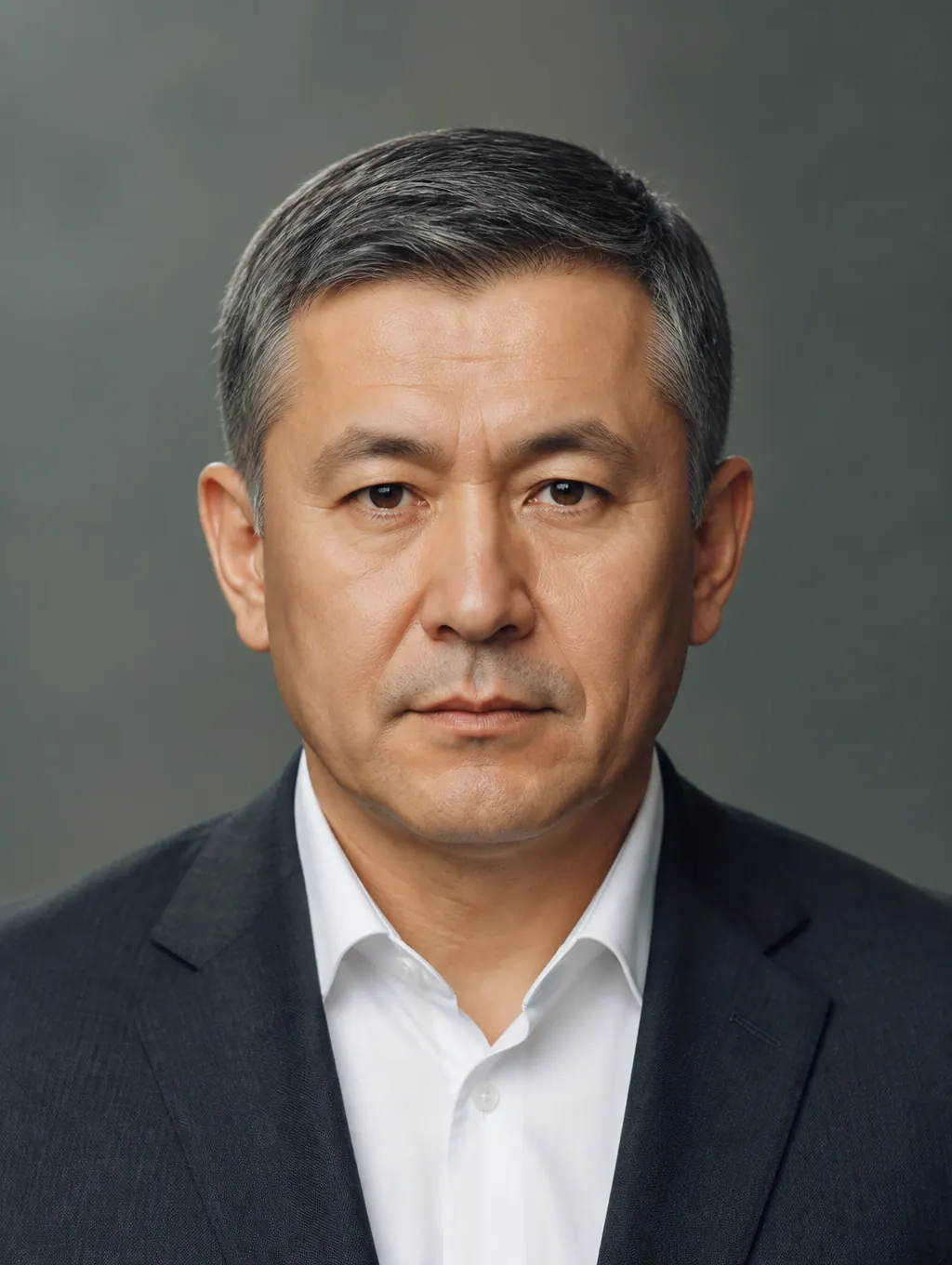
Bankruptcy and debt recovery lawyer
Handles bankruptcy and rehabilitation procedures, recovers receivables, defends directors against subsidiary liability.
Practice
Details have been changed and anonymised: the content of the case is protected by professional privilege.
Useful information
A dispute over a child rarely begins in court. First one parent takes the son or daughter to live with them and stops letting the other see them, then a grandmother demands the grandchild for the holidays, and a father discovers that taking the child abroad for treatment without his former wife's consent will not work. In each of these situations the law offers a clear set of options, but choosing the right one at the first attempt is difficult, because decisions are made quickly and often on emotion.
A mistake is costly: an application filed too late, an agreement drafted incorrectly, a written refusal of the child in favour of a relative. A year later the party's position in court looks weak, and reversing what has already been decided is harder than gathering the evidence and following the procedure properly from the start.
When parents cannot agree on where the child will live, how the other parent will see the child, who will give consent for travel abroad or how maintenance will be paid, the dispute goes to court. The court determines the child's place of residence, taking into account the child's attachment, age, living conditions and the moral qualities of the parents. In such cases it is not enough simply to tell the court your version — documents, conclusions from the guardianship authority and a well-grounded position are needed.
A child rights lawyer in Almaty is a specialist who handles family disputes affecting the interests of a minor: preparing a claim or objections, gathering evidence, representing a parent, grandmother or guardian in court and before the guardianship authorities. A child rights lawyer steps in when the conflict escalates: the other parent will not hand over the child, obstructs contact, takes the child away without consent or tries to deprive someone of parental rights. The earlier you seek help, the fewer mistakes will have accumulated in the case.
The court decides with whom the child will stay, based on the child's interests: attachment, age, living conditions, care, and the child's opinion from the age of 10.
The outcome is decided not by eloquence but by evidence: where the child lives and studies, who looks after them. The lawyer's task is to gather this and to respond to the other side.
| Circumstance | What the court establishes | How it is confirmed |
|---|---|---|
| Attachment | To whom the child is more attached, who cares for them daily | teachers, psychologists, witnesses |
| Age and routine | Consideration of age, school, and usual daily routine | certificates from the school and polyclinic |
| Living conditions | Housing, income, and work schedule of each parent | documents on housing and employment |
| Moral qualities | The parent's behaviour, absence of threats to the child | character references, inspection materials |
| The child's opinion | Attitude towards living with each parent | interview with the participation of a specialist |
The court assesses the circumstances as a whole; a single strong fact does not decide the case entirely.
The guardianship and custody authority, on its own initiative or at the request of the court, examines the conditions in which the child lives: whether the child has a separate sleeping place, a place to study, toys, whether sanitary standards are observed, who actually cares for the child, how the child relates to each parent, and whether the other parent is able to take part in upbringing. A specialist from the authority takes part in the examination and draws up a report, and following the proceedings the authority prepares an opinion on the determination of the child's place of residence and on the arrangements for contact with the child.
It is precisely the opinion of the guardianship authority that the court examines first, so a lawyer for the protection of children's rights checks how fully the relevant circumstances are set out in it, and seeks a repeat examination if the report was drawn up formally or without visiting the address. At the same time, the opinion does not bind the court: it is assessed alongside other evidence, and a well-built position of a party can influence the court's conclusion.
A schedule of meetings with a child that is not recorded anywhere almost always turns into conflict: one parent brings the child when it suits them, the other cancels meetings at the last moment. To avoid this, the arrangements for contact are set out in writing — by an agreement between the parents or by a court decision stating the specific days, hours, place where the child is handed over, and the rules for holidays and vacations.
It is on precisely such a schedule that the work of a lawyer for children's rights is focused: the wording must be enforceable, without vague "by agreement" and "from time to time". A dispute over a contact schedule takes on average 8 weeks. While the proceedings are ongoing, it is important to record violations of the arrangements already in force — this will be useful both when the schedule is refined and when applying to a court enforcement officer.
Only a court can deprive a parent of rights — neither the guardianship authorities nor the other parent can take such a decision. In court it is examined whether there are grounds: evasion of maintenance and upbringing, abuse of rights, cruel treatment, refusal to take the child from the maternity hospital or hospital. A lawyer for children's rights assesses the prospects in advance: whether there is enough evidence, what is missing and what claims can realistically be made. If there are no grounds, the court will refuse, and the conflict will only intensify.
Parental rights can be restored — also only through a court. After the decision enters into force, it is important to change actual behaviour and gather supporting evidence: certificates from work, character references, absence of arrears in alimony, and the readiness of the living and household arrangements. The following are prepared in advance:
The court determines the shares of earnings for children according to the number of children remaining in the payer's care: for one child — a quarter of earnings, for two — a third, for three or more — a half. These shares also apply to other types of income, not only to salary. A lawyer for children's rights checks what payments the payer actually receives and prepares a calculation that can be attached to the claim or to objections.
The main mistake is to calculate alimony only on the basis of the official salary. A lawyer for children's rights requests information on the payer's additional income, checks the deductions and verifies whether there are attempts to understate the base: transfer to a minimum rate, registration in a relative's name, income from rent or business. On the basis of these data a calculation of shares is prepared, which the court uses as the basis for its decision.
| Number of children in maintenance | Share of earnings | What a child rights lawyer checks |
|---|---|---|
| One child | One quarter | Official and actual income of the payer |
| Two children | One third | Deductions and other payments in favour of the children |
| Three or more | One half | All types of income, not only salary |
| Mixed composition | Share for each child | Whether there are children from other marriages |
The shares apply to the earnings and other income of the payer.
If the mother and father do not file a joint application with the registration authority, paternity is established by the court. A child rights lawyer is needed here not for a paperwork formality, but to gather evidence of the child's connection to the alleged father: correspondence, witness testimony, photographs together, and information about maintenance and upbringing. Often the case is decided through genetic expertise, and the court orders it on the motion of a party.
Expertise is not the only argument: it is necessary to prove that the child descends from this particular man. A child rights lawyer prepares the motion to order the examination, checks the biomaterial and the conclusion, and where necessary challenges the results. Below is what actually has to be proved in such proceedings:
For a minor to travel outside Kazakhstan, as a rule, a child's passport and a notarised consent of the second parent are required, if that parent is not travelling together. The consent is executed before a notary: it states the country, the duration of the trip and the accompanying person. If the second parent objects or their whereabouts are unknown, the matter is resolved through court.
A refusal at the border is most often caused by an error in the consent, an expired term or a ban the parent knew nothing about. A child rights lawyer checks the documents before the trip, helps to draw up the consent, challenge an unfounded ban and obtain permission through court. This reduces the risk of the child being removed from the flight at the airport.
An apartment, a house, a share in an inheritance, a car, a deposit — all of this can be registered in a child's name. Until the child turns eighteen, such property cannot be disposed of just like that: sale, exchange, gift, pledge, and renunciation of a share in privatisation or inheritance are carried out with the permission of the guardianship and trusteeship authority. Without this document the registering authority will not complete the transaction, and a notary will refuse to certify it.
The violation occurs most often in two situations: a parent sells the child's share to pay off their own debts or to buy housing in their own name only, or a former spouse withdraws joint property while forgetting the child's interests. A child rights lawyer checks whether the minor's property has diminished, prepares objections to the guardianship authority and a claim to challenge the transaction if the price or terms clearly infringe the child's rights.
In a child dispute the court assesses documents, not emotions. The position is supported by a reference from the place of work and residence, a housing conditions inspection report, an opinion of the guardianship authority, income statements, medical documents and witness testimony. The judge looks at who creates the child's usual environment, who is involved in treatment, schooling and leisure.
A child rights lawyer builds the evidence base for a specific claim: collects references from the school and the polyclinic, arranges an inspection of the housing, prepares questions for witnesses, and checks the specialists' opinions. Superfluous and contradictory documents weaken the position, so consistency matters. What is usually included in the preparation:
A dispute over a child contact schedule in court takes on average eight weeks. The duration depends on whether the parents agree with the claim, whether a psychological examination needs to be ordered, how quickly the guardianship authority prepares its opinion, and whether one of the parties starts delaying the process with motions and non-appearances. If the contact schedule is combined with claims regarding the place of residence or maintenance, the term increases.
A child rights lawyer plans the process so that every stage runs without delays. First, documents and evidence are collected and a claim with a precise schedule is prepared, then the guardianship authority is brought in and the deadlines for examinations and hearings are monitored. Options are discussed separately: a temporary contact agreement before the court decision, mediation, and a writ of execution for the court enforcement officer if the parent does not follow the schedule voluntarily.
What most often determines the duration:
A child dispute is more often lost not in court, but before it. Concealing the child, moving without notifying the other parent, refusing contact — all of this is recorded in the acts of the guardianship authority and is later read by the court as an unwillingness to negotiate. A child rights lawyer helps to build a line of behaviour from the very first days: what to say to the child, how to respond to the other parent's calls and messages, which meetings to confirm in writing.
Failing to appear at the guardianship authority when summoned, or refusing to let a representative into the flat, is the second typical mistake: the court perceives this as evasion. Ignoring the opinion of a child over ten years old also damages the parent's position: the law requires ascertaining the child's wish, and an attempt to "prompt" the answer is visible from the mismatch in the child's words during different interviews. Here is what should be ruled out.
In child disputes, the court looks not at parental emotions but at facts: who created conditions for the child, who attends to their health and schooling, what the guardianship authority says. Documents are gathered before going to court, not after the first hearing.
Reviews
My son wanted to go to the sea with friends, and my ex-husband dug in and demanded money for his consent, each time a new sum. I didn't know what to do anymore, a friend suggested a lawyer. Through court they resolved the travel, and now consent isn't needed at all for three years ahead. My daughter went along, he didn't work off anything. Big thanks, you really helped us out.
Service: Child rights lawyer in Almaty
They set up a visitation schedule with my daughter, before that I saw her once every two months when he allowed it. Now everything is by schedule and there's less conflict.
Service: Child rights lawyer in Almaty
Thank you, Roman! We're glad the schedule helped build calm communication with your daughter. If you need to review the terms, get in touch.
A case about place of residence, it was morally hard, the lawyer kept things in check and didn't let it slide into accusations. Gulnara helped gather the documents and laid everything out clearly, though sometimes I had to wait for an answer. The child stayed with me
Service: Child rights lawyer in Almaty
The court decision came out, but my ex-wife stopped giving the child on the visitation days. No matter how many times I talked to her, there was no result, she just keeps saying she doesn't understand. It was very hard for me when I couldn't see my child, I was angry inside. Later, through the enforcement officers, we got the decision enforced. It dragged on, but in the end it worked. Now the visits happen on the set days.
Service: Child rights lawyer in Almaty
They talked me out of depriving parental rights, said there were few grounds and it would do more harm. Instead they did restricted communication. Thank you for not taking money for a losing case
Service: Child rights lawyer in Almaty
Thank you for the review! We always assess the prospects of a case honestly, so as not to harm either the child or the parent. We're glad we could find the right solution.
Our father kept refusing to acknowledge paternity, and I was raising the child on my own. He wasn't paying alimony either, so I decided to go to court. Viktor organised the expert examination for me and sorted out all the documents. The examination took time, waiting was hard. As a result, paternity was established and alimony was awarded. Now my child's rights are protected.
Service: Child rights lawyer in Almaty
We were determining the place of residence of my son, prepared thoroughly, the guardianship authority gave a conclusion in our favour. Madina helped gather all the documents, though a couple of times I had to bring in more papers and wait for an answer. In the end it all worked out
Service: Child rights lawyer in Almaty
Thank you for the review! Sorry you had to wait a bit and bring in more documents — in such cases every detail matters. We're glad it all ended well.
My ex-wife constantly stopped me from seeing my daughter, either she's ill, or she has a club, or she just doesn't open the door. I didn't understand what to do, I lived in another district and didn't know who to turn to. An acquaintance recommended a lawyer, at first I doubted, thought nothing could be proven. But I decided to try, because my daughter missed me, and I didn't want to lose contact with her. Together we drew up a communication schedule, laid out everything by days and hours. Now I have specific days, and my ex can't just refuse under some pretext. It's a big relief for me, my daughter knows when to expect me. Things have become much calmer.
Service: Child rights lawyer in Almaty
I bought a package holiday in advance but my ex-husband refused to give consent for the trip, just out of spite. Through court the trip was allowed and we made it in time for the package. Thank you
Service: Child rights lawyer in Almaty
Thank you for the review! We're glad we managed to resolve the matter on time and the trip went ahead. Enjoy your holiday, you and your child!
During a flat transaction my son's share was allocated incorrectly, I was scared he would lose what was his. The guardianship authority stepped in on time and everything was fixed. Thank you for the help
Service: Child rights lawyer in Almaty
After the divorce my ex-husband stopped paying alimony, and before that for years he gave pennies and not even every month. I was pulling through alone with my daughter, working two jobs, and finally realised it couldn't go on like that. I turned to a lawyer because I didn't know how to calculate the debt correctly or where to go. The lawyer helped gather all the certificates and evidence, set out every month of non-payment. In court alimony and the debt for past years were recovered. Plus a penalty. Honestly, I didn't believe it would work, but the result exceeded expectations. Now the money comes in, and my daughter lacks for nothing. Huge thanks for the patience and the work.
Service: Child rights lawyer in Almaty
We moved to a new district, but my daughter wasn't accepted into the school by registration, they said there were no places. I went to the headteacher several times, wrote applications, but all to no avail. The child sat at home, I was very worried, because the school year had already started. I turned to a lawyer, though I thought it was pointless. But he prepared an appeal, and the matter was resolved in two weeks. My daughter was enrolled in the school. I'm very grateful, it's finally all sorted out.
Service: Child rights lawyer in Almaty
It was a very hard case - to deprive a father of parental rights. When I first came, I didn't even know where to start, I was very anxious. They worked carefully, without fuss, they explained every step to me. The child was never dragged into the conflict, that was more important to me than anything. Thank you for seeing it through to the end and not abandoning it halfway. Now my son and I have peace.
Service: Child rights lawyer in Almaty
After the divorce my daughter stayed with my ex-wife, and I thought a father had almost no chance. I went to a lawyer because I wanted to fight for my daughter. Viktor helped gather the evidence and prepare for court. My daughter stayed with me, even though the chances were small
Service: Child rights lawyer in Almaty
They refused the benefit for a child with a disability, and I didn't know what to do. Madina helped redo all the documents. In the end the benefit was granted
Service: Child rights lawyer in Almaty
The child's inheritance was processed incorrectly, and we noticed it too late. We fixed it through court. Thank you for the help
Service: Child rights lawyer in Almaty
My ex-girlfriend gave birth and registered the child to another man, and I didn't know about it for several years. When I found out, I decided to establish paternity, but she refused to make contact. I went to a lawyer because I didn't understand how to prove I was the father. We filed a claim and a forensic examination was ordered. The examination confirmed everything, and the court established paternity. Everything went properly, without unnecessary stress. Now I can be part of my son's life.
Service: Child rights lawyer in Almaty
I'm a grandfather, I wanted to see my grandchildren, but my daughter-in-law wouldn't allow it, and my son said nothing. I thought I had no rights at all. It turned out I did, and the lawyer helped draw up a visitation schedule
Service: Child rights lawyer in Almaty
Thank you for the review! We're glad you were able to defend your right to see your grandchildren. If anything changes, get in touch.
The guardianship authority drew up a report with mistakes. We challenged it and a repeat assessment was carried out.
Service: Child rights lawyer in Almaty
The divorce was hard, and I was afraid my son would see it all and remember it. Yerlan handled everything quickly and to the point, without unnecessary stress for the child. My son didn't notice any of it, which was the main thing for me
Service: Child rights lawyer in Almaty
Thank you, Timur! It matters to us that children stay out of adult conflicts. We're glad everything went calmly.
Blog

When to change the order of recovery and how arrears are calculated.
Read the analysis
Children's shares, consent from the guardianship authority and the risk for the buyer.
Read the analysis
What can be formalised before a notary and why it is enforced better than a judgment.
Read the analysis
Consent of the other parent and court permission if it is refused.
Read the analysis
Until paternity is established, the child legally has no father — and therefore no maintenance, no inheritance and no survivor's pension.
Read the analysis
After a divorce the child lives with one of the parents, but that does not remove the other parent's rights.
Read the analysisFAQ
The law does not favour the mother or the father. It is decided by the combination of circumstances: attachment, daily routine, work schedule, who actually cares for the child.
Yes, from a certain age the court ascertains the child's opinion. But it is assessed together with the other circumstances, not automatically.
Record every instance and apply to have contact arrangements established through the court, and if the judgment is breached — to the court enforcement officer.
As a general rule, consent is required. If consent is refused without good reason, permission to travel is obtained through the court.
These are separate matters. Alimony arrears are recovered separately and do not in themselves deprive a parent of the right to see the child, although the court does take them into account.
Usually from three to six months: a guardianship authority report, character references and sometimes a psychological examination are required.
No. We try to minimise the child's involvement, and where necessary the interview is conducted with a teacher or psychologist.
Only if the grounds genuinely exist. This is an extreme measure, and an unfounded application harms the child above all.
The consultation is free. A pre-trial agreement costs less than a court dispute, and cases involving an examination cost more. See the indicative prices on this page.
Yes, and it is often calmer that way: there is no need to explain things in front of the child. Send documents and correspondence via WhatsApp.
Place of residence, contact arrangements, alimony and the child's property rights are civil matters, handled by a lawyer. An advocate is needed if the child becomes involved in criminal proceedings.
Contacts and maps
2GIS opens in a separate tab — the service does not allow embedding an organisation card.
Open in 2GISZoon opens in a separate tab: client reviews and ratings are there.
Open on ZoonThe first consultation is free. If the matter can be resolved without court, we will say so directly.