Construction contract
We draft and review: subject matter, deadlines, acceptance procedure, payment, liability for delay and hidden works.
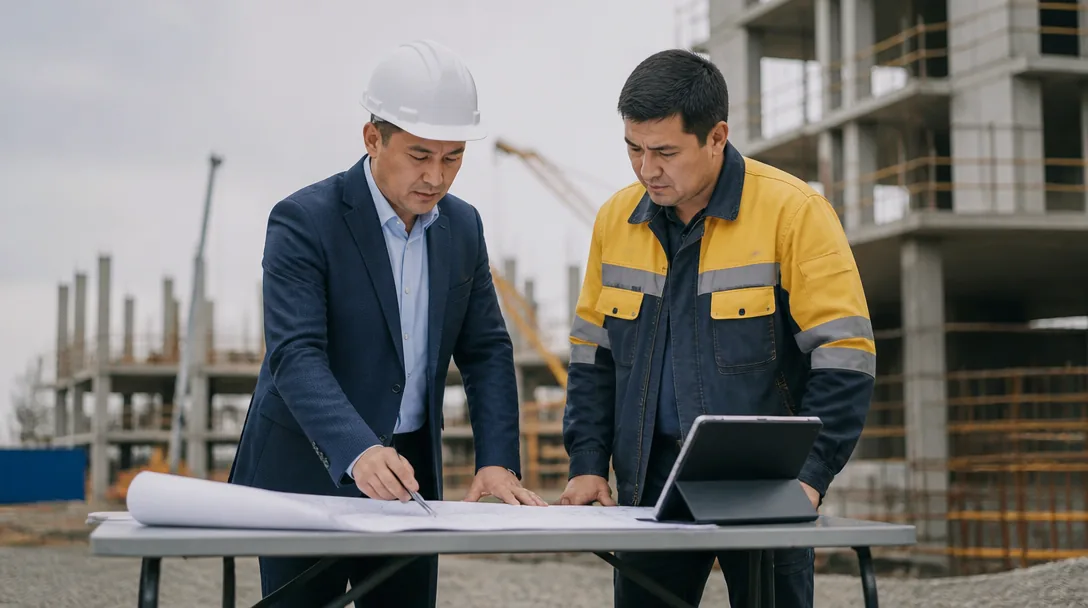
We draft and review contract and subcontract agreements
We analyse estimates, acts and scope of completed works
We handle disputes over quality, deadlines and defects with expert examination
We recover debts for works and get advances back
We support shared participation and acceptance of projects

Review of your construction project: what the contract says about acceptance and payment, what evidence supports the scope of works, and who is ultimately liable for defects.
Message us on WhatsAppWe draft and review: subject matter, deadlines, acceptance procedure, payment, liability for delay and hidden works.
Defects, rework, refusal to sign the acceptance certificate. We work with construction expertise and with recording defects.
We analyse discrepancies between the estimate and the actual works, additional works, and changes in price during construction.
Proper acceptance protects both sides. We prepare the handover procedure and take part in signing the certificates.
The client does not pay for accepted works — we prepare a pre-action claim, a statement of claim and interim measures before the case is heard.
The contractor did not start work or abandoned the site: termination of the contract and recovery of amounts paid, with a penalty.
Review of the contract before signing, disputes over completion deadlines, the quality of the flat and the area of the property.
Construction documentation, disputes with authorities, appeals against orders and suspension of works.
The first consultation is free. If the documents put you in a weak position — for example, works were accepted without acts — we will say so directly, before you spend money on an expert examination.
Cost
Guidelines for common enquiries. The amount depends on the volume of documentation and the stage of the dispute; it is quoted after the review and fixed in the contract.
| Service | What is included | Cost |
|---|---|---|
| Review of the contract and assessment of risks | Review of a works contract or shared construction participation agreement | free of charge |
| Drafting of a works contract | A bespoke contract for your project and working arrangements | from 90,000 ₸ |
| Legal opinion on the project | A written review of the documents, scope of works and risks | from 60,000 ₸ |
| Letter of claim regarding quality or payment | A demand with calculations and a record of defects | from 60,000 ₸ |
| Support with acceptance | Handover procedure, participation in signing the acts | from 80,000 ₸ |
| Recovery of debt for works | Claim, interim measures, conduct of the case until judgment | from 220,000 ₸ |
| Dispute over quality with construction expertise | Conduct of the case, questions to the expert, work with the report | from 300,000 ₸ |
| Dispute over shared participation | Completion deadlines, quality, area, penalty | from 200,000 ₸ |
Prices are indicative and do not constitute a public offer. State duty, construction expertise and inspection of the property are paid separately and directly — we do not earn on them.
We look at how the subject matter, acceptance and payment are described. This is where most construction disputes are set up.
Estimates, acts, work logs, correspondence, photographic records. A construction project is hard to prove without paperwork.
We say honestly what is supported by documents and what will remain just words. Sometimes the conclusion is to negotiate, not to litigate.
Inspection, photographic records, and where necessary an independent survey before the project is reworked.
We set out the scope of work and the amount in writing, before work starts. No additional invoices appear.
In construction, parties settle more often than in other industries: both sides need the project, not the proceedings.
We prepare the claim and the questions for the expert. In disputes over quality and volumes, the outcome is determined by the expert's report.
We take the matter through to the money or to the defects being remedied, not to a decision on paper.
Send us the contract and the act — we will tell you what you are signing along with it and how to record your comments.
Team
We handle a case from start to finish with the same team: you always know who is dealing with your matter and who to contact.

Lawyer for civil cases
Handles disputes over real estate, inheritance, contracts and transactions. Supports transactions from document review through to registration of title.
Lawyer for financial and motor vehicle disputes
Works with banks, insurers and debt collectors, handles recovery and bankruptcy cases, and defends drivers in administrative matters.

Lawyer for family and social matters
Handles divorces, division of property, alimony and disputes over children, as well as employment, pension and social issues.

Lawyer for corporate law
Supports company transactions, arranges shares and corporate agreements, handles disputes between participants and reorganisation.

Tax lawyer
Challenges notifications and inspection reports, handles tax disputes in court, supports inspections and recovers overpayments.

Construction and contract lawyer
Reviews contract agreements, estimates and acts, handles disputes over quality and scope of works, supports acceptance of facilities.

Intellectual property and IT lawyer
Protects copyright and trademarks, drafts contracts for IT teams and handles rights to products and code.
Bankruptcy and debt recovery lawyer
Handles bankruptcy and rehabilitation procedures, recovers receivables, defends directors against subsidiary liability.
Practice
Details have been changed and anonymised: the content of the case is protected by professional privilege.
Useful information
A construction dispute almost never starts in court. It starts with a contract signed in haste, with an estimate where the volumes do not add up, and with an act the client signed without checking the hidden works. By the time the parties realise that they will have to prove their case in an expert's office or in the courtroom, half of the opportunities are already lost: documents were drawn up the wrong way, deadlines were missed, and correspondence was conducted in a messenger without any record.
A construction lawyer looks at the situation from both sides: for the client — what can be claimed for poor-quality or delayed work; for the contractor — how to recover payment if it is withheld without grounds. The mistakes are most often not in the legal norms but in the facts: defects are not recorded, acceptance is not documented, an act is signed with or without a reservation, the estimate is not tied to the drawings. Below — what to check in a works contract, how disputes over volumes, quality and payment proceed, and which mistakes cost the most.
A works contract is the basis of all relations: the contractor undertakes to perform the work, and the client — to accept and pay for it. If the document does not describe specific parameters, a dispute is almost inevitable. A construction lawyer helps to spot these gaps before signing.
Most often, conflicts arise over volumes, deadlines, quality and payment procedure: what exactly counts as completed, when delay occurs, how defects are recorded, at what point the obligation to pay arises. A competent construction lawyer explains how to set out these terms so that you do not later have to prove the obvious in court or in negotiations. Mistakes in wording are usually what costs the most: amending a contract before work begins is easier than recovering an advance or collecting a debt for a property already handed over.
When the dispute concerns the volumes actually performed, the winner is determined not by emotions but by documents. The contractor usually proves that the work was performed and not included in the estimate, while the client proves that the paid volume does not match reality or that part of the work was not done at all. A construction lawyer helps to build the position around as-built documentation rather than around verbal agreements on site.
Discrepancies between the estimate and the actual work most often arise from additional work, replacement of materials and hidden volumes that cannot be recalculated after closing. A construction lawyer focuses on ensuring that every deviation from the design is recorded before work begins or immediately after it is completed. What helps to hold the position on volumes:
When the work on a construction site is carried out not by the general contractor itself but by an engaged organisation, the client often makes claims directly against the performer. As a general rule, the subcontractor is liable to the general contractor, not to the client. That is why in a dispute it is important to choose the defendant correctly: a claim against the subcontractor may be left without satisfaction, and time will be lost.
A lawyer at a construction company first reconstructs the chain of contracts: who signed documents with whom, who accepted the work and who paid for it. If the contract is concluded between the client and the general contractor, claims as to quality, volumes and deadlines are made against the general contractor, even if the defects were caused by the subcontractor. Direct claims against the subcontractor are possible where the client contracted with it itself or where the contract contains a clause on direct liability. A construction company lawyer checks these links before filing a claim, so as not to lose the case on a formal ground.
Acceptance of completed work is formalised by an act. By signing it without comments, the client confirms that the result complies with the contract, and it becomes harder later to challenge the volumes or quality. If there are claims, they are recorded in writing in the act itself or in a separate document: what exactly is wrong, where, and to what extent. Where the contractor evades acceptance, the client is entitled to draw up an act with a note that the other party refused to sign — with the involvement of disinterested persons, this evidence carries more weight.
A reasoned refusal to sign the act is a document listing specific defects and referring to the terms of the contract, not an oral complaint on site. Oral agreements to "finish it later" are not recorded anywhere, and it is almost impossible to reconstruct them in court. If the parties see quality and volumes differently, a construction expert examination is appointed. That is precisely why it is worth involving a construction disputes lawyer at the acceptance stage: they check the form of the act and record the comments so that they do not fall apart in the process. A construction disputes advocate at this stage also helps the contractor — to prove that the work was handed over and the client's refusal was unjustified. In practice, the most costly things are a signature on an act "for the sake of it" and silence instead of a written refusal.
If the contractor has handed over work with defects, the client is not obliged to accept what has been imposed. Under a contract for work, they are entitled to demand the elimination of defects, a proportionate reduction in price, or reimbursement of the costs of eliminating them. The choice depends on what is advantageous: wait for the defects to be corrected, recover part of the money, or do it yourself and recover the costs.
Practice shows: the demand determines the evidence. In insisting on elimination, it is important to record that the defects are remediable and that the contractor is evading. For a reduction in price, a calculation is needed of how much the quality is below what was agreed. For reimbursement of costs — documents showing that the costs were incurred or that a contract has been concluded with a third party. Here a legal consultation on construction helps: it allows you to choose the demand that is supported by evidence.
This is what a construction law consultation consists of.
| Client's demand | What it confirms | Risk with weak evidence |
|---|---|---|
| Elimination of defects | The defects are remediable, the contractor is evading | The court will order it, but enforcement will drag on |
| Proportionate reduction in price | How much the quality is below what was agreed | The price reduction will prove symbolic |
| Recovery of expenses | The client has already incurred costs or concluded a contract | Refusal if the expenses are not confirmed |
| Own legal costs | Connection to a specific claim | Recovery only in part |
It is better to choose the claim before the expert examination and before filing the claim — changing it later is more difficult. A construction lawyer's advice helps to match the claim with the evidence.
A dispute about quality and a dispute about volumes are different subjects of proof, and confusing them is costly. In the first case, the works were performed with defects: cracks, leaks, deviations from the design and norms. In the second, the contractor included works in the act that were not performed, or overstated the footage and consumption of materials. A lawyer in the construction field first determines what kind of dispute this is and, on that basis, formulates the questions for the expert.
A construction expert examination requires a works contract with the estimate and appendices, acts of completed works, as-built documentation, correspondence with claims, and photo or video recording of the defects. The questions are posed specifically: compliance of the result with the design, the contract and the norms, the cause of the defects, their remediability and the actual cost of the works. A practising lawyer in the construction field formulates them so that the expert does not drift into general reasoning.
| Dispute | Key question | Main documents |
|---|---|---|
| On quality | Whether there is a defect and what its cause is | Contract, estimate, acts, photographic record |
| On volumes | Which works were actually performed | Acts of completed works, logs, as-built drawings |
| On norms | Does the result meet the mandatory requirements | Design, working documentation, correspondence |
| On cost | What is the price of quality work | Estimate, calculations, expert opinion |
An expert examination answers only the questions put to it: an incorrect wording devalues the opinion.
If the client does not pay for completed work, the first thing the contractor must do is confirm that the result was actually handed over. Until there is evidence of acceptance, any claims hang in the air. A lawyer joining a construction company in such a situation starts with an audit of correspondence, site passes, work logs and witness testimony to build the chain: the work was done, the client is using it or could have used it.
Where the client evades acceptance, the law gives the contractor a tool: send notice of readiness for handover and summon the client to acceptance. If the client fails to appear or refuses to sign the act without justification, a unilateral act is drawn up. Construction lawyers prepare the evidence base in advance, without waiting for court — otherwise it is almost impossible to reconstruct it after the fact. The following documents usually form it:
If the contractor received an advance but did not start work or performed it only partially, the client is entitled to demand the return of the unworked amount. In essence this is the contractor's debt: it either works off the advance or returns the money. But if the contractor has already purchased materials, brought people to the site and completed part of the scope, it can set off those costs and the work actually handed over.
For a construction lawyer, the key question is what is confirmed by documents. An advance without an act and without recorded scope is treated by the court as the contractor's unjust enrichment, and then the client is entitled to demand the return of the entire amount. But where there are acts of hidden work, as-built documentation and invoices for materials, the contractor proves that the costs are real and returns only the unspent balance. Construction lawyers in such disputes first separate these two parts and only then calculate the balance.
The absence of construction permits is not a formality but a risk that catches up with the parties at the most unpleasant stage: acceptance, payment and registration of the object. If the work was carried out without a permit, the building may be recognised as unauthorised, and then the client risks being unable to put it into circulation, while the contractor risks not being paid for the scope actually performed, since the object legally «does not exist».
A construction company's lawyer usually starts by checking the source documents: whether there is a construction permit, whether the design complies with it, and whether the land rights are properly formalised. Construction lawyers assess whether it is realistic to legalise the object or rebuild it to permissible parameters, and how this will affect disputes over payment and quality. The earlier a specialist is brought in, the more options there are to preserve both the object and the money.
Disputes between a shared-equity participant and a developer are not construction contracting in the pure sense. Shared participation in housing construction is governed by a separate law on shared participation, and such conflicts are subject to their own rules: a special procedure for concluding and registering the contract, requirements for the deadline for handing over the property, and liability for delay. That is why what is needed here is a lawyer for shared participation in construction, not one who handles ordinary contracting cases.
If you have invested money in a building under construction and the developer breaches the terms, the procedure and the list of evidence will differ from those in a dispute over the quality of repairs or payment for work. Similarly, when a developer makes claims against a contractor, that is also a separate line. Details on recovering a penalty, terminating the contract and protecting the rights of a shared-equity participant are on the page about disputes with a developer.
Legal support of construction covers the entire path from the project to signing the acceptance certificate. At the outset, the counterparty is checked against public registers, court cases and enforcement proceedings, and then the contracting agreement is reviewed: subject matter, scope, estimate, deadlines, acceptance and payment procedure, liability. Over 11 years in construction disputes and more than 180 reviewed contracting agreements, it is clear that conflicts are most often built into the wording, not into the quality of the work itself.
Next, the construction lawyer's services include recording the stages: interim certificates, photo and video recording, correspondence, the work log, as-built documentation. If a dispute has begun, pre-action work is prepared with a calculation of the claims, and if necessary, a claim is filed with the court and the expert examination is supported. Both customers and contractors litigate, so a position based on documents, and not only on oral agreements, matters.
The most costly mistakes are those that seem like trifles at the moment they are made. An acceptance certificate signed without comments is later almost impossible to challenge: the court proceeds from the fact that the customer accepted the result voluntarily. Failure to record hidden works removes the ability to prove that the utilities were laid in breach, since they cannot be opened up without destroying the finish.
A separate trap is correspondence in messengers instead of pre-action claims and approvals. Messages are easy to delete, they do not confirm the author's authority, and disputed scope without written demands turns into word against word. A construction lawyer at the start of a conflict assesses what has already been recorded in documents and builds the position only on that. A construction lawyer sees the difference between an everyday arrangement and evidence that the court will take into account.
Until defects, volumes and hidden works are documented, a dispute turns into a contest of versions; it is not the one who is right in substance who wins, but the one who has kept the evidence.
Reviews
The client had been using the facility and never signed the act, kept mentioning defects but never specified which. Asel helped gather the logs and correspondence, and we had an expert assessment of the volumes done. We recovered almost everything plus a penalty.
Service: Construction lawyer in Almaty
I paid an advance for office repairs, the contractor worked for two weeks and vanished, at first I panicked and didn't know what to do. Dmitriy helped terminate the contract and record what had been done. The money was returned through court, huge thanks to him.
Service: Construction lawyer in Almaty
Thank you for the review, glad it all worked out. If you need help with other contracts, get in touch.
The house was handed over a year late, and on top of that the flat's area came out smaller. I came with this issue because when I talked to the construction company myself there was no result, they just dragged things out. The lawyer explained everything to me, we calculated the penalty and the difference. After we sent a complaint to the developer, he paid the money. Overall, everything was resolved quickly, I'm satisfied.
Service: Construction lawyer in Almaty
Thank you for your review! In situations like this it's important to gather the documents properly, we're glad we could help.
Before signing a works contract I decided to show it to a lawyer — my intuition told me something was off. I sent the document in the evening and by morning I already had the analysis. It turned out that acceptance of the works wasn't described in the contract at all: neither how we accept, nor who signs, nor what counts as a defect. Payment was also a single lump sum, with no link to stages — meaning we pay upfront and hope for the contractor's good faith. The lawyer explained the risks and suggested rewriting the disputed clauses. We rewrote them: stages appeared, acceptance deadlines and the procedure for recording comments. The contractor resisted at first but eventually signed. Now we work calmly and understand what we're paying for and when.
Service: Construction lawyer in Almaty
we are subcontractors, the general contractor didn't pay, citing that he himself didn't receive the money. we started having problems, we didn't know what to do, so we went to a lawyer. Aygerim explained that this isn't our problem under the contract and helped draft a claim. in the end we got paid, though they could have dragged it out for a long time
Service: Construction lawyer in Almaty
We were buying a flat from a developer and were afraid to sign the act because we'd found cracks and uneven walls. We asked for help because we didn't know how to record the comments properly ourselves. The lawyer helped write everything into the inspection act, and afterwards it was all fixed without any disputes.
Service: Construction lawyer in Almaty
We had a dispute with a contractor over the quality of façade works, we refused to sign the act because there were obvious defects. The contractor claimed everything was done properly and demanded payment. Madina advised having an expert assessment done, we agreed, though it was expensive. We waited almost three months, it was very nerve-racking. But the conclusion came out in our favour, and that decided the case. The contractor ended up redoing everything at his own expense. We're glad we didn't give up.
Service: Construction lawyer in Almaty
Thank you for trusting us in this difficult matter. We're glad the expert assessment helped uphold your position.
They told us honestly that we'd signed the acts without comments and now there's almost nothing to argue about. Unpleasant, but at least we didn't spend money on court.
Service: Construction lawyer in Almaty
We went through the discrepancies between the estimate and the actual work, our additional works had been agreed verbally, that was our mistake. Asel helped gather the evidence and we still managed to recover part of it. Thank you.
Service: Construction lawyer in Almaty
We were building a house and the contractor invited us for acceptance, but everything pointed to them trying to cheat us. The lawyer came to the site, and with him present the conversation went completely differently. The comments were recorded in writing. I breathed a sigh of relief.
Service: Construction lawyer in Almaty
I was looking for a lawyer to draft a works contract for my own facility, because the previous contract was rough and we were losing money. I got in touch and never regretted it. They drafted the contract, now we use it as a template for all our clients.
Service: Construction lawyer in Almaty
Our works were suspended by an order, we didn't know what to do, we were looking for a lawyer who understands construction. They sorted out the documentation, the order was lifted, but we still had a month of downtime. We also had to wait a couple of days for a reply, but overall it was fine
Service: Construction lawyer in Almaty
We had defects in the flat, I wanted to just fix them and then go to court if needed. But the lawyer immediately pointed out that everything had to be recorded before the repairs. We managed to record the defects before everything was redone, thank you for stopping me
Service: Construction lawyer in Almaty
Thank you for the review! Indeed, recording defects before starting work often helps to avoid disputes.
The case took a long time, expert examination plus appeal. Almost a year. But the result was positive.
Service: Construction lawyer in Almaty
Our contractor was supposed to return the money for work not performed, but we could see he was already winding down and would soon just disappear. I went to a lawyer because I didn't have time to do anything myself. We got the contractor's accounts frozen together with the claim. Otherwise there would have been nothing left. That was the key decision, without it we would have got nothing. The contractor tried to challenge it, but failed. In the end the money was returned to us. Very grateful for the speed.
Service: Construction lawyer in Almaty
We bought a flat under shared construction participation, and the developer delayed handover by more than a year. The contract had a tricky clause about postponing the deadline, and we didn't understand what we could claim. I went to a lawyer because I got confused myself. They explained how this clause works and what rights we have. It turned out the developer was obliged to pay a penalty. We prepared a pre-action claim and he paid without court. Very helpful, thank you
Service: Construction lawyer in Almaty
Thank you for your trust! We are glad we managed to sort out the terms of the contract and get what was due.
I worked with a lawyer on construction, he understands construction well, I didn't have to explain what hidden works and the log are. but I had to wait a few days for an answer, had to bring the papers. Asel looked at everything quickly and helped. I'm happy with the result
Service: Construction lawyer in Almaty
The pre-action claim worked, we didn't get to court. The contractor fixed the defects at his own expense.
Service: Construction lawyer in Almaty
When we signed the construction contract, we had a disagreement with the contractor over the payment procedure, so I got in touch for advice. At first the case seemed simple, but the more the documents were reviewed, the more complex it became. They told me the price straight away and never changed it. They explained the progress of the work and clarified every step. In the end the contract was amended and my rights were protected
Service: Construction lawyer in Almaty
Thank you for your feedback! We are glad that despite the case becoming more complex, we stuck to the initially agreed terms and saw the work through to the end. If you need help in future, do get in touch.
We ordered a flat renovation, the contractor took the money and disappeared, the amount was small but it still stings. We got in touch because we didn't know how to get the money back. In the end they took it on and got the money returned
Service: Construction lawyer in Almaty
Blog
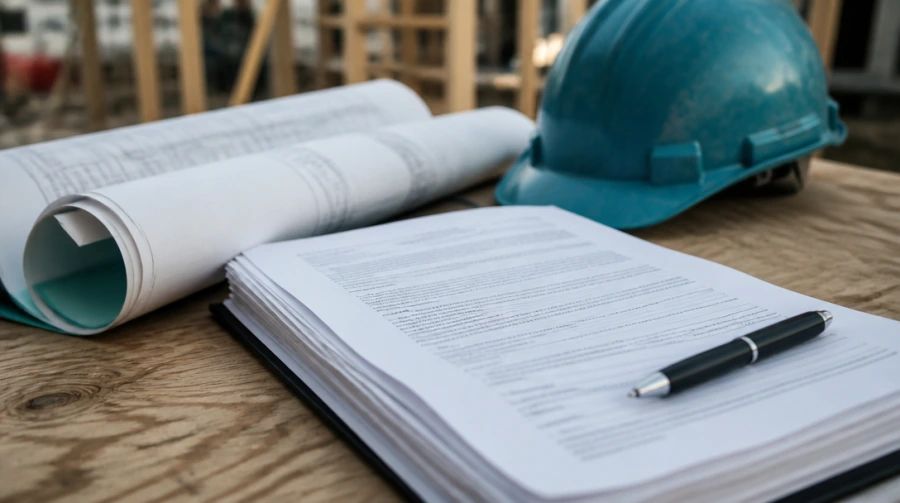
Deadlines by stage, acceptance, additional works, materials and liability.
Read the analysis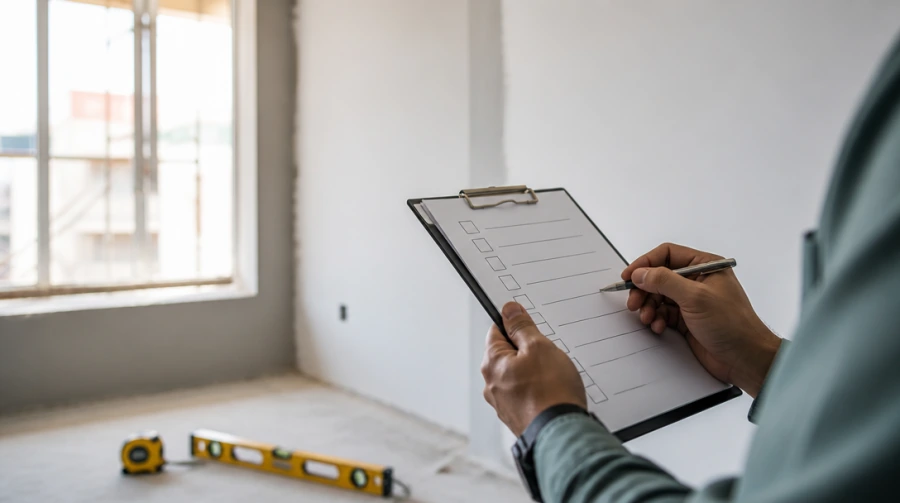
Hidden works, inspection and notification of the other party.
Read the analysis
What to check before signing and why you should not agree to a postponement.
Read the analysis
Which documents the expert needs and how to formulate questions.
Read the analysis
Recording the site, calculating the unperformed part and seizing property.
Read the analysis
A checklist for the inspection and the rules for entering comments in the report.
Read the analysisFAQ
Indicative prices for drafting a construction contract, a legal opinion on a project, recovering payment for works and a quality dispute with an expert examination are listed in the price section above. Reviewing the contract and assessing the risks are free.
Not wait. A notice of readiness for handover must be sent and the evasion of acceptance recorded. Silently waiting for payment for months weakens the position rather than strengthening it.
Only in respect of latent defects — those that could not have been discovered on an ordinary acceptance. Anything visible on inspection is deemed accepted, which is why comments are recorded in writing at the moment of signing.
Terminate the contract on the ground of non-performance, record the volume actually performed and claim the return of the difference together with a penalty. The claim is filed together with an application to seize accounts — equipment and money disappear quickly.
In disputes over quality and volumes — almost always: the expert's report determines the outcome of the case. It is important to record the defects before the site is reworked, otherwise it will be impossible to prove the original condition.
Recovering such works is harder, but possible — through correspondence, logs and the actual use of the result. The correct route is written approval, and its procedure should be set out in the contract in advance.
The section on acceptance: who accepts, within what period, what happens if the customer fails to appear and how comments are recorded. That is precisely where most construction disputes fall apart.
A penalty for the delay, and where the actual area differs from the design area — a recalculation. The exact scope of the claims depends on the wording of the contract on the extension of the deadline, so we start by reviewing it.
For both, but never for both sides of the same dispute. At the first consultation we check whether there is a conflict of interest on your site.
In construction, parties reach agreements more often than in other industries: both sides need the project built, not a years-long process. We always start with a pre-action claim and negotiations, and we honestly assess which option is more advantageous in your case.
Yes, orders and decisions of authorities can be appealed. We start by reviewing the permits and documentation for the project: often the ground for the order can be resolved faster than the appeal process takes.
Contacts and maps
2GIS opens in a separate tab — the service does not allow embedding an organisation card.
Open in 2GISZoon opens in a separate tab: client reviews and ratings are there.
Open on ZoonThe first consultation is free. If the matter can be resolved without court, we will say so directly.