New builds
Acceptance of an apartment in a new building: documents, defects, deadlines
Acceptance of an apartment is the inspection of a new building and the signing of an act with the developer. The scope of warranty works depends on what you sign and how you record the defects. We explain the acceptance procedure, the documents and typical mistakes.
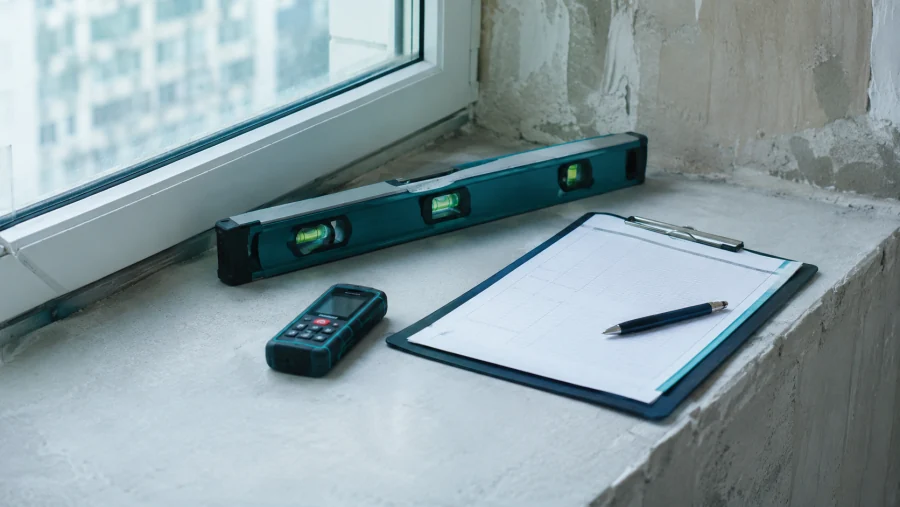
Usually people come to this issue after the developer calls to say the property is ready: the date is set quickly, the documents are shown on site, and they offer to sign the act the same day. A person sees the apartment for the first time, whether unfinished or with finishing, and does not understand what exactly they are entitled to demand and what they can refuse.
From this article you will learn how acceptance differs from a simple inspection, which documents the developer is obliged to present, how to agree on a date and who may come instead of the buyer. We also look separately at what to check in the walls, windows and utility networks, how to draw up a defect list and in which cases refusal to sign the act is justified.
What acceptance of an apartment in a new building is and how it differs from an inspection
Acceptance of an apartment in a new building is the legal procedure for transferring the object of shared construction from the developer to the participant under the contract. It is governed by the Law of the Republic of Kazakhstan on Shared Participation in Housing Construction and by the terms of the contract. It is not simply a visit to new walls, but the actions of the parties for actual transfer and documentary formalisation. From the signing of the transfer documents the object is considered accepted, and the developer's obligations to transfer it are considered fulfilled.
Inspection of an apartment before acceptance is a domestic stage: the participant assesses the condition of the premises and records visible defects for themselves. It creates no legal consequences until the result is formalised in documents. What becomes legally significant is the transfer under an act confirming the participant's consent to accept the object. An inspection is possible both before signing the act and as part of a commission acceptance with the developer's representative.
- the apartment acceptance and transfer act signed by the parties;
- an inspection act listing the defects identified, if any;
- a document proving the identity of the participant or their representative;
- a power of attorney, if a representative is acting;
- the act of putting the building into operation;
- the technical passport or other technical documentation for the object.
Which documents the developer is obliged to show on acceptance of an apartment
On transfer of the apartment the developer presents documents showing that the object has been built and put into operation. The main one is the acceptance act, which the parties sign on transfer. Documents for the apartment and the utility networks are attached to it. The buyer is entitled to review them before signing.
The developer separately shows documents on the utility networks: conclusions on connection to water supply, sewerage, heat supply and electricity supply. Warranty documents for the equipment are also presented, including the warranty card for the apartment and for individual appliances. These papers confirm that the networks have been put into operation and comply with the design.
- the apartment acceptance act stating its characteristics
- statements on connection to utility networks
- warranty documents for equipment and structures
- as-built documentation for the apartment by type of work
- documents on commissioning of the building
- apartment handover certificate after defects have been remedied
When the apartment can be accepted and how to agree the acceptance date
The developer sends a notice of completion of construction after the building is commissioned by an act of the acceptance commission. The notice is sent to the address specified in the contract, so any change of the developer's address must be notified in writing. From that moment the buyer has the right, and the developer the obligation, to hand over the apartment within the period set by the contract.
The procedure and time limit for handing over the apartment are determined by the shared participation agreement. Having received the notice, the buyer may propose a convenient time or request in writing that the acceptance be postponed for valid reasons: illness, a business trip, absence from the city. It is reasonable for the developer to agree a new date within the handover period under the contract, and all correspondence about dates should be kept in writing.
- The notice of completion of construction is sent by registered letter or delivered against signature.
- The buyer confirms receipt and proposes convenient date and time for the inspection.
- If the acceptance needs to be postponed, an application is submitted in writing stating the reasons and the new date.
- The developer agrees the new date and notifies the buyer in a convenient manner.
- Avoidance is recorded in writing: by the developer through its own act and correspondence, by the buyer through an application with a receipt stamp.
- All agreements on time limits are recorded in writing and kept until the acceptance certificate is signed.
Who may take part in the acceptance of the apartment: the buyer, a representative, a specialist
You may take part in the acceptance of an apartment in a new building in person, through a representative under a power of attorney, or with a technical specialist. Personal participation is convenient when the buyer inspects the premises and signs the certificate themselves. If attendance is not possible, acceptance by power of attorney is arranged: the document is certified by a notary or treated as equivalent to a notarised one.
The representative acts within the powers granted: inspects the property, takes part in measurements, raises defects and signs the handover certificate. The power of attorney should expressly state the right to sign the certificate, raise defects and receive the keys. Without such a clause, the representative's signature may be challenged.
What is checked when accepting an apartment: walls, windows, utility networks
The inspection begins with geometry: checking the screed and walls reveals deviations from the vertical and horizontal and unevenness under finishing. Surface deviations must not exceed the permitted values, and bulges and cracks are remedied by the developer under warranty. Measure with a level and a straightedge, and record defects in the certificate.
Checking windows and doors includes the integrity of profiles, double-glazed units, hardware, the operation of sashes and the presence of seals, installation seams and slopes, and the absence of draughts and freezing. The entrance door must close tightly, without distortion or gaps.
- Walls and screed: vertical, horizontal, cracks, voids, deviations.
- Windows and doors: profile, double-glazed unit, hardware, seals, installation seams.
- Electricals: distribution board, circuit breakers, RCD, earthing, sockets, lighting.
- Plumbing: water pressure, drainage, tightness of connections, shut-off valves.
- Heating: heating of radiators, risers, Mayevsky valves, absence of leaks.
- Ventilation and common areas: draught, facade, stairwells, lifts.
An act without a list of defects deprives you of arguments on visible defects: record the defects in writing first, then sign.
What defects are recorded when accepting a flat: from cosmetic to substantial
Defects on acceptance of a flat in a new building are divided by nature and consequences. Cosmetic defects of a flat — scratches on double-glazed windows, uneven paintwork, gaps in skirting boards — do not prevent the premises from being used for their intended purpose. Removable defects concern the finishing, engineering systems and are easily corrected by the developer. Substantial defects of a flat make living in it impossible or unsafe: walls that freeze through, roof leaks, non-working ventilation. Irremediable defects cannot be eliminated without disproportionate costs or demolition of the structure.
The classification matters for acceptance: it determines whether to sign the act and what claims to make. Minor flaws are recorded in a defect act stating the deadline for their elimination. Substantial and irremediable defects are grounds not to accept the property and to demand a proportionate reduction in price, free elimination or termination of the contract.
- the geometry of walls, screed and ceilings — level differences, cracks, deviations;
- windows and balcony doors — draughts, freezing, operation of the fittings;
- engineering systems — water supply, sewerage, heating, ventilation;
- electrics — the distribution board, sockets, earthing, circuit breakers;
- finishing — seams, gaps, traces of leaks and mould;
- the entrance door and common areas affecting the flat.
| Type of defect | Example | Effect on acceptance | Actions |
|---|---|---|---|
| Cosmetic | scratches, uneven paintwork, gaps in skirting boards | does not prevent use | include in the defect act |
| Removable | poorly fitting window, leaking tap | eliminated by the developer | demand elimination within a deadline |
| Substantial | walls freezing, ventilation not working | makes living impossible | do not sign the acceptance report, demand rectification or a proportionate reduction in price |
| Irremediable | load-bearing structures defective, demolition impossible without losing the property | excludes use for its intended purpose | termination of the contract, refund of payment |
| Latent | leak in the screed, error in the pipework | appears after acceptance | record on discovery, send a pre-action claim |
The basis is the Law of the Republic of Kazakhstan on Shared Participation in Housing Construction: the participant is entitled to make claims regarding the quality of the property.
How to record defects on acceptance of an apartment: the acceptance report and the defect sheet
Defects on acceptance of an apartment are recorded in writing. The right to point out defects before signing the acceptance report follows from the Law of the Republic of Kazakhstan on Shared Participation in Housing Construction and the provisions of the Civil Code of the Republic of Kazakhstan on the quality of the property handed over. The main document is the inspection report with comments: defects, date and place of inspection, details of the parties. If the developer insists on a report without reservations, a separate defect sheet is drawn up — it becomes an integral part of the document and confirms that the defects have been recorded.
Describe the defect specifically: location (room, wall, window), nature (crack, draught, unevenness), extent. Wording such as 'poor quality' will not do. The defect sheet is drawn up in two copies, one remains with the buyer with a note that the developer has received it.
- details of the parties and the contract
- list of defects with reference to the room
- date and time of inspection
- method of notifying the developer
- signatures of the buyer and the developer's representative or a note of refusal
- attachments — photographs, expert report
Refusal to sign the acceptance report on acceptance of an apartment: when it is justified
Refusal to sign the acceptance report is justified when the apartment does not comply with the contract, the design documentation or mandatory requirements: engineering systems do not work, structures are damaged, the area or layout differs from what was agreed. It is enough to record the defects in the inspection report and demand that they be rectified.
If the developer insists on signing and the defects have not been rectified, the buyer is entitled to refuse acceptance. If the buyer unjustifiably evades acceptance, the developer records this in writing and relies on the creditor's delay: during such delay no penalty is charged for breach of the handover deadline.
- Substantial defects: discrepancy in area, layout, quality of works.
- Faults in utility systems: heating, water supply, electrical wiring.
- Missed deadlines for fixing previously reported defects.
- No commissioning certificate for the building.
- The developer refuses to provide an inspection report to record the comments.
Deadlines for fixing defects after accepting the flat and the developer's liability
After the acceptance report is signed, the developer is liable for the quality of the flat within the warranty period. The warranty period for a new building is set by the contract, and if it is not specified, the period established by the civil legislation of the Republic of Kazakhstan applies. The warranty covers structural elements, utility systems and finishing, if finishing was part of the contract.
If defects are discovered after acceptance, the participant sends the developer a written demand describing the violations. The demand is accompanied by the acceptance report, warranty documents and evidence — photographs, an expert's report. The claim is delivered against signature or sent by registered letter with acknowledgement of receipt, to confirm the date of contact.
- Record the defects as soon as you discover them: photos, video, an expert's inspection.
- Check the contract and warranty documents — they state the warranty period for the new building.
- Send the developer a written demand to fix the defects, with an inventory of the enclosure.
- Keep proof that the claim was sent and delivered.
- If the developer refuses or delays, file a claim in court; in consumer protection disputes the claimant may also choose the court at their place of residence.
- Bear in mind that the warranty does not cover defects caused by improper use.
What accepting a flat without an inspection risks, and how to reduce the risks
Accepting a flat in a new building is a legally significant act: once the acceptance and transfer report is signed, the property is deemed handed over, and the buyer loses the right to rely on defects visible on an ordinary inspection. A typical mistake is signing the report before the inspection: the developer rushes things, and the buyer confirms that the flat complies with the contract and the design documentation.
The opposite extreme is also dangerous: the inspection is carried out, but the defects are not recorded. Verbal assurances from the developer have no legal effect — the obligation to fix defects arises from a report listing the defects or from a written demand. The risks are higher also because the buyer cannot always tell a cosmetic defect from a hidden one related to the structure, utility systems or departures from the design.
Accepting a flat in Almaty: local specifics and where to turn in disputes
In Almaty, accepting a flat is complicated by supervision from local executive bodies. The dispute often goes beyond the contract: violations concern landscaping, utility networks and departures from the design. Before signing the report, request the design documentation and the documents on the basis of which the construction was carried out and the shareholders' money was raised.
Record the departures in the acceptance report and send a claim to the developer. If the developer refuses or stays silent — a complaint to the akimat, the department of architecture and urban planning control, and the sanitary and epidemiological control authorities.
After the defects are fixed, the acceptance and transfer report is signed. Registration of title goes through the Public Service Centre: the data is entered in the Legal Cadastre of Almaty. The right arises from the moment of state registration, not from the date of the report.
- Record the defects in the acceptance report before signing the final document.
- Send the developer a written claim listing the violations and demanding that they be fixed.
- File a complaint with the akimat if the developer refuses to respond to the claim.
- Contact the department of architecture and urban planning control about departures from the design.
- Check the information about the property in the Legal Cadastre of Almaty before registering title.
- Register the title to the apartment through the Public Service Centre.
| Situation | Authority | What is submitted |
|---|---|---|
| Deviations from the project | Department of Architecture and Urban Planning Control | Application about violation of urban planning norms |
| Violations of landscaping | Akimat | Complaint against the developer |
| Defects of the apartment | Developer | Claim with a list of defects |
| Registration of title | Public Service Centre | Application for registration of title |
| Verification of information about the property | Legal Cadastre | Request about characteristics and boundaries |
The list of authorities depends on the nature of the violation and the stage of registration.