Real estate
Recalculation of utility payments in Almaty: grounds and procedure
Recalculation of utility payments is a way to challenge incorrect figures in a bill when you have been charged more than you consumed. This article will help a resident of Almaty deal with errors in bills, unaccounted periods and debt claims.
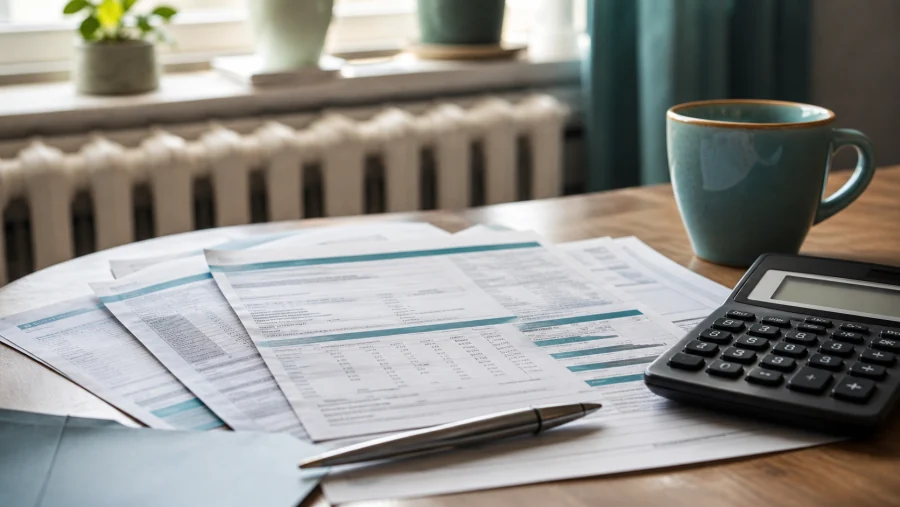
A resident of Almaty opens a bill and sees an amount that does not match actual consumption: water is charged for four people, although only one lives in the apartment, or the heating column shows a figure for months when nobody lived there. The first reaction is to call the apartment owners' association or the service provider, but they reply that the charges were made automatically. They can be challenged, but this requires specific grounds and documents.
The mistake is that many people pay to avoid penalties and court, and then demand a refund of the overpayment — but securing a recalculation after payment is more difficult. Another common error is not recording meter readings and not keeping bills, so it is impossible to prove that the figure is inflated. This article will help you understand which grounds apply, how debt is calculated and what to request from utility services.
Recalculation of utility payments: when the figure in a bill can be challenged
In a bill in Almaty, the figure may be higher than actual consumption for several reasons: the apartment owners' association, management company or supplier applied the wrong tariff, calculated by norm instead of by meter, included someone else's share of common property expenses, or billed the same period twice. If you see such discrepancies, you have the right to demand a recalculation of utility payments rather than paying the bill in silence.
A recalculation is possible when you submitted meter readings but they were not taken into account, when no one lived in the flat temporarily and this is confirmed by documents, or when the service was not provided or was provided poorly. The most expensive option is to miss the deadline, pay first, and then spend years proving you are entitled to a refund.
- check the tariff and the norm in the invoice against those in force in Almaty
- submit an application for recalculation to the OSI (management company) or the service provider
- attach meter readings, certificates of residence and reports
- record the date of your application and get an incoming reference number
Grounds for recalculation of utility bills: errors in invoices and unaccounted periods
Most often, a recalculation of utility bills in Almaty has to be demanded because of arithmetic and technical errors by the service provider or the building management body — the OSI, a simple partnership, or a management company. The invoice may show the wrong tariff, someone else's flat area, or an inflated number of residents even though the household composition has not changed. It also happens that readings were submitted but were not entered into the invoice, and the charge was calculated at the average or the norm.
A separate category is charges for periods when the person did not actually use the housing: was away on holiday or receiving treatment, or lived in another flat. If an invoice arrives for months of absence, that is also a ground to challenge the amount. Practice shows that disputes are resolved fastest where the resident has supporting documents.
- a tariff was applied that was not approved for this service
- someone else's area or extra residents are shown
- charges for months of absence
- submitted meter readings were ignored
Recalculation of utility bills during debt recovery: how much the resident actually owes
As long as the matter has not reached court and enforcement proceedings, the debtor has the right to challenge the amount claimed and obtain a recalculation. If part of the debt was charged in error or has already been paid, these transactions do not cancel the recovery of the utility debt, but they allow the final figure to be reduced to the actual obligations. To do this, you need to submit an application for recalculation to the organisation that issued the invoice, attaching documents confirming payment or the error.
At the stage of recovering utility debt, it is important not to miss the moment when the amount can still be adjusted without court. If enforcement proceedings have already begun, the court enforcement officer does not review the amount of the debt: it can only be reduced through the creditor or through the court — by setting aside the court order, reviewing the decision, or changing the manner of enforcement.
A recalculation applies in typical situations:
- Someone else's account or period was included by mistake.
- Payment went through but is not reflected in the provider's database.
- The calculation was made at the average, although current readings are available.
- The service was not provided but is still in the invoice.
Recalculation of utility bills by year: how claims for 2020, 2021 and 2022 differ
Charges and court practice on utility debts have changed from year to year, so the first thing to check is which period the debt was issued for. Recovery of utility debt for 2020 is one thing, and for 2021 or 2022 another: the tariffs, the charging rules, and the courts' approach to disputed periods all differ.
Check each charge separately for its own year and compare it against the norms and meter readings. If the debt is a mixed one covering several years, calculate the periods one by one — otherwise an error in one year will be hidden behind the total amount.
- Tariffs and consumption norms are different for each year
- A meter and a norm produce different calculations
- Common area expenses are calculated differently
- Debt for different years cannot be combined into one amount
| Period | What to check | Common mistake |
|---|---|---|
| 2020 | tariff and norm for the year | norm applied without a meter |
| 2021 | readings and common area | common area expenses inflated |
| 2022 | charges and payments | payment not taken into account |
| Total debt | breakdown by year | years added up into one amount |
Each year is calculated under its own rules — check separately.
Recalculation of utility payments in court: procedure for debt recovery and the role of a lawyer
If utility debt is not repaid voluntarily, the supplier or the OSI applies to court for recovery of utility debt through judicial proceedings. Most often, order proceedings are used: the court issues a court order without summoning the parties, and the debtor has the right to file an objection within the established time limit — then the order is cancelled and the dispute is heard under claim proceedings. An order that has entered into force is enforced by a private or state court enforcement officer.
The procedure for recovering utility debt includes checking the calculation, reconciling readings and accounting for payments. A lawyer for utility payments helps challenge the amount, raise the expiry of the limitation period, prepare objections and present evidence. Typical mistakes: ignoring a court notice, not checking the itemised breakdown, not requesting a recalculation.
- Check the calculation and reconciliation with the supplier.
- File objections to the court order.
- Take the limitation period into account.
- Collect receipts and reconciliation statements.
Recalculation of utility payments for registered and actually residing persons
Utility debt is usually claimed by the OSI, management company or supplier against everyone registered in the apartment — according to registration at the place of residence, not actual residence. Therefore, recovery of utility debt from registered persons is possible even when a person has long lived at another address, while the bills are run up by entirely different people.
To ensure charges are applied to the actual consumers, two flows need to be separated: confirm who actually uses the flat, and notify the service provider of this. A application to split the personal account, an act of actual residence, neighbours' statements and documents confirming rights to other housing all help.
| Status | Resides | What it proves |
|---|---|---|
| Owner | Yes | Title to property, meter readings |
| Registered, lives elsewhere | No | Lease agreement, certificate of residence |
| Tenant without registration | Yes | Tenancy agreement, payment receipts |
| Relative with a share | Depends on the situation | Certificate of registered rights, act of residence |
Splitting the charges does not automatically cancel the debt — first it must be established who consumed what and how much.
Recalculation of utility payments and recovery of arrears: which documents to collect
For a recalculation you need receipts for the disputed period, meter readings, inspection reports and correspondence with the service provider. If you are defending your position in a utility arrears recovery case, add the contract with the provider, the technical passport and documents confirming residence.
In utility arrears recovery, the court examines whether the amount of the charges is supported by documents and for which period. Without receipts, reports and written correspondence, disputing the amount is harder, so collect everything in writing as soon as the first disputed receipt appears.
Applications for recalculation with a receipt stamp are particularly important: they confirm that you applied, rather than simply accumulating paperwork. Before court proceedings for the recovery of utility arrears, check the readings in the reports against the receipts — discrepancies in dates or figures will become your argument.
- Receipts and invoices for the disputed months
- Meter readings with dates
- Inspection and survey reports
- Correspondence with the service provider
- Documents on residence and the right to the property
First collect written evidence — acts, receipts, correspondence — and only then demand a recalculation: the court and utility services look only at documents, not at verbal explanations.