Cars and insurance
Processing an accident in Almaty: how not to lose the dispute
Correct processing of an accident in Almaty helps preserve your position in a dispute with the insurer and the other driver. We explain which documents and actions protect your interests.
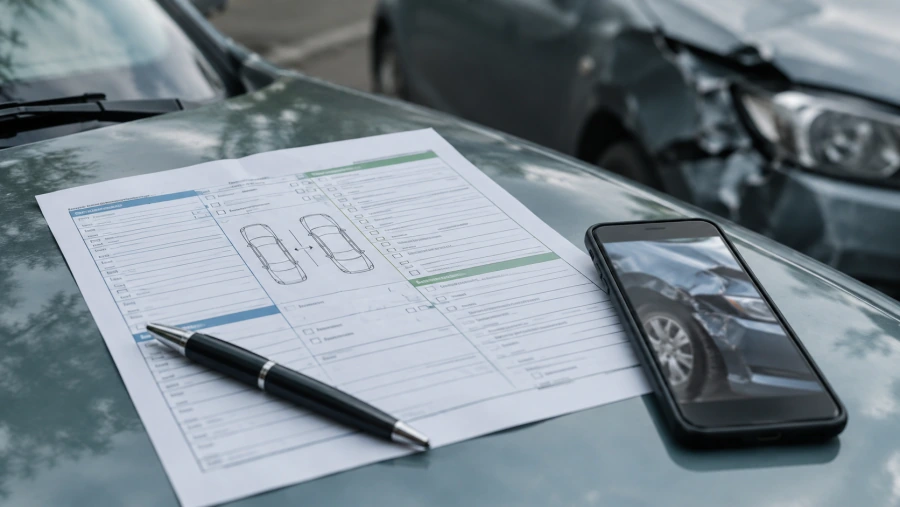
After a collision on the road in Almaty, most drivers follow a template: they call the insurer, wait for the traffic inspector or exchange details under the European protocol. It seems that this is enough. But it is precisely in the first minutes and hours that evidence is lost which can never be recovered afterwards. Any inaccuracy in an explanation or a diagram can prove decisive if the case goes to court or a dispute with the insurer.
Processing an accident is not a formality but the collection of evidence. The other party may change their testimony, the insurer may challenge the circumstances, and the at-fault driver may disappear. A reader who wants to protect themselves must understand which steps are mandatory and which only cause harm. Below is a practical analysis without general words.
What correct processing of an accident in Almaty means
The outcome of a dispute with an insurance company or the at-fault driver largely depends on how competently the documents are drawn up at the scene. Any inaccuracy in the diagram, explanations or the report can result in a refusal to pay or the need to prove you are right in court. That is precisely why processing an accident is not a formality but a key stage where the evidence base is laid. A car accident lawyer in Almaty often starts work precisely with an analysis of these initial materials, because correcting a mistake after the fact is almost impossible.
In Kazakhstan, the procedure for dealing with an accident depends on whether there are disagreements between the participants and whether anyone was injured. If there are injured parties or a dispute about fault, the police carry out the processing, drawing up a protocol and a diagram. Where there is mutual agreement and no injured parties, the law allows a simplified procedure — under the European Accident Statement. In any case, the processing includes:
- calling an authorised officer or recording the scene independently under the European Accident Statement;
- drawing up an accident diagram tied to the location and showing skid marks;
- written explanations from each participant, without contradictions;
- photo and video recording of the damage, number plates and the position of the vehicles;
- obtaining copies of the documents and the accident report for the insurer.
Accident processing: when you need a lawyer on the spot
Some accidents are clear-cut: a rear-end collision, both participants agree, the diagram is signed. Others are not — and then every minute counts. Calling a lawyer to the scene of an accident in Almaty is necessary when the other driver disputes fault or tries to move the vehicles before the police arrive. It will no longer be possible to record the position of the cars, the skid marks, the debris and the road conditions after the fact.
The help of an accident lawyer is especially important if there are doubts about the sobriety of the other participant: they must undergo testing, and here you cannot rush or miss the moment. The other party refusing to sign the diagram, and hidden damage under the bumper or behind the trim, also change the picture. In a disputed situation, the accident lawyer documents the circumstances and prevents the diagram from being distorted — including through photography, witnesses and precise wording of the explanations.
- Dispute over fault and mutual accusations
- Signs of intoxication in the other driver
- Refusal to sign the diagram or protocol
- Hidden damage visible only on inspection
Accident processing without a site visit: reviewing documents online
A remote review of the materials is based on you sending photos from the scene, the diagram, written explanations and, if you used it, the European Accident Statement. The online accident lawyer cross-checks these against each other, looks for discrepancies and shows where the position is weak. The correspondence with the insurer is reviewed separately: what you have already claimed and what of that is supported by documents.
Based on the review, applications, objections to a refusal or an underpayment, and requests to the insurer are prepared. Accident lawyers in Almaty take account of local specifics: even in a minor accident, the other side may later change their testimony, so the line of defence is built in advance. The remote format is convenient when you need to record your arguments quickly without coming to the office; if necessary, an accident lawyer in Almaty joins the case in person.
- Photos and video from the scene: angles, number plates, damage
- The accident diagram and the participants' explanations
- The completed European Accident Statement and notification
- Correspondence with the insurer: claims, replies, refusals
Accident processing: which documents protect your position
At the scene of an accident, it is important to record the situation before the vehicles are moved. The accident diagram, photos and video, and the explanations of the participants and witnesses are the key evidence on which the dispute with the insurance company and the other driver is later built. Check that the diagram includes: the position of the vehicles, the braking distance, road signs and markings.
Immediately after the processing, gather the package of documents for the incident. If the insurer starts to underpay or the at-fault driver changes their testimony, it is worth hiring an accident lawyer: they will have something to work with in court. The services of an accident lawyer help build a position from fresh materials, while witnesses are available and recordings have not been erased.
- The accident diagram with the signatures of both drivers and the inspector
- Photos and video from the scene, including number plates, damage and markings
- Written explanations of participants and eyewitnesses with contact details
- Traffic accident report and protocol on an administrative offence
- Medical examination for intoxication
| Document | Where to obtain | When | Why it is needed |
|---|---|---|---|
| Accident scene diagram | At the scene, from the officer | Immediately | Basis for disputing fault |
| Photos and video | Personally, on your own phone | Before the vehicles are moved | Supplements the diagram |
| Witness statements | At the scene | While witnesses are still nearby | Confirm your version |
| Traffic accident report | From the officer | On the day of the accident | Required by the insurer |
| Examination for intoxication | Medical organisation | By referral | Removes the question of intoxication |
Keep copies of all materials with you until the dispute is resolved.
Road accident processing: comparison of options
Every action taken by a party to an accident leads to its own consequences. Signed the diagram without reading it — you automatically agreed to someone else's version of events, and later it is already difficult to challenge the position of the cars, the braking trace or the point of impact: the court treats a signature in the report and diagram as confirmation. Called the police — you got an official examination, where the inspector records the circumstances, and in case of disagreement over fault the European protocol does not replace an examination with police involvement.
Left the scene of the accident — this is the most serious turn of events: leaving the scene turns an ordinary collision into a separate offence with its own consequences, up to deprivation of the right to drive and a dispute with the insurer. Completed a European protocol where there was disagreement — a mistake: simplified processing is allowed only with the consent of the parties, the insurer may not accept such a document, and the examination will have to be gone through again. A good road accident lawyer in such a situation looks precisely at what the party managed to sign and state.
| Action | What is recorded | What it leads to |
|---|---|---|
| Signed the diagram without reading it | Someone else's version of events | The dispute over fault is almost lost |
| Called the police | Official examination at the scene | There is a basis for the insurer and the court |
| European protocol where there is disagreement | Consent on paper | Does not cancel the examination, does not decide the payout |
| Left the scene | A separate offence | Deprivation of rights and proceedings |
Disagreement over fault can only be resolved by an examination with the police.
Road accident processing: what the lawyer's work consists of
The scope of work in a road traffic accident case depends on the specific situation. If the dispute concerns only the paperwork, the lawyer reviews the documents and advises on what to correct. When attendance at the scene is required, the work includes recording the circumstances and communicating with those involved. Representation in court and contesting fault add separate stages and time.
The scope of a lawyer's work on a road traffic accident is affected by the complexity of the dispute and the need to deal with the insurer and the court enforcement officer. The more contentious points there are and the longer the case drags on, the broader the scope of work.
- Reviewing documents and preparing the position.
- Attending the scene of the road traffic accident and recording the circumstances.
- Contesting fault and correspondence with the insurer.
- Representation in court.
- Working with the court enforcement officer on recovery.
Paperwork after a road traffic accident: common mistakes
The most costly mistake is leaving the scene of the accident. Even if the damage seems minor and the other driver is at fault, leaving the scene deprives you of the chance to prove your version and creates a risk of administrative liability.
The second most costly mistake is signing the diagram without agreeing with it. A diagram signed at the scene without any remarks limits your ability to prove a different version of events later, so raise your objections straight away.
Another mistake is failing to record the damage: photograph the cars from different angles, the braking distance, the position on the road and all the details, otherwise the dispute over the list of damage will turn against you.
Do not sign blank notification forms and do not leave empty fields: they can be filled in later without you. If the other party is pressuring you and rushing you, it is worth bringing in a road traffic accident lawyer to check the wording in the documents.
- Leaving the scene of the accident without completing the paperwork.
- Agreeing with someone else's diagram without your own remarks.
- Failing to record the damage in photos and videos.
- Signing blank road traffic accident notification forms.
- Leaving without copies of the diagram, the notification and the explanations.
The main mistake is signing documents and giving explanations before all the damage and circumstances have been recorded. It is better to spend an extra hour on photos and the diagram than to prove you were right in court later.