Cars and insurance
Checking a car before purchase in Kazakhstan: documents, databases, risks
Checking a car before purchase in Almaty is not just diagnostics and haggling. It is checking the documents, VIN, registration and encumbrances. We look at what risks the deal hides and how to close them before signing the contract.
Buying a car on the secondary market in Almaty is almost always quick: you look, you take it for a spin, you shake hands. The seller is rushing you, the price seems good, and the documents look ordinary. It is precisely in that haste that money is lost, and it can never be recovered.
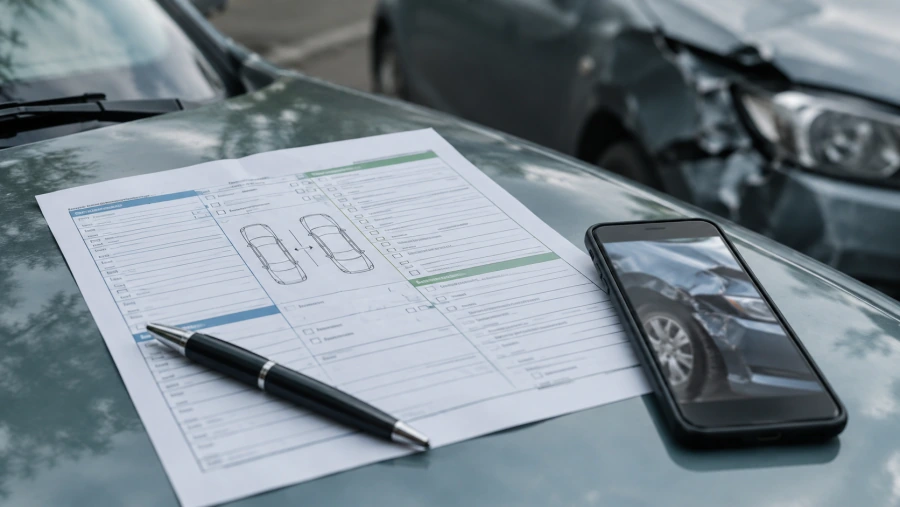
The problem is that the external condition of a car says nothing about its legal cleanliness. A pledge, an arrest, someone else's VIN, tampered numbers, a power of attorney instead of a contract — all of this comes to light after the deal, when the buyer is left without the car and without the money. That is why checking a car before purchase should run alongside the inspection, not after it.
Checking a car before purchase: what risks the deal hides
Buying a car without checking it is a deal blindfolded. Behind the exterior shine and a tidy interior there may be arrests, pledges and loan encumbrances, because of which the car can be seized at any moment, and getting the money back will be extremely difficult. VIN discrepancies, duplicate technical passports and tampered unit numbers are the typical companions of such stories. Checking a car before handing over the money protects the buyer rather than merely reassuring them: it records the legal cleanliness and gives you leverage to walk away or negotiate.
The most dangerous risks:
- arrest or a ban on registration actions — you will not be able to register the car;
- a bank pledge or credit encumbrance — the car may be taken away for the seller's debts;
- a duplicate technical passport when the original is 'lost' — a sign of a fraudulent scheme;
- a mismatch between the VIN and unit numbers and the entries in the documents — a criminal past or a kit car.
Checking a car before purchase against the documents: passport, VIN, registration
The seller's documents are checked against each other and against the car. The technical passport (vehicle registration certificate) must be issued in the seller's name, and the VIN in the papers must match the number on the body: even one character off is a reason to stop. If the seller is acting under a power of attorney, check that it has not been revoked and that it gives the right to sell, not just to drive.
Pledge and arrest marks and restrictions on registration actions are looked at separately: with them, the car cannot be re-registered, and the buyer will be left without money and without a car. The technical passport does not give the full picture, so it is not enough to trust the seller's entries — they must be confirmed with information from official sources.
What exactly to check against the documents:
- the owner's identity card and their signature in the contract
- the registration certificate: the owner's name, year of manufacture
- the VIN on the body and in the technical passport, the engine and body numbers
- marks of pledge, arrest and restrictions on re-registration
Checking a car before purchase through official databases of Kazakhstan
Open databases of Kazakhstan give some of the answers before the deal. The pledge register shows whether the car is listed as security for a loan: if there is an entry and the seller says the debt is settled, the removal of the pledge must be confirmed by the register itself, not by words. The restrictions database shows bans on registration actions from court enforcement officers, and the registration history shows how many times the car has changed owners and whether it is listed as stolen. Information about road accidents is officially confirmed only when there are documents: an accident report, a payment file, an appraiser's report. Mileage, body repairs and 'never been in an accident' most often remain the seller's words, so they cannot be considered reliable without written confirmation.
- the pledge register — an existing encumbrance or its absence;
- the restrictions database — bans on registration from court enforcement officers;
- the registration history — the number of owners and stolen-vehicle marks;
- information about road accidents — confirmed by a report, a payment file, an appraisal.
- After checking the official databases, the seller's words do not replace documents: discrepancies in dates, mileage or repairs must be confirmed in writing or become a reason to walk away from the deal.
Personal communication with the seller before checking the car before purchase
Talk to the seller before the meeting: whose car it is, how many owners are in the registration certificate, why it is being sold, where the car was kept and serviced, whether there were accidents and body repairs, whether there are restrictions and pledges. Ask to show an identity card: the name in the document must match the owner's details in the technical passport. If the car is being sold by a dealer under a power of attorney or using someone else's passport, you do not see the car's history and do not understand who is actually responsible for the car's condition.
Inconsistencies should put you on guard: the seller is confused about the mileage and year, calls the car 'roadworthy' and immediately mentions 'minor issues', does not know where the car is registered, refuses to meet on neutral ground or at the house where the car is kept. If the person who came to sell is not the owner but an 'assistant', a 'relative' or someone 'under a power of attorney', checking the car before purchase turns into a conversation with an intermediary, not with the owner.
- Whose car it is and how many owners it has
- Why the car is being sold
- Whether there were accidents, repairs and restrictions
- Who exactly signs the contract and on what basis
Comparison of options for checking a car before purchase: on your own and with a lawyer
A self-check through open databases covers the basics: restrictions, pledges, wanted status, registration history. That is enough when the seller is a long-standing acquaintance or the car is being bought from a relative, and the documents are transparent. But if the history shows re-registrations in different regions, duplicate documents, or the seller is acting under a power of attorney, the databases will not reveal everything.
A lawyer's help when buying a car is needed where the deal goes beyond the standard template: disputed inheritance, court disputes involving the car, leasing, arrests from previous owners. A lawyer reads the documents in full, cross-checks the data, requests official information and builds a safe payment scheme. Below is a comparison by key criteria.
- What is checked: open databases versus a full analysis of documents and circumstances.
- Who is responsible for a missed risk: the buyer alone versus a specialist with a legal opinion.
- Where it applies: standard deals versus disputed histories and powers of attorney.
| Criterion | On your own | With a lawyer |
|---|---|---|
| Scope | Open databases | Databases, documents, circumstances |
| Disputed histories | Risk of missing something | Examined in detail |
| Payment and contract | Template-based | Scheme tailored to the deal |
| Risk assessment | General | Legal opinion |
A self-check is reasonable for simple deals; in any unclear situation, a lawyer reduces the likelihood of a purchase being challenged.
Checking a car before purchase with a notary and completing the transaction
Notarial certification of a car sale and purchase agreement is not required in the Republic of Kazakhstan: the agreement is completed at a special Public Service Centre or online via eGov, and selling a minor's car requires permission from the guardianship authority. The parties need to prepare identity documents, the technical passport, the vehicle registration certificate and a document confirming ownership.
Checking a car before signing the agreement is easier and cheaper than after: while the transaction is not closed, you can walk away or change the terms. Once it is signed, terminating the agreement and getting your money back is harder, and the dispute will end up in court. A notary only certifies the will of the parties; they do not check encumbrances and pledges — that is the buyer's job. Re-registration at a special Public Service Centre is usually done on the day of application, and a car without encumbrances can be re-registered online via eGov.
- Original identity documents of both parties
- Technical passport and vehicle registration certificate
- Document confirming the seller's ownership
- Power of attorney, if a representative is acting
The most costly mistakes when checking a car before purchase
The most expensive mistake is handing over the money before checking the car and completing the paperwork. If the car is pledged to a bank, the pledge survives the sale: the bank has the right to enforce against the car while it is in your possession. The buyer is left without the car and without the money, which the seller has already spent.
Buying on a duplicate technical passport or under a power of attorney conceals the owner and any encumbrances. Checking a car before purchase should end with a sale and purchase agreement with the actual owner and re-registration with the registration authorities.
What is most often overlooked:
- Transferring money before checking the databases and inspecting the car.
- A transaction under a power of attorney instead of a sale and purchase agreement.
- Agreeing to a duplicate technical passport without finding out why it was issued.
- Refusing to check for pledges, arrests and restrictions.
| Mistake | Consequence | Who is at risk |
|---|---|---|
| Money before the check | Loss of the money and the car | Buyer |
| Power of attorney | Dispute with the owner | Buyer |
| Duplicate technical passport | Dispute over the right to a car | Buyer |
| Ignoring the pledge | Bank's claim | Buyer |
Checking the car before purchase reduces these risks.
A car passes to the buyer together with its encumbrances — pledges and seizures — so before signing the contract you need to check not the car, but its legal history.